Brenda Vale – författare
2 300 kr
Läs direkt efter köp
1 810 kr
Skickas inom 10-15 vardagar
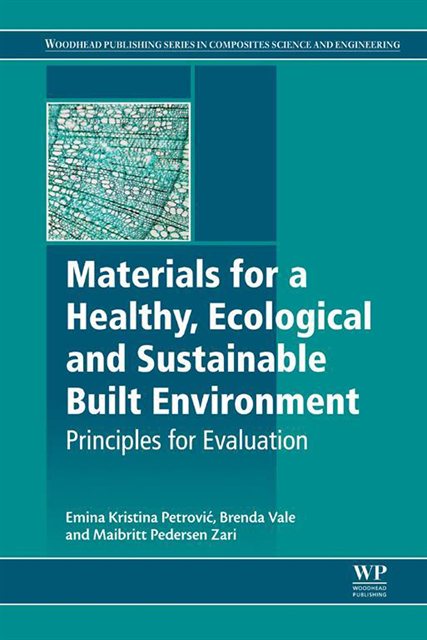
Principles for Evaluating Building Materials in Sustainable Construction: Healthy and Sustainable Materials for the Built Environment provides a comprehensive overview of the issues associated with the selection of materials for sustainable construction, proposing a holistic and integrated approach.
The book evaluates the issues involved in choosing materials from an ecosystem services perspective, from the design stage to the impact of materials on the health of building users.
The three main sections of the book discuss building materials in relation to ecosystem services, the implications of materials choice at the design stage, and the impact of materials on building users and their health. The final section focuses on specific case studies that illustrate the richness of solutions that existed before the rise of contemporary construction and that are consistent with a sustainable approach to creating built environments. These are followed by modern examples which apply some, if not all, of the principles discussed in the first three sections of the book.
Provides a holistic and integrated approach to the issues associated with the selection of materials for sustainable construction Provides a thorough understanding of ecosystem services based on ecology research for built environment design Provides an original review of the impact of materials on human health Provides case studies to illustrate the points above546 kr
Skickas inom 10-15 vardagar
1 944 kr
Skickas inom 10-15 vardagar
1 736 kr
Skickas inom 10-15 vardagar
685 kr
Skickas inom 10-15 vardagar
2 566 kr
Skickas inom 10-15 vardagar
920 kr
Skickas inom 10-15 vardagar
515 kr
Skickas inom 10-15 vardagar
819 kr
Läs direkt efter köp
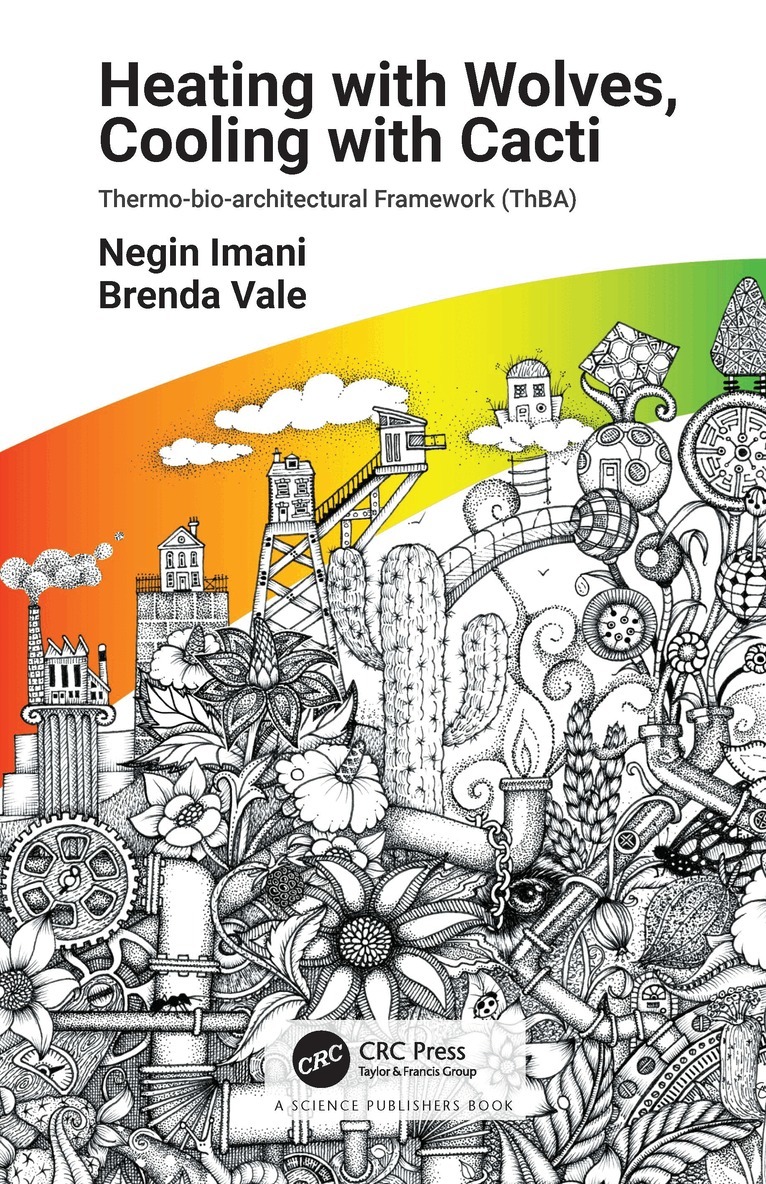
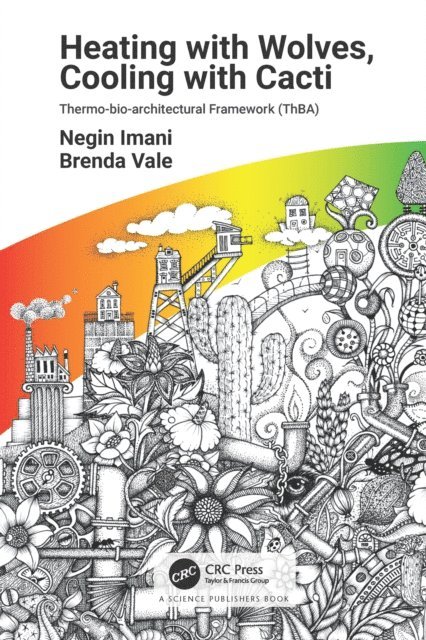
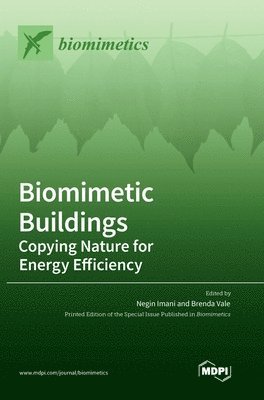
This book describes the detailed process behind the development of a comprehensive thermo-bio-architectural framework (the ThBA). This framework systematically connects the thermal performance requirements of a building to relevant solutions found in the natural world. This is the first time that architecture has been connected to biology in this manner. The book provides an in-depth understanding of thermoregulatory strategies in animals and plants and links these to equivalent solutions in architectural design. The inclusion of this fundamental knowledge, along with the systematic process of accessing it, should open up new avenues for the generation of energy efficient and sustainable buildings.
819 kr
Läs direkt efter köp
This book describes the detailed process behind the development of a comprehensive thermo-bio-architectural framework (the ThBA). This framework systematically connects the thermal performance requirements of a building to relevant solutions found in the natural world. This is the first time that architecture has been connected to biology in this manner. The book provides an in-depth understanding of thermoregulatory strategies in animals and plants and links these to equivalent solutions in architectural design. The inclusion of this fundamental knowledge, along with the systematic process of accessing it, should open up new avenues for the generation of energy efficient and sustainable buildings.
568 kr
Läs direkt efter köp
Originally published in 1995, this book unravels the history of the ‘temporary bungalow’ and shows that perhaps it was more a question of providing a new peace-time product for factories than a means of providing accommodation for the homeless. Built in a period of housing history which remains fascinating for architects and planners and admired by some of their first occupants but berated by others, those prefabs remaining today are subject to preservation orders but also perhaps offer a solution to the ongoing housing crisis in the UK. The book includes chapters on the development of the prefab house in the UK; comparisons with temporary housing programmes in the USA, Sweden and Germany; political and economic considerations to the UK Temporary Housing Programme and a discussion of the design of the Arcon, Uni-Seco, Tarran and Aluminium Temporary Bungalows.
568 kr
Läs direkt efter köp
Originally published in 1995, this book unravels the history of the ‘temporary bungalow’ and shows that perhaps it was more a question of providing a new peace-time product for factories than a means of providing accommodation for the homeless. Built in a period of housing history which remains fascinating for architects and planners and admired by some of their first occupants but berated by others, those prefabs remaining today are subject to preservation orders but also perhaps offer a solution to the ongoing housing crisis in the UK. The book includes chapters on the development of the prefab house in the UK; comparisons with temporary housing programmes in the USA, Sweden and Germany; political and economic considerations to the UK Temporary Housing Programme and a discussion of the design of the Arcon, Uni-Seco, Tarran and Aluminium Temporary Bungalows.
633 kr
Läs direkt efter köp
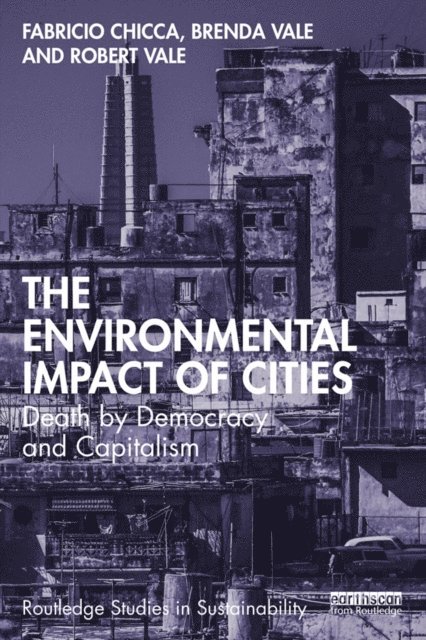
The Environmental Impact of Cities assesses the environmental impact that comes from cities and their inhabitants, demonstrating that our current political and economic systems are not environmentally sustainable because they are designed for endless growth in a system which is finite.
It is already well documented that political, economic and social forces are capable of shaping cities and their expansion, retraction, gentrification, re-population, industrialisation or de-industrialisation. However, the links between these political and economic forces and the environmental impact they have on urban areas have yet to be numerically presented. As a result, it is not clear how our cities are affecting the environment, meaning it is currently impossible to relate their economic, political and social systems to their environmental performance. This book examines a broad selection of cities covering a wide range of political systems, geography, cultural backgrounds and population size. The environmental impact of the selected cities is calculated using both ecological footprint and carbon emissions, two of the most extensively available indices for measuring environmental impact. The results are then considered in terms of political, economic and social factors to ascertain the degree to which these factors are helping or hindering the reduction of the environmental impact of humans.
This book will be of great interest to students and scholars of sustainability, urban planning, urban design, environmental sciences, geography and sociology.
633 kr
Läs direkt efter köp
The Environmental Impact of Cities assesses the environmental impact that comes from cities and their inhabitants, demonstrating that our current political and economic systems are not environmentally sustainable because they are designed for endless growth in a system which is finite.
It is already well documented that political, economic and social forces are capable of shaping cities and their expansion, retraction, gentrification, re-population, industrialisation or de-industrialisation. However, the links between these political and economic forces and the environmental impact they have on urban areas have yet to be numerically presented. As a result, it is not clear how our cities are affecting the environment, meaning it is currently impossible to relate their economic, political and social systems to their environmental performance. This book examines a broad selection of cities covering a wide range of political systems, geography, cultural backgrounds and population size. The environmental impact of the selected cities is calculated using both ecological footprint and carbon emissions, two of the most extensively available indices for measuring environmental impact. The results are then considered in terms of political, economic and social factors to ascertain the degree to which these factors are helping or hindering the reduction of the environmental impact of humans.
This book will be of great interest to students and scholars of sustainability, urban planning, urban design, environmental sciences, geography and sociology.
1 717 kr
Skickas inom 10-15 vardagar
491 kr
Skickas inom 10-15 vardagar
618 kr
Läs direkt efter köp
618 kr
Läs direkt efter köp
1 080 kr
Läs direkt efter köp
According to many authorities the impact of humanity on the earth is already overshooting the earth’s capacity to supply humanity’s needs. This is an unsustainable position. This book does not focus on the problem but on the solution, by showing what it is like to live within a fair earth share ecological footprint.
The authors describe numerical methods used to calculate this, concentrating on low or no cost behaviour change, rather than on potentially expensive technological innovation. They show what people need to do now in regions where their current lifestyle means they are living beyond their ecological means, such as in Europe, North America and Australasia. The calculations focus on outcomes rather than on detailed discussion of the methods used. The main objective is to show that living with a reduced ecological footprint is both possible and not so very different from the way most people currently live in the west.
The book clearly demonstrates that change in behaviour now will avoid some very challenging problems in the future. The emphasis is on workable, practical and sustainable solutions based on quantified research, rather than on generalities about overall problems facing humanity.
1 071 kr
Läs direkt efter köp
According to many authorities the impact of humanity on the earth is already overshooting the earth’s capacity to supply humanity’s needs. This is an unsustainable position. This book does not focus on the problem but on the solution, by showing what it is like to live within a fair earth share ecological footprint.
The authors describe numerical methods used to calculate this, concentrating on low or no cost behaviour change, rather than on potentially expensive technological innovation. They show what people need to do now in regions where their current lifestyle means they are living beyond their ecological means, such as in Europe, North America and Australasia. The calculations focus on outcomes rather than on detailed discussion of the methods used. The main objective is to show that living with a reduced ecological footprint is both possible and not so very different from the way most people currently live in the west.
The book clearly demonstrates that change in behaviour now will avoid some very challenging problems in the future. The emphasis is on workable, practical and sustainable solutions based on quantified research, rather than on generalities about overall problems facing humanity.
1 360 kr
Skickas inom 10-15 vardagar
2 358 kr
Skickas inom 10-15 vardagar
605 kr
Skickas inom 10-15 vardagar
2 151 kr
Skickas inom 10-15 vardagar
588 kr
Skickas inom 10-15 vardagar
682 kr
Läs direkt efter köp
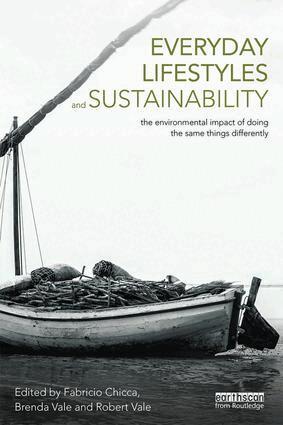
The impact of humanity on the earth overshoots the earth’s bio-capacity to supply humanity’s needs, meaning that people are living off earth’s capital rather than its income. However, not all countries are equal and this book explores why apparently similar patterns of daily living can lead to larger and smaller environmental impacts.
The contributors describe daily life in many different places in the world and then calculate the environmental impact of these ways of living from the perspective of ecological and carbon footprints. This leads to comparison and discussion of what living within the limits of the planet might mean. Current footprints for countries are derived from national statistics and these hide the variety of impacts made by individual people and the choices they make in their daily lives. This book takes a ‘bottom-up’ approach by calculating the footprints of daily living. The purpose is to show that small changes in behaviour now could avoid some very challenging problems in the future.
Offering a global perspective on the question of sustainable living, this book will be of great interest to anyone with a concern for the future, as well as students and researchers in environmental studies, human geography and development studies.
682 kr
Läs direkt efter köp
The impact of humanity on the earth overshoots the earth’s bio-capacity to supply humanity’s needs, meaning that people are living off earth’s capital rather than its income. However, not all countries are equal and this book explores why apparently similar patterns of daily living can lead to larger and smaller environmental impacts.
The contributors describe daily life in many different places in the world and then calculate the environmental impact of these ways of living from the perspective of ecological and carbon footprints. This leads to comparison and discussion of what living within the limits of the planet might mean. Current footprints for countries are derived from national statistics and these hide the variety of impacts made by individual people and the choices they make in their daily lives. This book takes a ‘bottom-up’ approach by calculating the footprints of daily living. The purpose is to show that small changes in behaviour now could avoid some very challenging problems in the future.
Offering a global perspective on the question of sustainable living, this book will be of great interest to anyone with a concern for the future, as well as students and researchers in environmental studies, human geography and development studies.
702 kr
Läs direkt efter köp
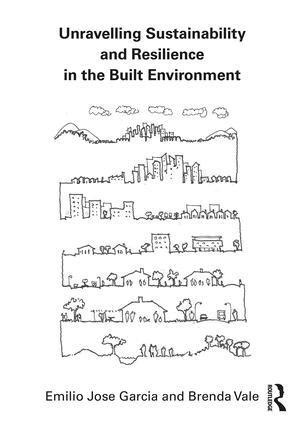
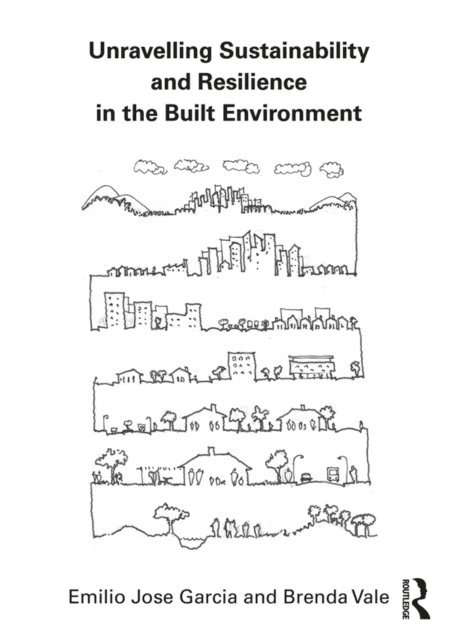
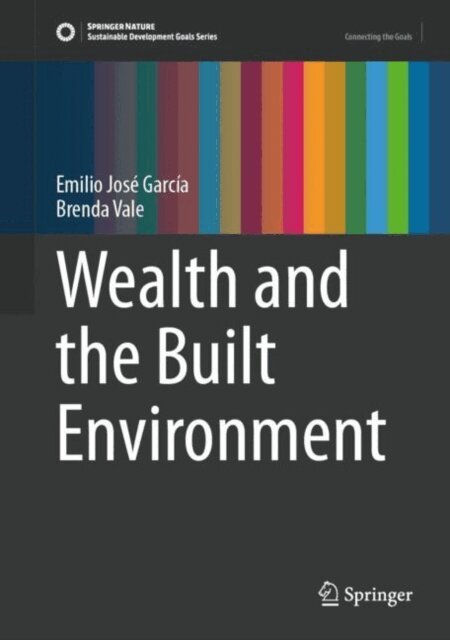
In this timely book, Emilio Jose Garcia and Brenda Vale explore what sustainability and resilience might mean when applied to the built environment. Conceived as a primer for students and professionals, it defines what the terms sustainability and resilience mean and how they are related to each other and to the design of the built environment. After discussion of the origins of the terms, these definitions are then compared and applied to case studies, including Whitehill and Bordon, UK, Tianjin Eco-city, China, and San Miguel de Tucuman, Argentina, which highlight the principles of both concepts. Essentially, the authors champion the case that sustainability in the built environment would benefit from a proper understanding of resilience.
702 kr
Läs direkt efter köp
In this timely book, Emilio Jose Garcia and Brenda Vale explore what sustainability and resilience might mean when applied to the built environment. Conceived as a primer for students and professionals, it defines what the terms sustainability and resilience mean and how they are related to each other and to the design of the built environment. After discussion of the origins of the terms, these definitions are then compared and applied to case studies, including Whitehill and Bordon, UK, Tianjin Eco-city, China, and San Miguel de Tucuman, Argentina, which highlight the principles of both concepts. Essentially, the authors champion the case that sustainability in the built environment would benefit from a proper understanding of resilience.