Fabricio Chicca – författare
2 772 kr
Skickas inom 10-15 vardagar
3 950 kr
Läs direkt efter köp
546 kr
Skickas inom 10-15 vardagar
1 944 kr
Skickas inom 10-15 vardagar
633 kr
Läs direkt efter köp
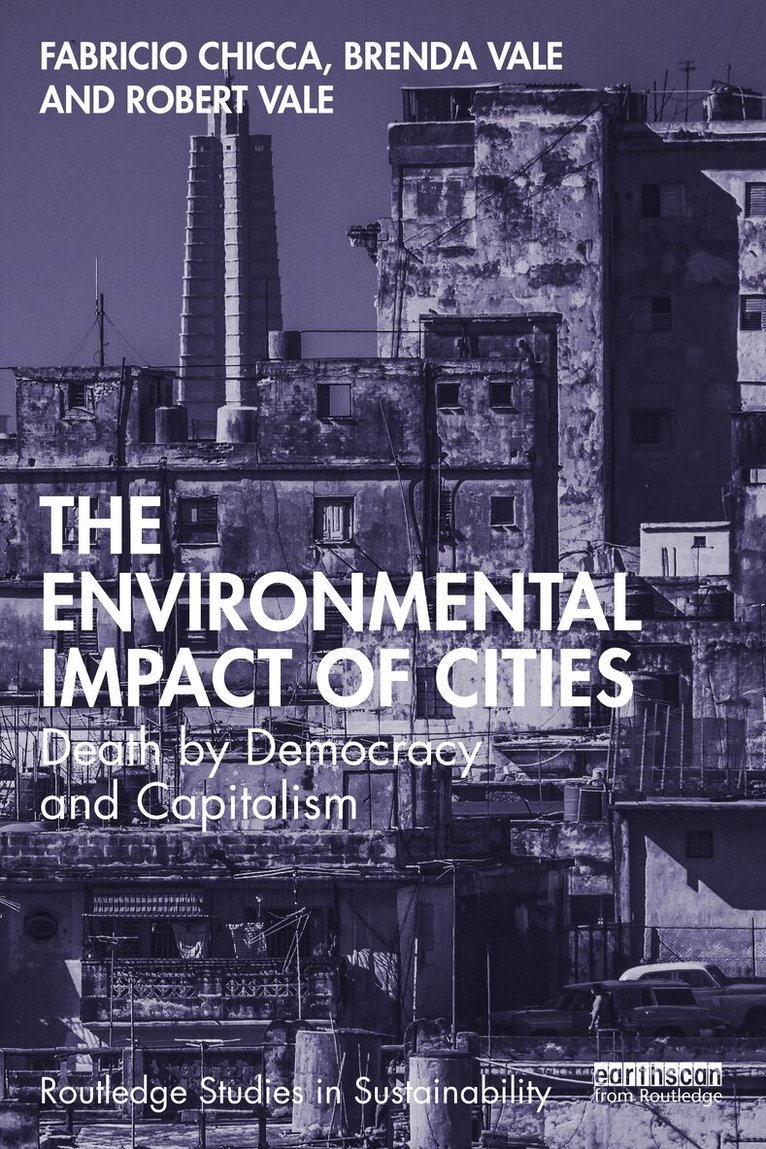
The Environmental Impact of Cities assesses the environmental impact that comes from cities and their inhabitants, demonstrating that our current political and economic systems are not environmentally sustainable because they are designed for endless growth in a system which is finite.
It is already well documented that political, economic and social forces are capable of shaping cities and their expansion, retraction, gentrification, re-population, industrialisation or de-industrialisation. However, the links between these political and economic forces and the environmental impact they have on urban areas have yet to be numerically presented. As a result, it is not clear how our cities are affecting the environment, meaning it is currently impossible to relate their economic, political and social systems to their environmental performance. This book examines a broad selection of cities covering a wide range of political systems, geography, cultural backgrounds and population size. The environmental impact of the selected cities is calculated using both ecological footprint and carbon emissions, two of the most extensively available indices for measuring environmental impact. The results are then considered in terms of political, economic and social factors to ascertain the degree to which these factors are helping or hindering the reduction of the environmental impact of humans.
This book will be of great interest to students and scholars of sustainability, urban planning, urban design, environmental sciences, geography and sociology.
633 kr
Läs direkt efter köp
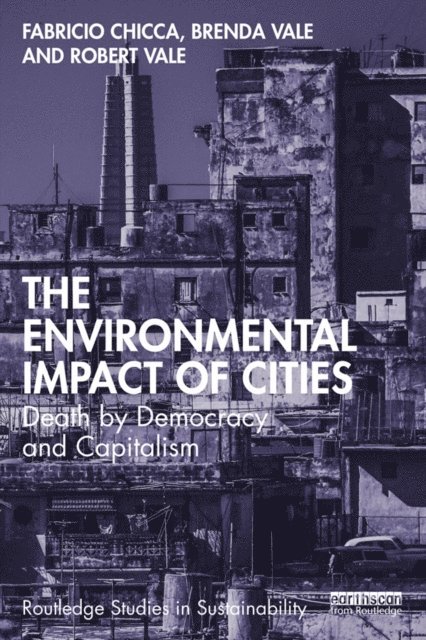
The Environmental Impact of Cities assesses the environmental impact that comes from cities and their inhabitants, demonstrating that our current political and economic systems are not environmentally sustainable because they are designed for endless growth in a system which is finite.
It is already well documented that political, economic and social forces are capable of shaping cities and their expansion, retraction, gentrification, re-population, industrialisation or de-industrialisation. However, the links between these political and economic forces and the environmental impact they have on urban areas have yet to be numerically presented. As a result, it is not clear how our cities are affecting the environment, meaning it is currently impossible to relate their economic, political and social systems to their environmental performance. This book examines a broad selection of cities covering a wide range of political systems, geography, cultural backgrounds and population size. The environmental impact of the selected cities is calculated using both ecological footprint and carbon emissions, two of the most extensively available indices for measuring environmental impact. The results are then considered in terms of political, economic and social factors to ascertain the degree to which these factors are helping or hindering the reduction of the environmental impact of humans.
This book will be of great interest to students and scholars of sustainability, urban planning, urban design, environmental sciences, geography and sociology.
2 151 kr
Skickas inom 10-15 vardagar
588 kr
Skickas inom 10-15 vardagar
682 kr
Läs direkt efter köp
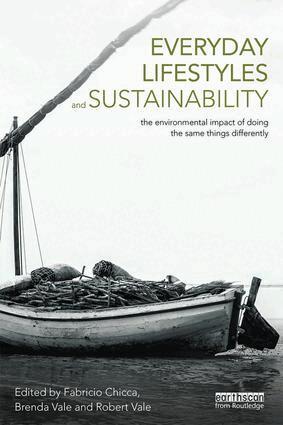
The impact of humanity on the earth overshoots the earth’s bio-capacity to supply humanity’s needs, meaning that people are living off earth’s capital rather than its income. However, not all countries are equal and this book explores why apparently similar patterns of daily living can lead to larger and smaller environmental impacts.
The contributors describe daily life in many different places in the world and then calculate the environmental impact of these ways of living from the perspective of ecological and carbon footprints. This leads to comparison and discussion of what living within the limits of the planet might mean. Current footprints for countries are derived from national statistics and these hide the variety of impacts made by individual people and the choices they make in their daily lives. This book takes a ‘bottom-up’ approach by calculating the footprints of daily living. The purpose is to show that small changes in behaviour now could avoid some very challenging problems in the future.
Offering a global perspective on the question of sustainable living, this book will be of great interest to anyone with a concern for the future, as well as students and researchers in environmental studies, human geography and development studies.
682 kr
Läs direkt efter köp
The impact of humanity on the earth overshoots the earth’s bio-capacity to supply humanity’s needs, meaning that people are living off earth’s capital rather than its income. However, not all countries are equal and this book explores why apparently similar patterns of daily living can lead to larger and smaller environmental impacts.
The contributors describe daily life in many different places in the world and then calculate the environmental impact of these ways of living from the perspective of ecological and carbon footprints. This leads to comparison and discussion of what living within the limits of the planet might mean. Current footprints for countries are derived from national statistics and these hide the variety of impacts made by individual people and the choices they make in their daily lives. This book takes a ‘bottom-up’ approach by calculating the footprints of daily living. The purpose is to show that small changes in behaviour now could avoid some very challenging problems in the future.
Offering a global perspective on the question of sustainable living, this book will be of great interest to anyone with a concern for the future, as well as students and researchers in environmental studies, human geography and development studies.