A. Aneesh - Böcker
Visar alla böcker från författaren A. Aneesh. Handla med fri frakt och snabb leverans.
8 produkter
8 produkter
941 kr
Skickas inom 10-15 vardagar
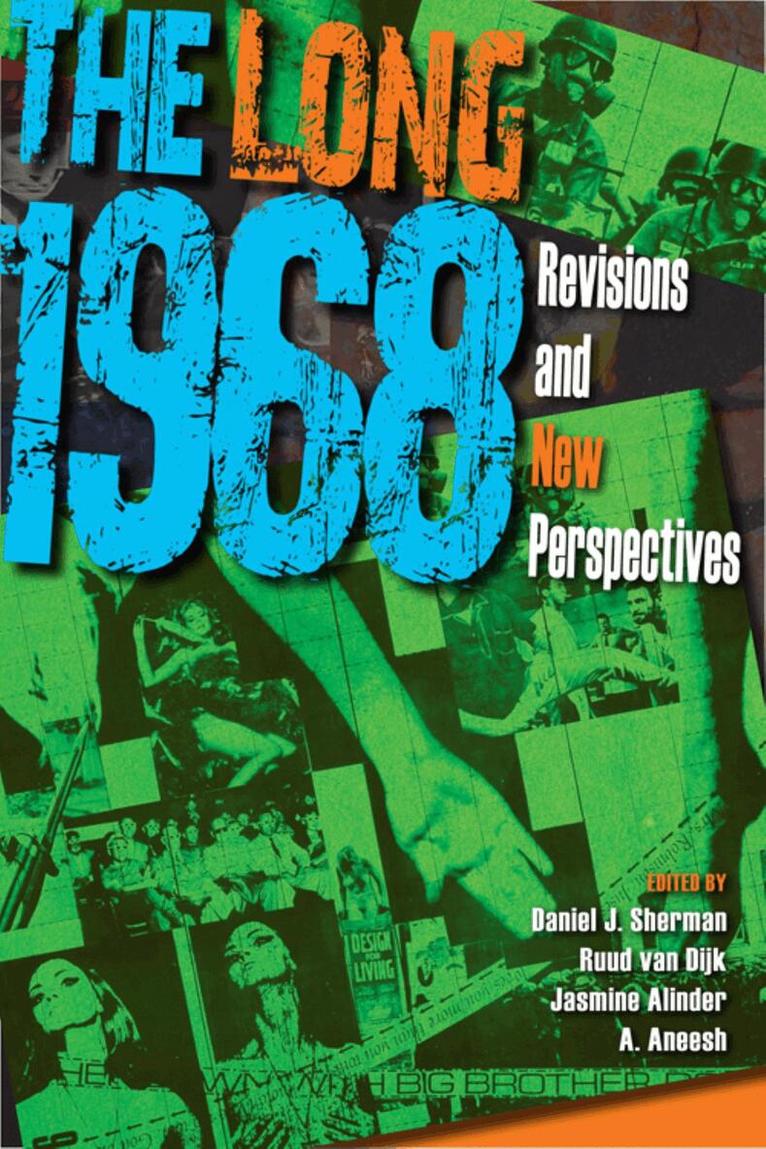
From the mid-1960s to the early 1970s, revolutions in theory, politics, and cultural experimentation swept around the world. These changes had as great a transformative impact on the right as on the left. A touchstone for activists, artists, and theorists of all stripes, the year 1968 has taken on new significance for the present moment, which bears certain uncanny resemblances to that time. The Long 1968 explores the wide-ranging impact of the year and its aftermath in politics, theory, the arts, and international relations—and its uses today.
332 kr
Skickas inom 7-10 vardagar
From the mid-1960s to the early 1970s, revolutions in theory, politics, and cultural experimentation swept around the world. These changes had as great a transformative impact on the right as on the left. A touchstone for activists, artists, and theorists of all stripes, the year 1968 has taken on new significance for the present moment, which bears certain uncanny resemblances to that time. The Long 1968 explores the wide-ranging impact of the year and its aftermath in politics, theory, the arts, and international relations—and its uses today.
1 391 kr
Skickas inom 5-8 vardagar
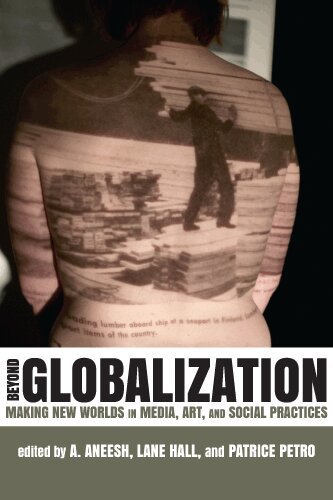
Does living in a globally networked society mean that we are moving toward a single, homogenous world culture? Or, are we headed for clashes between center and periphery, imperial and subaltern, Western and non-Western, First and Third World? The interdisciplinary essays in Beyond Globalization present us with another possibility-that new media will lead to new kinds of “worldmaking.” This provocative volume brings together the best new work of scholars within such diverse fields as history, sociology, anthropology, film, media studies, and art. Whether examining the inauguration of a virtual community on the website Second Life or investigating the appropriation of biotechnology for transgenic art, this collection highlights how mediated practices have become integral to global culture; how social practices have emerged out of computer-related industries; how contemporary apocalyptic narratives reflect the anxieties of a U.S. culture facing global challenges; and how design, play, and technology help us understand the histories and idealsbehind the digital architectures that mediate our everyday actions.
370 kr
Skickas inom 5-8 vardagar
Does living in a globally networked society mean that we are moving toward a single, homogenous world culture? Or, are we headed for clashes between center and periphery, imperial and subaltern, Western and non-Western, First and Third World? The interdisciplinary essays in Beyond Globalization present us with another possibility-that new media will lead to new kinds of “worldmaking.” This provocative volume brings together the best new work of scholars within such diverse fields as history, sociology, anthropology, film, media studies, and art. Whether examining the inauguration of a virtual community on the website Second Life or investigating the appropriation of biotechnology for transgenic art, this collection highlights how mediated practices have become integral to global culture; how social practices have emerged out of computer-related industries; how contemporary apocalyptic narratives reflect the anxieties of a U.S. culture facing global challenges; and how design, play, and technology help us understand the histories and idealsbehind the digital architectures that mediate our everyday actions.
322 kr
Skickas inom 7-10 vardagar
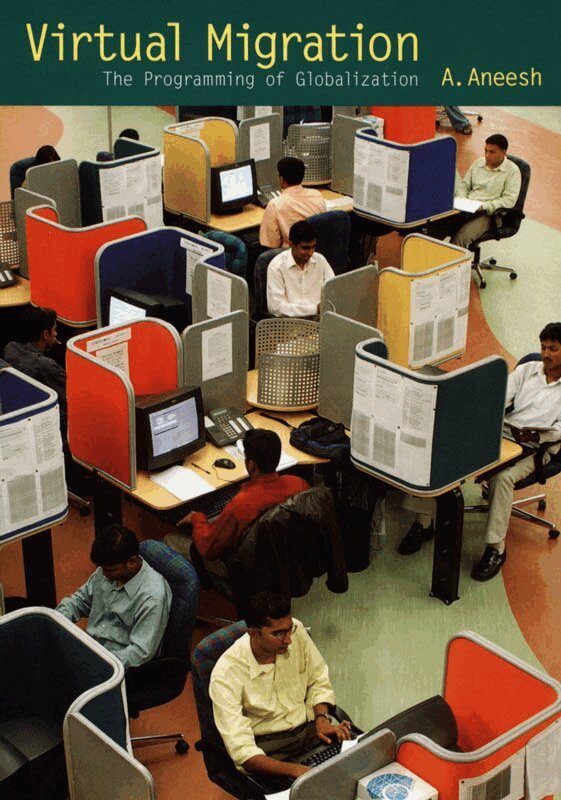
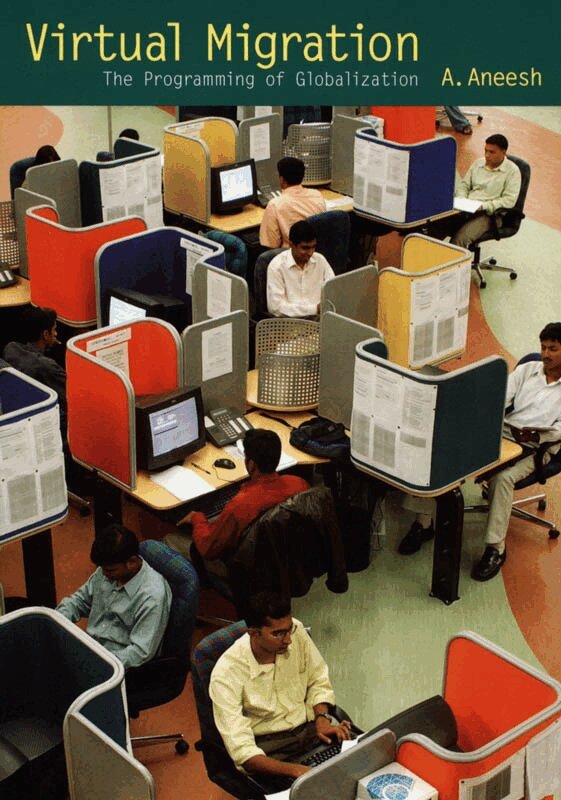
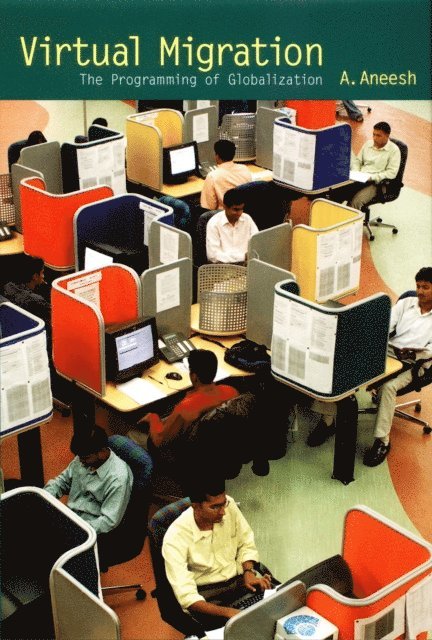
Workers in India program software applications, transcribe medical dictation online, chase credit card debtors, and sell mobile phones, diet pills, and mortgages for companies based in other countries around the world. While their skills and labor migrate abroad, these workers remain Indian citizens, living and working in India. A. Aneesh calls this phenomenon “virtual migration,” and in this groundbreaking study he examines the emerging “transnational virtual space” where labor and vast quantities of code and data cross national boundaries, but the workers themselves do not. Through an analysis of the work of computer programmers in India working for the American software industry, Aneesh argues that the programming code connecting globally dispersed workers through data servers and computer screens is the key organizing structure behind the growing phenomenon of virtual migration. This “rule of code,” he contends, is a crucial and underexplored aspect of globalization.Aneesh draws on the sociology of science, social theory, and research on migration to illuminate the practical and theoretical ramifications of virtual migration. He combines these insights with his extensive ethnographic research in offices in three locations in India-in Delhi, Gurgaon, and Noida-and one in New Jersey. Aneesh contrasts virtual migration with “body shopping,” the more familiar practice of physically bringing programmers from other countries to work on site, in this case, bringing them from India to New Jersey. A significant contribution to the social theory of globalization, Virtual Migration maps the expanding transnational space where globalization is enacted via computer programming code.
1 164 kr
Skickas inom 7-10 vardagar
Workers in India program software applications, transcribe medical dictation online, chase credit card debtors, and sell mobile phones, diet pills, and mortgages for companies based in other countries around the world. While their skills and labor migrate abroad, these workers remain Indian citizens, living and working in India. A. Aneesh calls this phenomenon “virtual migration,” and in this groundbreaking study he examines the emerging “transnational virtual space” where labor and vast quantities of code and data cross national boundaries, but the workers themselves do not. Through an analysis of the work of computer programmers in India working for the American software industry, Aneesh argues that the programming code connecting globally dispersed workers through data servers and computer screens is the key organizing structure behind the growing phenomenon of virtual migration. This “rule of code,” he contends, is a crucial and underexplored aspect of globalization.Aneesh draws on the sociology of science, social theory, and research on migration to illuminate the practical and theoretical ramifications of virtual migration. He combines these insights with his extensive ethnographic research in offices in three locations in India-in Delhi, Gurgaon, and Noida-and one in New Jersey. Aneesh contrasts virtual migration with “body shopping,” the more familiar practice of physically bringing programmers from other countries to work on site, in this case, bringing them from India to New Jersey. A significant contribution to the social theory of globalization, Virtual Migration maps the expanding transnational space where globalization is enacted via computer programming code.
1 708 kr
Skickas inom 3-6 vardagar
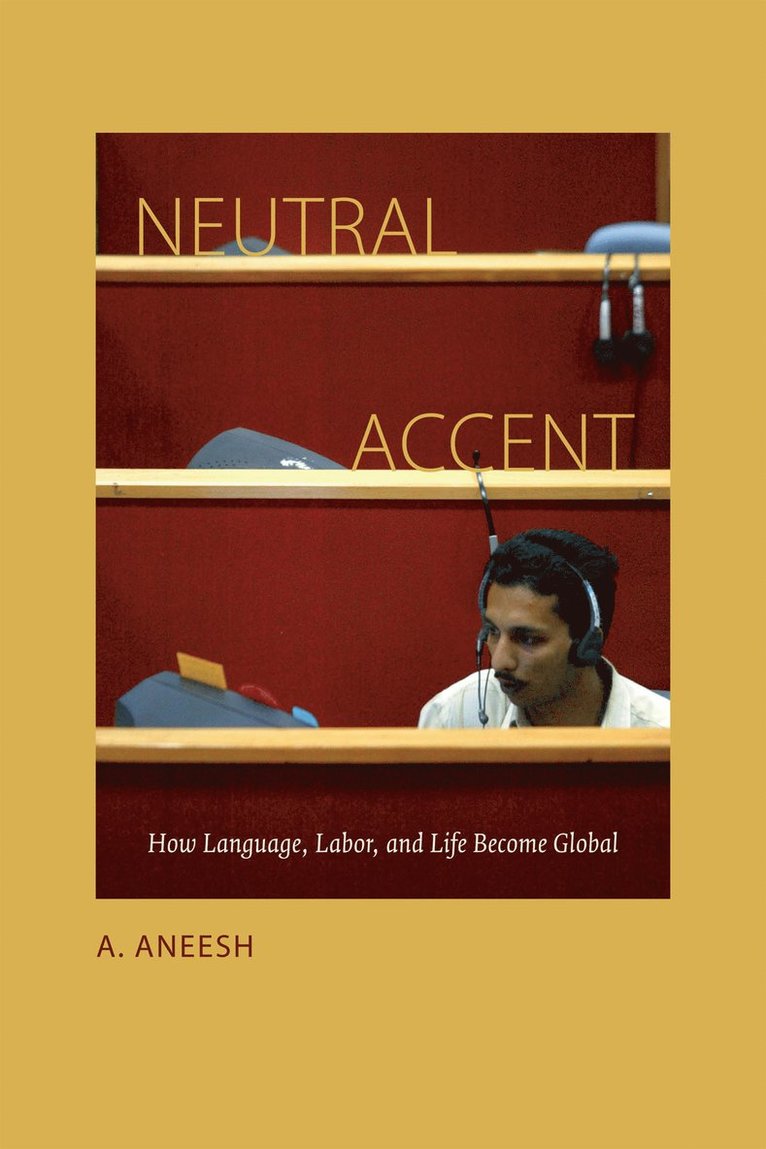
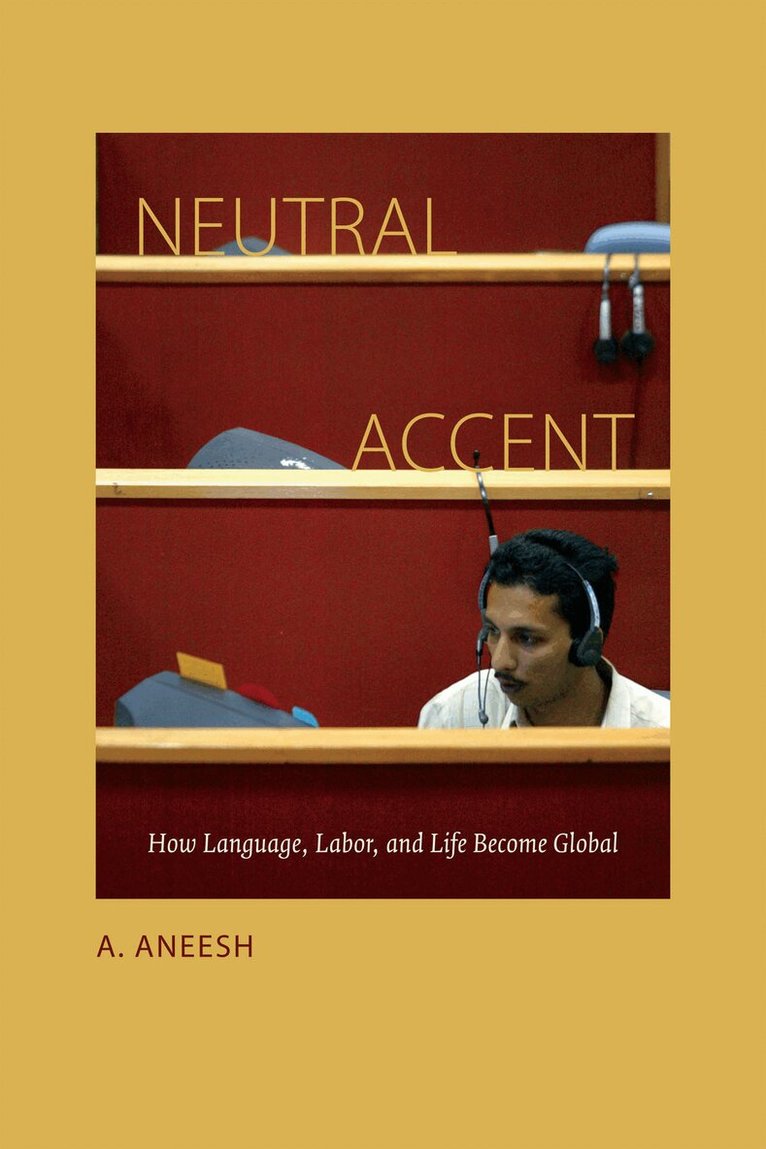
In Neutral Accent, A. Aneesh employs India's call centers as useful sites for studying global change. The horizon of global economic shift, the consequences of global integration, and the ways in which call center work "neutralizes" racial, ethnic, and national identities become visible from the confines of their cubicles. In his interviews with call service workers and in his own work in a call center in the high tech metropolis of Gurgoan, India, Aneesh observed the difficulties these workers face in bridging cultures, laws, and economies: having to speak in an accent that does not betray their ethnicity, location, or social background; learning foreign social norms; and working graveyard shifts to accommodate international customers. Call center work is cast as independent of place, space, and time, and its neutrality-which Aneesh defines as indifference to difference-has become normal business practice in a global economy. The work of call center employees in the globally integrated marketplace comes at a cost, however, as they become disconnected from the local interactions and personal relationships that make their lives anything but neutral.
323 kr
Skickas inom 10-15 vardagar
In Neutral Accent, A. Aneesh employs India's call centers as useful sites for studying global change. The horizon of global economic shift, the consequences of global integration, and the ways in which call center work "neutralizes" racial, ethnic, and national identities become visible from the confines of their cubicles. In his interviews with call service workers and in his own work in a call center in the high tech metropolis of Gurgoan, India, Aneesh observed the difficulties these workers face in bridging cultures, laws, and economies: having to speak in an accent that does not betray their ethnicity, location, or social background; learning foreign social norms; and working graveyard shifts to accommodate international customers. Call center work is cast as independent of place, space, and time, and its neutrality-which Aneesh defines as indifference to difference-has become normal business practice in a global economy. The work of call center employees in the globally integrated marketplace comes at a cost, however, as they become disconnected from the local interactions and personal relationships that make their lives anything but neutral.