
A Borgmann – författare
Visar alla böcker från författaren A Borgmann. Handla med fri frakt och snabb leverans.
2 produkter
2 produkter
Häftad, Engelska, 2003
309 kr
Skickas inom 3-6 vardagar
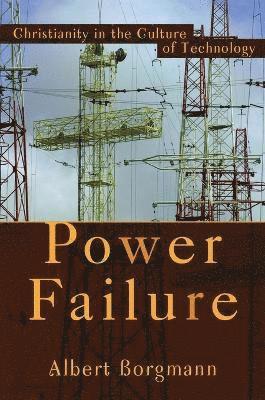
We live in a culture shaped and fueled by technology. Usually we equate access to technology with opportunity and the chance to pursue "the good life." Power Failure raises some crucial, if disconcerting, questions about technology: If technology liberates us, what kind of liberation does it promise? Are we prospering, and by what definition? Albert Borgmann looks at the relationship between Christianity and technology by examining some of the "invisible" dangers of a technology-driven lifestyle. Specifically, he points out how utility and consumption have replaced connection to physical things and meaningful practices in everyday life. Power Failure calls us to redeem and restrain technology through simple Christian practices, including citizen-based decision making, shared meals, and daily Scripture reading.
Häftad, Engelska, 1974
1 103 kr
Skickas inom 10-15 vardagar
This book deals with the philosophy of language and with what is at issue in the philosophy of language. Due to its intensity and diversity, the philosophy of language has attained the position of first philosophy in this century. To show this is the task of Part Two. But the task can be accomplished only if it is first made clear how language came to be a problem in and for philosophy and how this development has influ enced and has failed to influence our understanding of language. This is done in Part One. What is at issue in the philosophy of language today is the question regarding the source of meaning. More precisely the question is whether we have access to such a source. Again Part One presents the necessary foil for Part Two in showing how meaning was thought to originate in Western history and how the rise of the philosophy of language and the eclipse of the origin of meaning occurred jointly. Today the question of meaning has come to a peculiarly elaborate and fruitful issue in the philosophy of language, and the fate of the philosophy of language is bound up with the future possibilities of meaning.