A. Carly Buxton - Böcker
Visar alla böcker från författaren A. Carly Buxton. Handla med fri frakt och snabb leverans.
3 produkter
3 produkter
752 kr
Skickas inom 7-10 vardagar
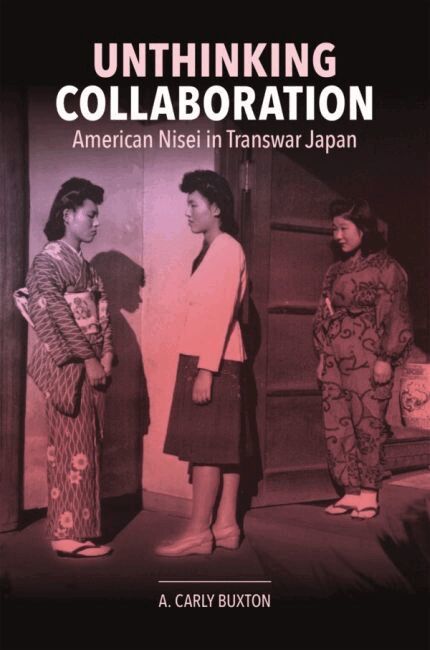
Unthinking Collaboration uncovers the little-known history of Japanese Americans who weathered the years of World War II on Japanese soil. Severed from the country of their birth when the attack on Pearl Harbor abruptly halted all passenger traffic on the Pacific, these Nisei faced the years of total war as members of the Japanese populace, yet as the target of anti-American propaganda and suspicion. Whereas their white American counterparts were sequestered by Japanese authorities, placed on house arrest, or sent home on exchange ships during the war, American Nisei in Japan were left to contribute to the war effort alongside their Japanese neighbors as soldiers, cryptographers, interpreters, and in farming and manufacturing. When the dust of air raid bombings cleared, many such Nisei transitioned into roles in service of the Allied occupation and its goals of democratization and demilitarization. As censors, translators, interpreters, and administrative staff, they played integral roles in facilitating American-Japanese interaction, as well as in shaping policies and public opinion in the postwar era. Weaving archival data with oral histories, personal narratives, material culture, and fiction, Unthinking Collaboration emphasizes the heterogeneity of Japanese immigrant experiences, and sheds light on broader issues of identity, race, and performance of individuals growing up in a bicultural or multicultural context. By distancing "collaboration" from its default elision with moral judgment, and by incorporating contemporary findings from psychology and behavioral science about the power of the subconscious mind to influence human behavior, author A. Carly Buxton offers an alternative approach to history—one that posits historical subjects as deeply embedded in the realities of their physical and discursive environment. Walking beside Nisei as they navigate their everyday lives in transwar Japan, readers "un-think" long-held assumptions about the actions and decisions of individuals as represented in history. The result is an ambitious historical study that speaks to readers who are interested in broader questions of race and trust, empire-building, World War II and its legacy on both the Western and Pacific fronts, and to all who consider questions of loyalty, treason, assimilation, and collaboration.
279 kr
Skickas inom 11-20 vardagar
Unthinking Collaboration uncovers the little-known history of Japanese Americans who weathered the years of World War II on Japanese soil. Severed from the country of their birth when the attack on Pearl Harbor abruptly halted all passenger traffic on the Pacific, these Nisei faced the years of total war as members of the Japanese populace, yet as the target of anti-American propaganda and suspicion. Whereas their white American counterparts were sequestered by Japanese authorities, placed on house arrest, or sent home on exchange ships during the war, American Nisei in Japan were left to contribute to the war effort alongside their Japanese neighbors as soldiers, cryptographers, interpreters, and in farming and manufacturing. When the dust of air raid bombings cleared, many such Nisei transitioned into roles in service of the Allied occupation and its goals of democratization and demilitarization. As censors, translators, interpreters, and administrative staff, they played integral roles in facilitating American-Japanese interaction, as well as in shaping policies and public opinion in the postwar era. Weaving archival data with oral histories, personal narratives, material culture, and fiction, Unthinking Collaboration emphasizes the heterogeneity of Japanese immigrant experiences, and sheds light on broader issues of identity, race, and performance of individuals growing up in a bicultural or multicultural context. By distancing "collaboration" from its default elision with moral judgment, and by incorporating contemporary findings from psychology and behavioral science about the power of the subconscious mind to influence human behavior, author A. Carly Buxton offers an alternative approach to history—one that posits historical subjects as deeply embedded in the realities of their physical and discursive environment. Walking beside Nisei as they navigate their everyday lives in transwar Japan, readers "un-think" long-held assumptions about the actions and decisions of individuals as represented in history. The result is an ambitious historical study that speaks to readers who are interested in broader questions of race and trust, empire-building, World War II and its legacy on both the Western and Pacific fronts, and to all who consider questions of loyalty, treason, assimilation, and collaboration.
291 kr
Skickas inom 7-10 vardagar
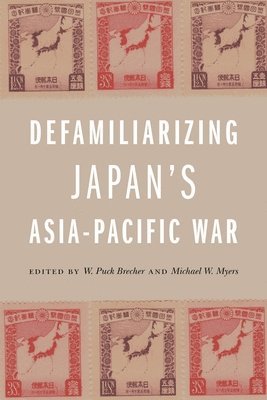
This wide-ranging collection seeks to reassess conventional understanding of Japan’s Asia-Pacific War by defamiliarizing and expanding the rhetorical narrative. Its nine chapters, diverse in theme and method, are united in their goal to recover a measured historicity about the conflict by either introducing new areas of knowledge or reinterpreting existing ones. Collectively, they cast doubt on the war as familiar and recognizable, compelling readers to view it with fresh eyes.Following an introduction that problematizes timeworn narratives about a "unified Japan" and its "illegal war" or "race war," early chapters on the destruction of Japan’s diplomatic records and government interest in an egalitarian health care policy before, during, and after the war oblige us to question selective histories and moral judgments about wartime Japan. The discussion then turns to artistic/cultural production and self-determination, specifically to Osaka rakugo performers who used comedy to contend with state oppression and to the role of women in creating care packages for soldiers abroad. Other chapters cast doubt on well-trod stereotypes (Japan’s lack of pragmatism in its diplomatic relations with neutral nations and its irrational and fatalistic military leadership) and examine resistance to the war by a prominent Japanese Christian intellectual. The volume concludes with two nuanced responses to race in wartime Japan, one maintaining the importance of racial categories while recognizing the "performance of Japaneseness," the other observing that communities often reflected official government policies through nationality rather than race. Contrasting findings like these underscore the need to ask new questions and fill old gaps in our understanding of a historical event that, after more than seventy years, remains as provocative and divisive as ever.Defamiliarizing Japan’s Asia-Pacific War will find a ready audience among World War II historians as well as specialists in war and society, social history, and the growing fields of material culture and civic history.