Annika A. Culver - Böcker
Visar alla böcker från författaren Annika A. Culver. Handla med fri frakt och snabb leverans.
6 produkter
6 produkter
291 kr
Skickas inom 7-10 vardagar
This wide-ranging collection seeks to reassess conventional understanding of Japan’s Asia-Pacific War by defamiliarizing and expanding the rhetorical narrative. Its nine chapters, diverse in theme and method, are united in their goal to recover a measured historicity about the conflict by either introducing new areas of knowledge or reinterpreting existing ones. Collectively, they cast doubt on the war as familiar and recognizable, compelling readers to view it with fresh eyes.Following an introduction that problematizes timeworn narratives about a "unified Japan" and its "illegal war" or "race war," early chapters on the destruction of Japan’s diplomatic records and government interest in an egalitarian health care policy before, during, and after the war oblige us to question selective histories and moral judgments about wartime Japan. The discussion then turns to artistic/cultural production and self-determination, specifically to Osaka rakugo performers who used comedy to contend with state oppression and to the role of women in creating care packages for soldiers abroad. Other chapters cast doubt on well-trod stereotypes (Japan’s lack of pragmatism in its diplomatic relations with neutral nations and its irrational and fatalistic military leadership) and examine resistance to the war by a prominent Japanese Christian intellectual. The volume concludes with two nuanced responses to race in wartime Japan, one maintaining the importance of racial categories while recognizing the "performance of Japaneseness," the other observing that communities often reflected official government policies through nationality rather than race. Contrasting findings like these underscore the need to ask new questions and fill old gaps in our understanding of a historical event that, after more than seventy years, remains as provocative and divisive as ever.Defamiliarizing Japan’s Asia-Pacific War will find a ready audience among World War II historians as well as specialists in war and society, social history, and the growing fields of material culture and civic history.
Democratizing Luxury
Name Brands, Advertising, and Consumption in Modern Japan
Inbunden, Engelska, 2023
730 kr
Skickas inom 7-10 vardagar
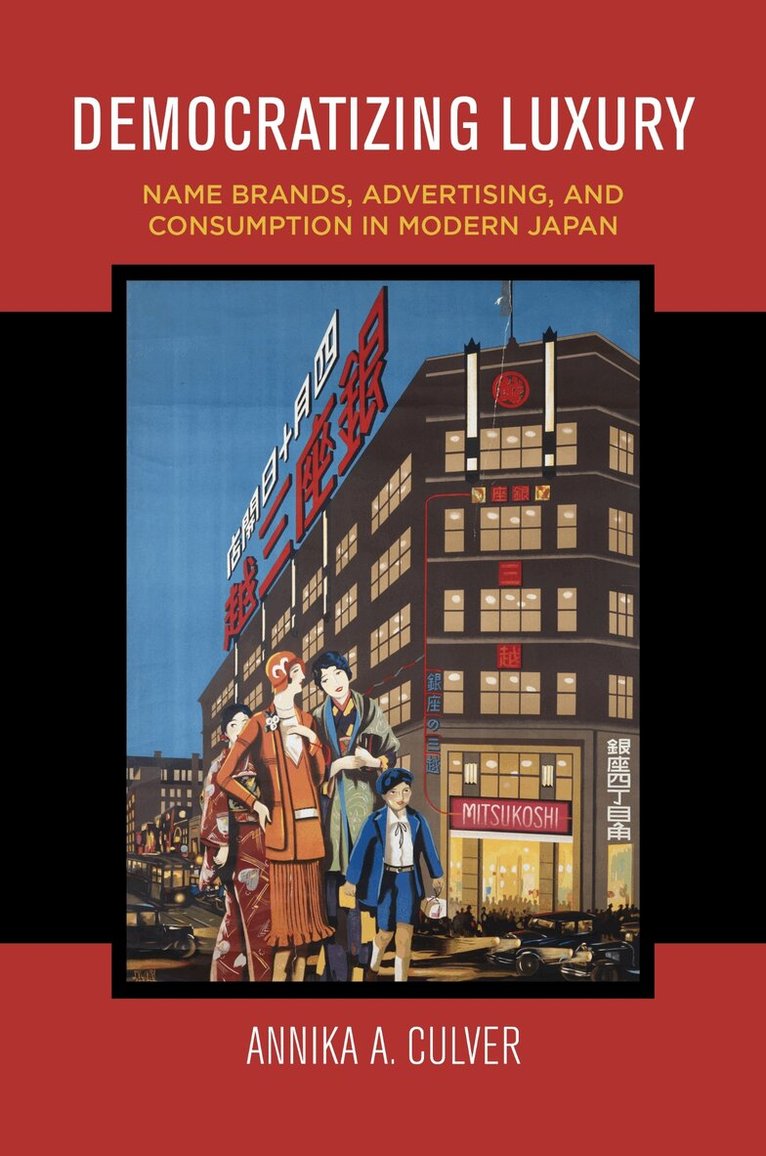
Democratizing Luxury explores the interplay between advertising and consumption in modern Japan by investigating how Japanese companies at key historical moments assigned value, or "luxury," to mass-produced products as an important business model. Japanese name-brand luxury evolved alongside a consumer society emerging in the late nineteenth century, with iconic companies whose names became associated with quality and style. At the same time, Western ideas of modernity merged with earlier artisanal ideals to create Japanese connotations of luxury for readily accessible products. Businesses manufactured items at all price points to increase consumer attainability, while starkly curtailing production for limited editions to augment desirability.Between the late nineteenth and twenty-first centuries, control over family disposable income transformed Japanese middle-class women into an important market. Growth of purchasing power among women corresponded with Japanese goods diffusing throughout the empire, and globally after the Asia-Pacific war (1931–1945). This book offers case studies that examine affordable luxury consumer items often advertised to women, including drinks, beauty products, fashion, and timepieces. Japanese companies have capitalized on affordable luxury since a flourishing domestic mercantile economy began in the Tokugawa period (1603–1868), showcasing brand-name shops, renowned artisans, and mass-produced woodblock prints by famous artists. In the late nineteenth century, personalized service expanded within department stores like Mitsukoshi, Shiseidō cosmetic counters, and designer boutiques. Shiseidō now globally markets invented traditions of omotenashi, Japanese "values" of hospitality expressed in purchasing and consuming its products.In postwar times, when a thriving democracy and middle-class were tied to greater disposable income and consumerism, companies rebuilt a growing consumer base among cautious shoppers: democratizing luxury at reasonable prices and maintaining business patterns of accessibility, high quality, and exemplary service. Nationalism amid economic success soon blended with myths of unique Japanese identity in a mass consumer society, suffused by commodity fetishism with widely available brand names. As the first comprehensive history of iconic Japanese name brands and their unique connotations of luxury and accessibility in modern Japan and elsewhere, Democratizing Luxury explores company histories and reveals strategies that lead customers to consume these alluring commodities.
309 kr
Skickas inom 7-10 vardagar
Democratizing Luxury explores the interplay between advertising and consumption in modern Japan by investigating how Japanese companies at key historical moments assigned value, or "luxury," to mass-produced products as an important business model. Japanese name-brand luxury evolved alongside a consumer society emerging in the late nineteenth century, with iconic companies whose names became associated with quality and style. At the same time, Western ideas of modernity merged with earlier artisanal ideals to create Japanese connotations of luxury for readily accessible products. Businesses manufactured items at all price points to increase consumer attainability, while starkly curtailing production for limited editions to augment desirability.Between the late nineteenth and twenty-first centuries, control over family disposable income transformed Japanese middle-class women into an important market. Growth of purchasing power among women corresponded with Japanese goods diffusing throughout the empire, and globally after the Asia-Pacific war (1931–1945). This book offers case studies that examine affordable luxury consumer items often advertised to women, including drinks, beauty products, fashion, and timepieces. Japanese companies have capitalized on affordable luxury since a flourishing domestic mercantile economy began in the Tokugawa period (1603–1868), showcasing brand-name shops, renowned artisans, and mass-produced woodblock prints by famous artists. In the late nineteenth century, personalized service expanded within department stores like Mitsukoshi, Shiseidō cosmetic counters, and designer boutiques. Shiseidō now globally markets invented traditions of omotenashi, Japanese "values" of hospitality expressed in purchasing and consuming its products.In postwar times, when a thriving democracy and middle-class were tied to greater disposable income and consumerism, companies rebuilt a growing consumer base among cautious shoppers: democratizing luxury at reasonable prices and maintaining business patterns of accessibility, high quality, and exemplary service. Nationalism amid economic success soon blended with myths of unique Japanese identity in a mass consumer society, suffused by commodity fetishism with widely available brand names. As the first comprehensive history of iconic Japanese name brands and their unique connotations of luxury and accessibility in modern Japan and elsewhere, Democratizing Luxury explores company histories and reveals strategies that lead customers to consume these alluring commodities.
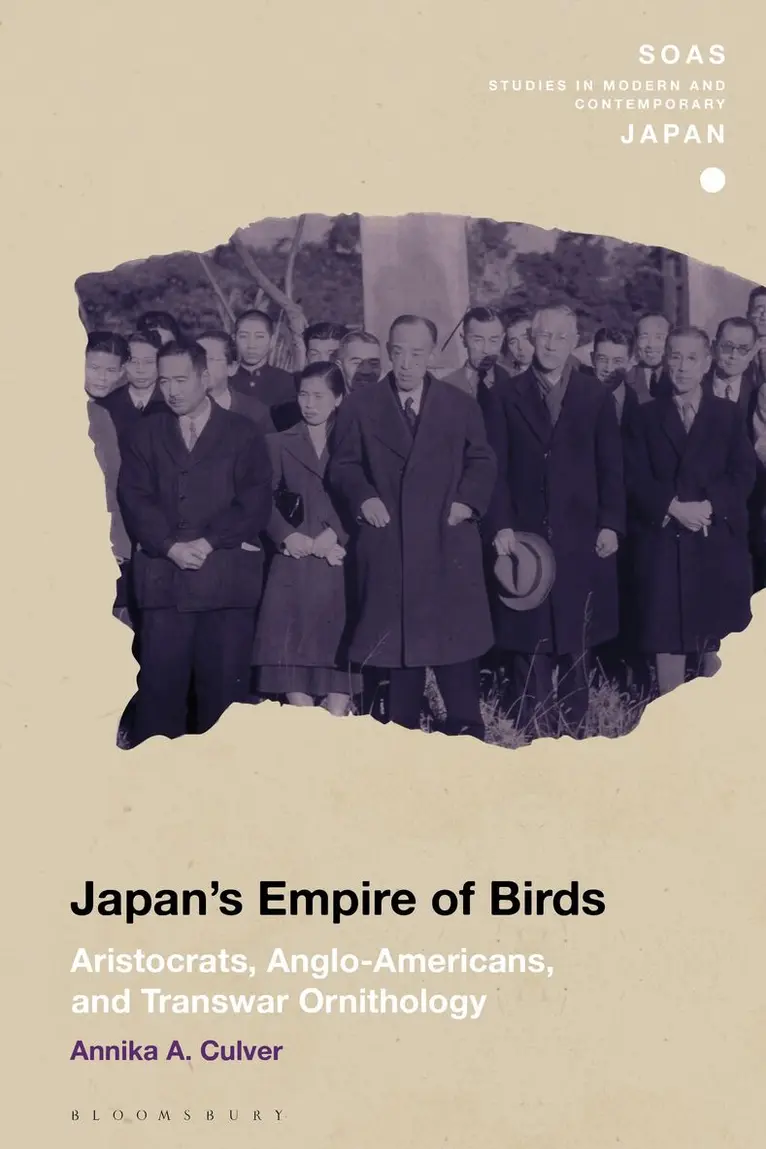
Japan's Empire of Birds
Aristocrats, Anglo-Americans, and Transwar Ornithology
Inbunden, Engelska, 2022
1 314 kr
Skickas inom 10-15 vardagar
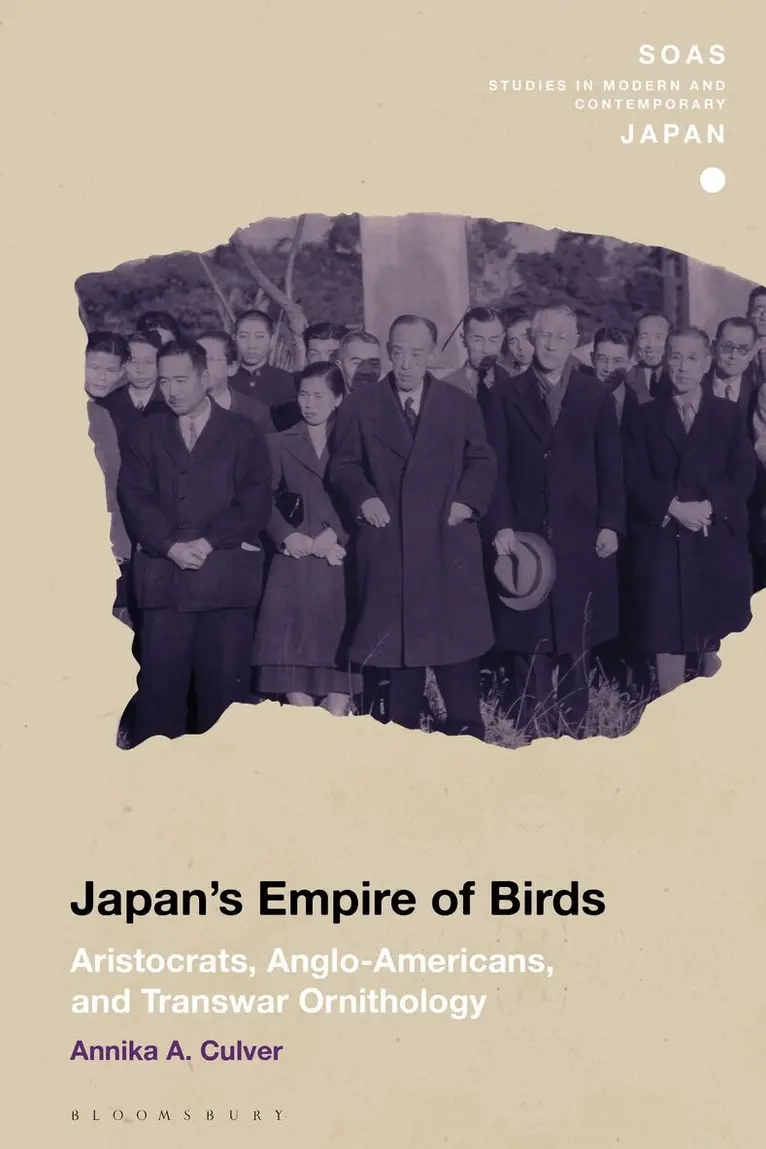
As a transnational history of science, Japan's Empire of Birds: Aristocrats, Anglo-Americans, and Transwar Ornithology focuses on the political aspects of highly mobile Japanese explorer-scientists, or cosmopolitan gentlemen of science, circulating between Japanese and British/American spaces in the transwar period from the 1920s to 1950s.Annika A. Culver examines a network of zoologists united by their practice of ornithology and aristocratic status. She goes on to explore issues of masculinity and race related to this amidst the backdrop of imperial Japan's interwar period of peaceful internationalism, the rise of fascism, the Japanese takeover of Manchuria, and war in China and the Pacific. Culver concludes by investigating how these scientists repurposed their aims during Japan's Allied Occupation and the Cold War. Inspired by geographer Doreen Massey, themes covered in the volume include social space and place in these specific locations and how identities transform to garner social capital and scientific credibility in transnational associations and travel for non-white scientists.
420 kr
Skickas inom 10-15 vardagar
As a transnational history of science, Japan's Empire of Birds: Aristocrats, Anglo-Americans, and Transwar Ornithology focuses on the political aspects of highly mobile Japanese explorer-scientists, or cosmopolitan gentlemen of science, circulating between Japanese and British/American spaces in the transwar period from the 1920s to 1950s.Annika A. Culver examines a network of zoologists united by their practice of ornithology and aristocratic status. She goes on to explore issues of masculinity and race related to this amidst the backdrop of imperial Japan's interwar period of peaceful internationalism, the rise of fascism, the Japanese takeover of Manchuria, and war in China and the Pacific. Culver concludes by investigating how these scientists repurposed their aims during Japan's Allied Occupation and the Cold War. Inspired by geographer Doreen Massey, themes covered in the volume include social space and place in these specific locations and how identities transform to garner social capital and scientific credibility in transnational associations and travel for non-white scientists.
751 kr
Tillfälligt slut