A. K. Yousuf Haroon - Böcker
Visar alla böcker från författaren A. K. Yousuf Haroon. Handla med fri frakt och snabb leverans.
3 produkter
3 produkter
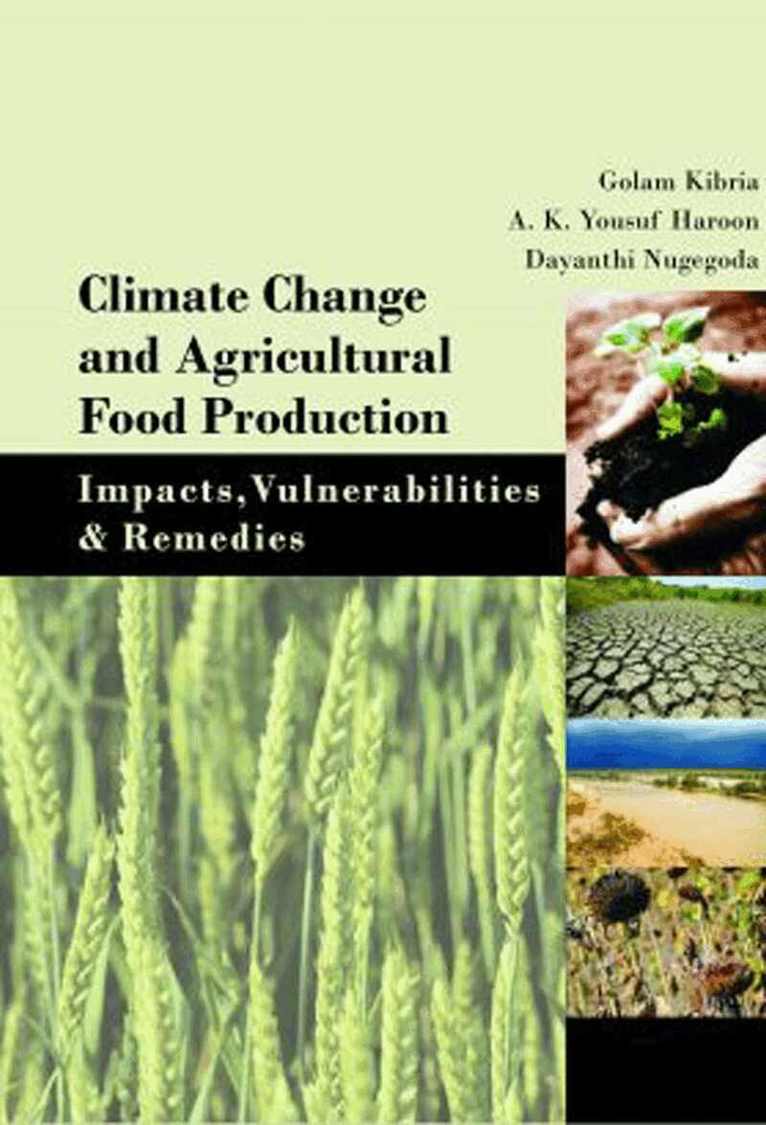
Climate Change and Agricultural Food Production
Impacts, Vulnerabilities & Remedies
Häftad, Engelska, 2013
826 kr
Skickas inom 7-10 vardagar
The textbook Climate Change and Agricultural Food Production: Impacts, Vulnerabilities and Remedies provides an extensive overview of the effects of climate change on all sectors of agricultural food production, including agriculture, livestock, and fisheries. It also covers food contamination and food safety, including microbial pathogens, toxic biological, and toxic chemical contaminants, as well as food security and measures to adapt to and mitigate the impacts of climate change on these sectors. The book presents information from research results and data from around the world, including Africa, Asia, Australia, Europe, Latin America, North America, the Polar Regions, and Small Island Nations. It has been designed as a textbook, reference book, and extension book, and is written in simple and plain English, with key facts, acronyms, and a glossary provided in each chapter, along with tables and figures to benefit a wide range of readers.
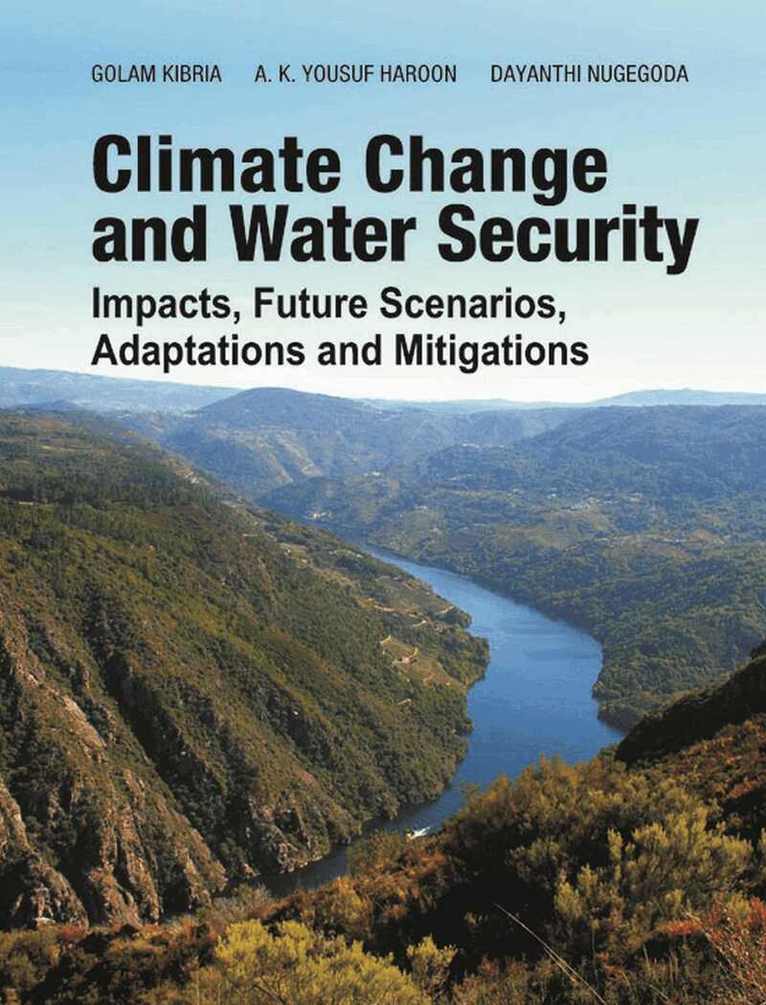
Climate Change and Water Security
Impacts, Future Scenarios, Adaptations and Mitigations
Häftad, Engelska, 2016
1 130 kr
Skickas inom 7-10 vardagar
The book is an attempt to address the important facts and figures relating to climate change impacts on water security: a. Climate change impacts on water resources; b. Climate change impacts on water related diseases; c. Climate change impacts on water dependent biodiversity and ecosystems; d. Climate change adaptation and mitigation measures for water security; and e. Climate change and greenhouse gas emissions from water sector.Climate change is an additional stress on water security in addition to other chemical and biological stressors.Rivers depending on the Himalayan glaciers (the Indus, Ganges, Brahmaputra) could face water shortages or reduced river run-off due to retreat of glaciers, and this would cause dramatic impact on drinking water supplies, biodiversity, hydropower generation, industry, agriculture, ecosystems on which about 2.4 billion people in Asia depends.As a consequence of drought, the annual stream flow in the Murray-Darling basin (Australia) is projected to fall by 10-25% by 2050 and 16-48% by 2100 which would have severe consequences on irrigated agriculture in the region.Rise of water temperatures may enhance proliferation of harmful algae (some of algae produce toxins), causing water quality problems for recreational activities, fisheries/fish farming, irrigation, and drinking and seafood contamination with algal toxins.Global warming is projected to increase river water temperatures in a number of countries including the USA (the Mississippi, Colorado, and Mackenzie basins), Europe (the Rhine, Danube, and Rhone basins), eastern China (the Yangtze), and Australia (the Murray-Darling).Sea-level rise (SLR) will cause salinization of coastal groundwater resources, and may damage or destroy many coastal ecosystems including wetlands, salt marshes, and may cause saline water intrusion in agriculture and freshwater aquaculture facilities, a shift in community composition of mangrove forests, etc.It is projected that a 1°C rise of temperature in the future can increase the initial relative risks of cholera by 15 to 29 percent. Both rise of temperature and sea-level may enhance dengue and malaria.To adapt to climate change, we need increasing storage capacity, rainwater harvesting, improvement of water use efficiency, desalination of seawater, water savings, mandatory rainwater tanks in new and old buildings, use of recycled/reclaimed water, virtual water trade, improvements in irrigation efficiency, modification of irrigation techniques, reducing leakage of irrigation pipes, selection of climate resilient crops to save scarcity of water resources.Water processes (abstraction, treatment, end use and wastewater treatment) do emit Greenhouse gases (GHG). In irrigation, pumping of water is the most energy-demanding process and consequently causes more GHG emissions (CO2). Dams/reservoirs emit GHGs such as methane.The most effective way to decrease carbon footprint in water sectors is to use low carbon emitting fuels such as, renewable energy (solar, wind or nuclear). Ecological toilet may be promoted to reduce GHG emissions from septic tanks in developing countries.Stopping or slowing deforestation, forest degradation and sustainable management of forests may significantly contribute to avoid GHG emissions, may conserve water resources and prevent flooding, reduce run-off, control erosion, reduce siltation of rivers, and protect fisheries and preserve biodiversity.Mangrove ecosystems can play an important role in the protection of the coast from the natural disasters (cyclones, tsunamis) and could act as a barrier (live seawalls) against disasters and help minimize damage to property and life.
2 794 kr
Skickas inom 7-10 vardagar
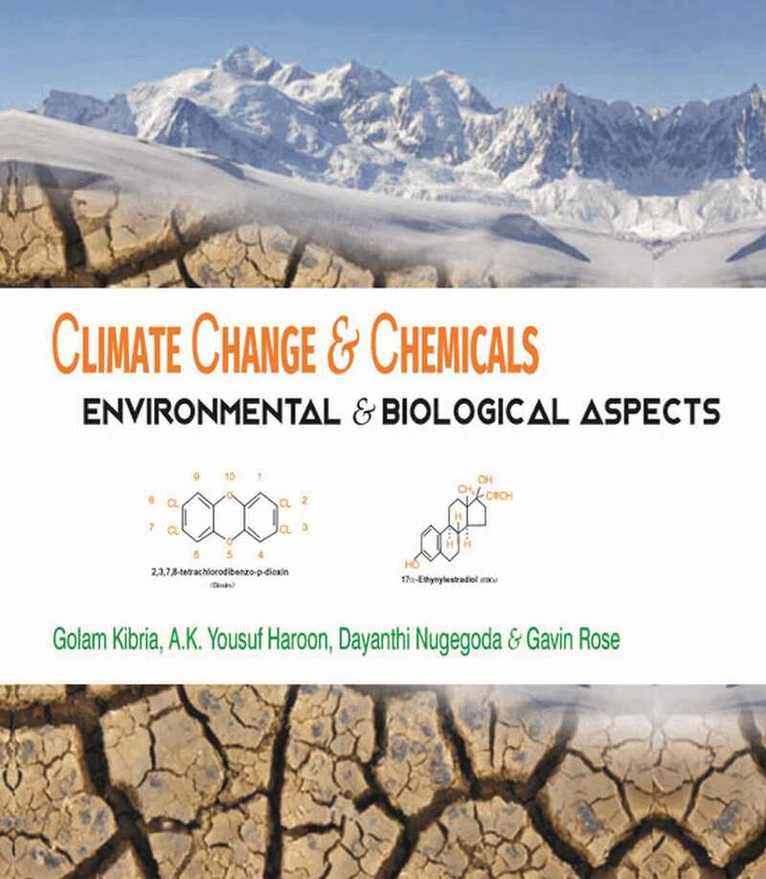
The book Climate Change and Chemicals - Environmental and Biological Aspects has addressed the two key environmental issues : climate change and chemical impacts on human health, environment and agricultural production with reference to chemistry, Ecotoxicology, toxicology, and biology. The book reviewed and summarised research results and information from both developed and developing countries including Asia-Pacific, Australasia and other parts of the world. Part-1 of the book Climate Change Impacts provides an account of greenhouse gases (carbon dioxide, methane and nitrous oxide) and its relationships with climate change and likely impacts on water resources, agriculture and livestock, fisheries and aquatic ecosystems and human health. The key data and information provided in Part-1 are as follows: Climate change and greenhouse gases: Carbon dioxide emissions from different countries of the world; measures to reduce greenhouse gas emissions including key mitigation technologies; and projections for future climate changes (temperatures and sea levels; precipitation; glaciers and cyclones) and Kyoto protocol and Copenhagen Accord (COP 15). Water resources: World freshwater resources and projections for future climate change impacts on water resources (surface waters; floods and droughts; ground water; water quality; snows and glaciers melting; sea level rise; shared water resources) and adaptation measures. Agriculture and livestock : Future worlds agricultural and livestock production relating to climate changes (enhanced CO2 effect on C3 and C4 plants/crops; effects of higher temperature; precipitation, water availability, irrigation; extreme events and climate variability; sea level rise; and pests and diseases) and adaptation measures. Fisheries and aquatic ecosystems : Effects of climate change on world fisheries and aquaculture production and projected impacts on freshwater, marine and terrestrial ecosystems (rising temperatures, dissolved oxygen and hypoxia; toxicological effects of contaminants; rising CO2 and acidification of oceans; rising temperatures and fish growth and fish recruitment) and adaptation measures. Human health : Observed climate change related health effects in the world; Projected impacts of climate change on human health (heat waves; ultra violet radiation; floods and storms; drought; forest fire; El Niño; diseases malaria, dengue, cholera; food poisoning and aeroallergens) and adaptation measures. Part-2 of the book Chemical Impacts highlights the impact of arsenic, heavy metals, pesticides, dioxins, endocrine disrupting chemicals, pharmaceuticals (human and veterinary drugs) and freshwater and marine biotoxins. The key data and information provided in Part-2 are as follows: Arsenic (As) : Arsenic contamination in the global environment; arsenic speciation; environmental and biological impacts (toxicity of arsenic to biota, plants and human; environmental and food safety guidelines for arsenic) and arsenic contamination in Bangladesh. Heavy metals (Cd, Cu, Pb, Hg, Zn) :- Physico-chemical properties; speciation; bio-availability and bio-uptake, environmental and biological impacts (bio-accumulation; toxicity on aquatic organisms and human health; water and food quality guidelines), global trends in heavy metals in road dusts. Pesticides : insecticides, herbicides and fungicides, their chemical classes, and chemical properties (half-life, water solubility, Koc, Log Kow, pKa), pesticide usage in Asia, Australia and in the world, physico-chemical properties (bio-accumulation; persistence; mobility; mode of action), environmental and biological impacts (toxicity and ecotoxicity for mammals, birds, fish, daphnia, algae and bees), effects on biota and human health, pesticides residue in human breast milk from developed and developing countries. Dioxins (PCDDs), furans (PCDFs) and PCBs : Physico-chemical properties (persistence; bio-accumulation; mode of action; toxicity and toxic equivalent factors for mammals, birds and fish), environmental and biological impacts (global environmental concentrations in the air, soil, sediments, vegetation, food, human women milk; effects on biota and human health; guidelines), dioxins related compounds in the Asia-Pacific and Australia region (e-waste recycling sites, human breast milk and agriculture produce). Endocrine disrupting chemicals (EDCs) : (Estrone; 17b-estradiol; 17a-ethynylestradiol; estriol; nonylphenol; octylphenol; bisphenol-A; phthalates; tributyltin) - physico-chemical properties and fate and transport; environmental and biological impacts (EDCs in worlds environment surface waters, sediments, groundwater, rainwater, biota, drinking water; ecotoxicity and toxicity of EDCs; ; effects on biota and humans health; drinking and water quality guidelines), endocrine disrupting chemicals in Asian mussels, USA streams and Australian rural environment. Pharmaceuticals (human and veterinary) : Classification; usage; physico-chemical properties (fate; persistence; excretion), environmental risk assessment; environmental and biological impacts (concentrations in worlds environmental waters WWTPs, surface waters, groundwater, and drinking water); ecotoxciological effects on biota; effects on human health; environmental water quality guideline and management of pharmaceuticals in the environment. Biotoxins (freshwater and marine) : freshwater biotoxins (anatoxin-a; anatoxin-a(s); saxitoxins; microcystins; nodularins; cylindrospermopsin): conditions for algal blooms; cyanobacteria species; physico-chemical characteristics of cyanotoxins (chemical nature; persistence and degradation), environmental and biological impacts (cyantoxins from surface waters of the world; bio-accumulation; effects of cyanotoxins on terrestrial plants, biota, drinking water, mammals and human; species causing off-flavour compounds; regulations and guidelines for cyanotoxins); marine biotoxins: amnesic shellfish poisoning (domoic acid); diarrhetic shell fish poisoning(okadaic acid); neurotoxic shellfish poisoning (brevitoxins); paralytic shellfish poisoning (saxitoxins); ciguatera fish poisoning (ciguatoxins), toxic marine algal species; chemical nature; toxicity to aquatic organisms and human; cases and outbreak in the world; preventive measures and regulatory limits of marine biotoxins. The book would be beneficial to academic and research institutes and university students (under-graduates and post-graduates), agriculturists, bio-medical scientists, chemists, chemical/hydro-engineers, ecotoxicologists, environmental scientists, fisheries biologists, health professionals, hydro-geologists, water and public health scientists, and government planners, regulators and environmental campaigners.