A. Logrieco – författare
Visar alla böcker från författaren A. Logrieco. Handla med fri frakt och snabb leverans.
6 produkter
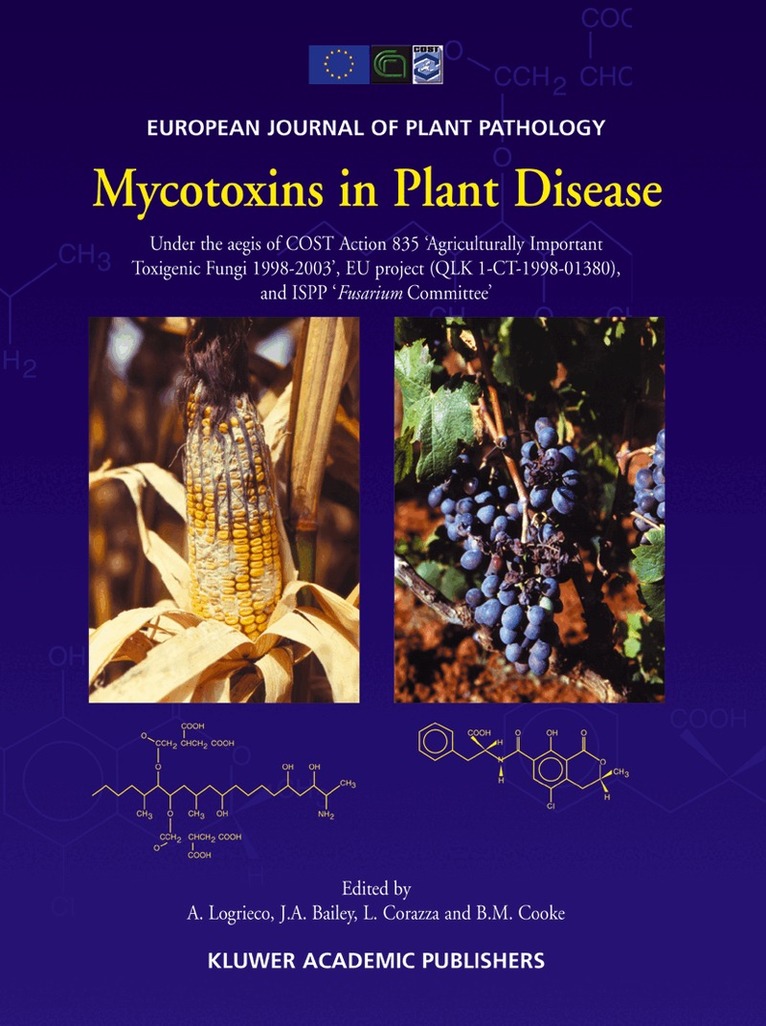
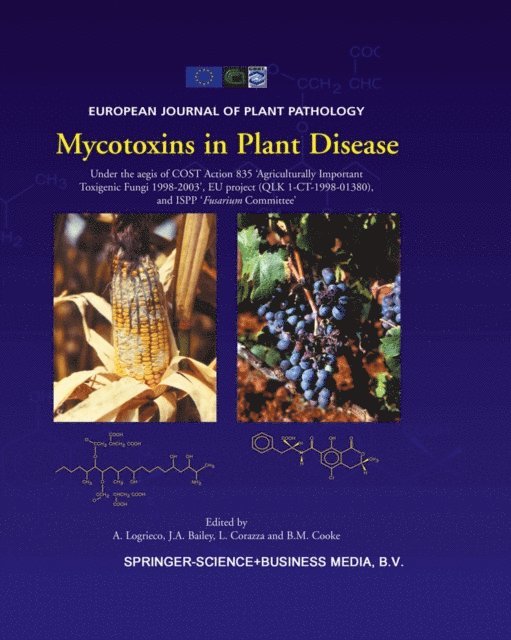
Mycotoxins in Plant Disease
Under the aegis of COST Action 835 ‘Agriculturally Important Toxigenic Fungi 1998-2003’, EU project (QLK 1-CT-1998-01380), and ISPP ‘Fusarium Committee’
Av A. Logrieco, John A. Bailey m. fl.
Inbunden, 2002
1096 kr
Lägg i varukorg
The accumulation of mycotoxins in plants and plant products is one of the most important consequences of plant diseases, especially those caused by species of Fusarium, Aspergillus and Penicillium. It has been estimated that 25 per cent of world food crops, including many basic food crops, are …
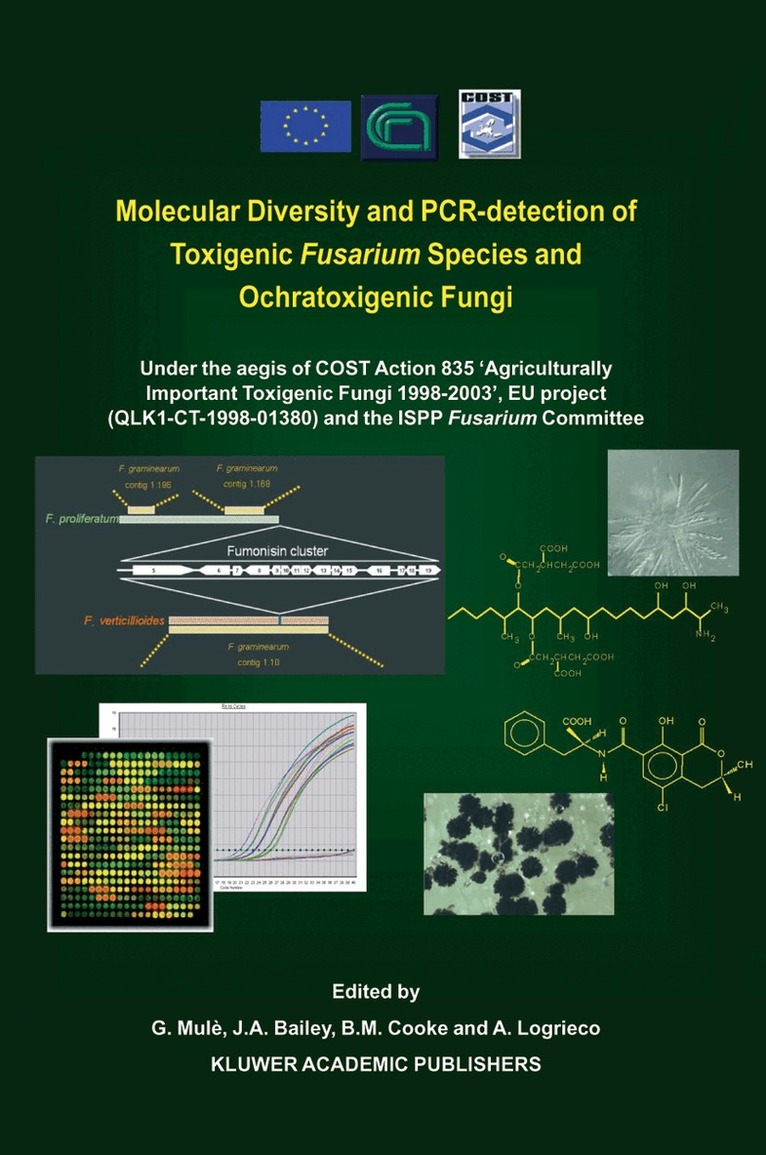
Molecular Diversity and PCR-detection of Toxigenic Fusarium Species and Ochratoxigenic Fungi
Under the aegis of COST Action 835 ‘Agriculturally Important Toxigenic Fungi 1998–2003’, EU project (QLK1-CT-1998-01380) and the ISPP ‘Fusarium Committee’
Av G. Mulè, John A. Bailey m. fl.
Inbunden, 2004
1096 kr
Lägg i varukorg
Toxigenic Fusarium species and ochratoxigenic fungi are responsible for plant diseases which have important effects on both human and animal health. The development of rapid, robust and sensitive detection methods based on molecular technologies is needed to identify fungal contamination in the …
Molecular Diversity and PCR-detection of Toxigenic Fusarium Species and Ochratoxigenic Fungi
Under the aegis of COST Action 835 ‘Agriculturally Important Toxigenic Fungi 1998–2003’, EU project (QLK1-CT-1998-01380) and the ISPP ‘Fusarium Committee’
Av G. Mule, John A. Bailey m. fl.
2004
1666 kr
Lägg i varukorg
Toxigenic Fusarium species and ochratoxigenic fungi are responsible for plant diseases which have important effects on both human and animal health. The development of rapid, robust and sensitive detection methods based on molecular technologies is needed to identify fungal contamination in the …
Molecular Diversity and PCR-detection of Toxigenic Fusarium Species and Ochratoxigenic Fungi
Under the aegis of COST Action 835 ‘Agriculturally Important Toxigenic Fungi 1998–2003’, EU project (QLK1-CT-1998-01380) and the ISPP ‘Fusarium Committee’
Av G. Mulè, John A. Bailey m. fl.
Häftad, 2010
1096 kr
Lägg i varukorg
Toxigenic Fusarium species and ochratoxigenic fungi are responsible for various plant diseases which have important consequential effects on both human and animal health worldwide. The development of rapid, robust and sensitive detection methods based on new molecular technologies is urgently …
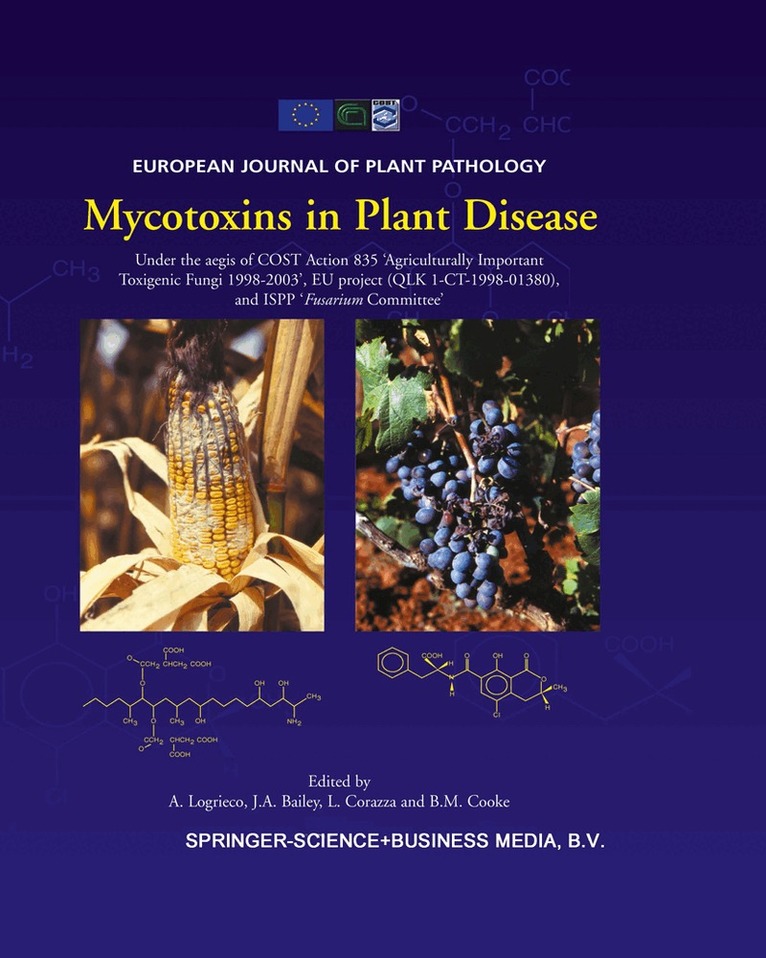
Mycotoxins in Plant Disease
Under the aegis of COST Action 835 ‘Agriculturally Important Toxigenic Fungi 1998-2003’, EU project (QLK 1-CT-1998-01380), and ISPP ‘Fusarium Committee’
Av B.M. Cooke, L. Corazza m. fl.
E-bok, 2013
1459 kr
Lägg i varukorg
There is an urgent need to expand our knowledge of both the nature of the toxigenic fungi that are widespread on economically-important plants and the effect of their toxic secondary metabolites on human health. Informa tion about the production of mycotoxins by plant pathogens, particularly by …
Mycotoxins in Plant Disease
Under the aegis of COST Action 835 ‘Agriculturally Important Toxigenic Fungi 1998-2003’, EU project (QLK 1-CT-1998-01380), and ISPP ‘Fusarium Committee’
Av A. Logrieco, John A. Bailey m. fl.
Häftad, 2014
1096 kr
Lägg i varukorg
There is an urgent need to expand our knowledge of both the nature of the toxigenic fungi that are widespread on economically-important plants and the effect of their toxic secondary metabolites on human health. Informa tion about the production of mycotoxins by plant pathogens, particularly by …