A. M. C. Waterman - Böcker
Visar alla böcker från författaren A. M. C. Waterman. Handla med fri frakt och snabb leverans.
4 produkter
4 produkter
428 kr
Skickas inom 7-10 vardagar
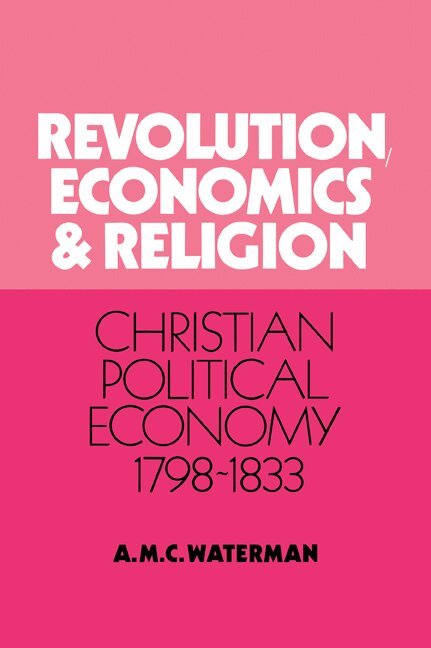
Malthus's Essay on Population was seen in 1798 as a complete refutation of Godwin and all 'Jacobin' ideology. It proved that a state of equality and justice for all was unfeasible; and it demonstrated the inevitability and beneficence of private property and political institutions. But its central theme, the dominance of scarcity in human affairs, presented the theological 'problem of evil' in novel and threatening form. For thirty-five years both the economics and the theology of the Essay were modified and refined: first by Paley, Sumner and Malthus himself, and later by Copleston, Whately and Chalmers. The result was 'Christian Political Economy': an ideological alliance of political economy and Christian theology, congenial to a new 'liberal-conservatism' in the early nineteenth century, which found middle ground between the ultra-tory defence of the ancien régime and a 'radical' repudiation of existing institutions. Professor Waterman analyses this story of the 'intellectual repulse of revolution', and describes the ideological alliance of political economy and Christian theology after 1798.
1 192 kr
Skickas inom 7-10 vardagar
Malthus's Essay on Population was seen in 1798 as a complete refutation of Godwin and all 'Jacobin' ideology. It proved that a state of equality and justice for all was unfeasible; and it demonstrated the inevitability and beneficence of private property and political institutions. But its central theme, the dominance of scarcity in human affairs, presented the theological 'problem of evil' in novel and threatening form. For thirty-five years both the economics and the theology of the Essay were modified and refined: first by Paley, Sumner and Malthus himself, and later by Copleston, Whately and Chalmers. The result was 'Christian Political Economy': an ideological alliance of political economy and Christian theology, congenial to a new 'liberal-conservatism' in the early nineteenth century, which found middle ground between the ultra-tory defence of the ancien régime and a 'radical' repudiation of existing institutions. Professor Waterman analyses this story of the 'intellectual repulse of revolution', and describes the ideological alliance of political economy and Christian theology after 1798.
1 638 kr
Skickas inom 10-15 vardagar
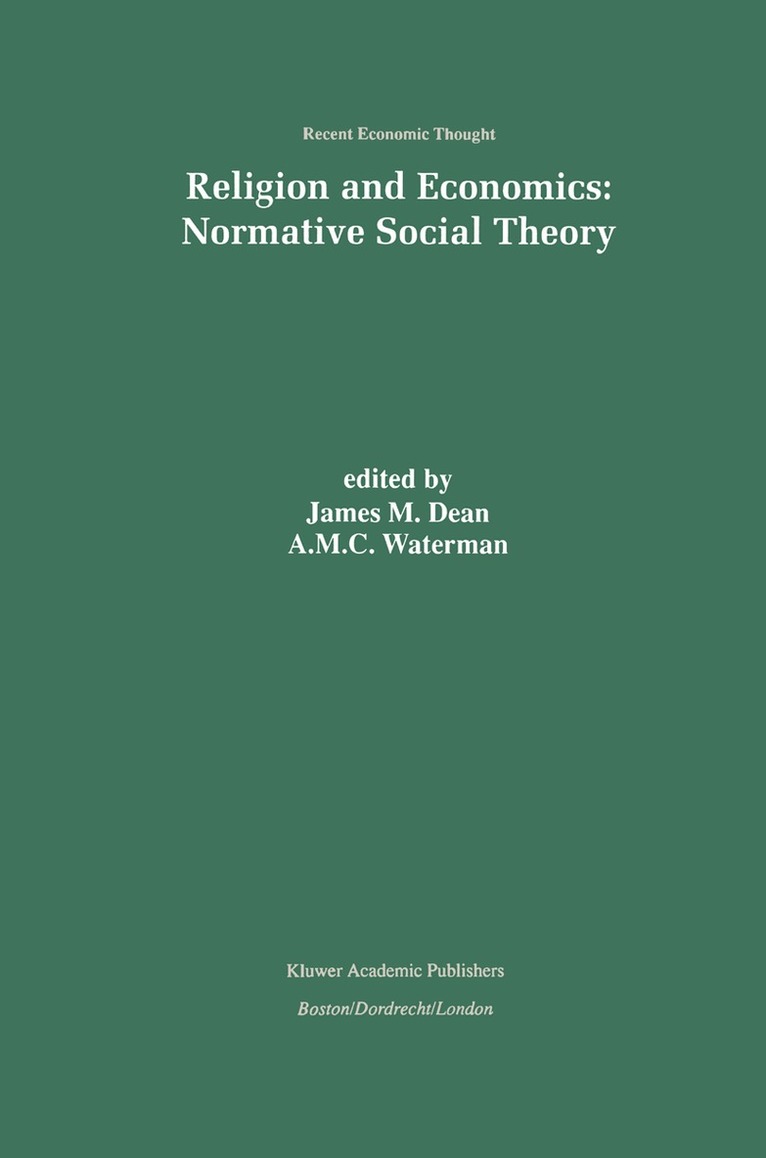
A sequel to "Economics and Religion: Are They Distinct?", this volume presents a set of case studies of ways in which economics and theology may actually have been combined in the real world. As in the previous volume, these case studies were written first and then sent as a complete set to a second group of authors whose function was to act as a jury. The commentators were asked whether the combination of (putative) insights of theology with the (putative) scientific knowledge supplied by economics are intellectually defensible or actually fruitful. The case studies are printed in the first part of this book in roughly chronological order of their historical emergence. The interpretative essays are printed in the second part in alphabetical order.
1 638 kr
Skickas inom 10-15 vardagar
Normative Social Theory James M. Dean and A. M. C. Waterman University of Manitoba 1. Economics and Religion Once Again This hook is a sequel to Economics and Religion: Are They Distinct? (Brennan and Waterman 1994). That volume was motivated by a frustration born of many disappointing encounters between economists and theologians in the 1980s. Can bishops, synods, and other voices of organized religion bring any interesting (and disinterested) contribution to the public policy debate? If so, what is the relation of their contribution to that of the purely "secular" knowledge economists believe they can supply? Can economists bring any interesting (and disinterested) contribution to the public policy debate? If so, what is the relation of their contribution to the fundamental values that inform social ethics and that are still guarded to a large extent by religious tradition? All too often the two sides talked at cross-purposes. Well-intentioned economists coexisted for a few hours or days with well intentioned theologians whose manner of conceiving social reality was radically incompatible with their own. There seemed to be no common ground. The first requisite of any genuine conversation is an agreed conceptual framework that is able to accommodate the peculiar social vision both of the economist and of theologian, and to display the logical relation between the two.