
Aamir R. Mufti – författare
Visar alla böcker från författaren Aamir R. Mufti. Handla med fri frakt och snabb leverans.
3 produkter
3 produkter
286 kr
Skickas inom 5-8 vardagar
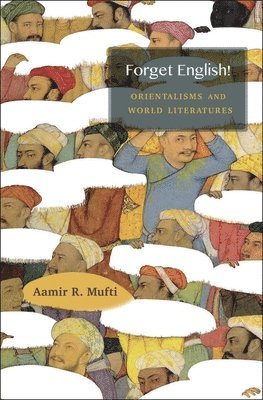
A Choice Outstanding Academic Title of the YearThe idea of world literature has garnered much attention recently as a discipline that promises to move humanistic study beyond postcolonial theory and antiquated paradigms of “national” literary traditions. In Forget English! Aamir Mufti scrutinizes the claims made on behalf of world literature by its advocates. The notion of a borderless, egalitarian global literature has obvious appeal, he notes, but behind it lurks the continuing dominance of English as a literary language and a cultural system of international reach.“Mufti’s historical perspective and insightful analyses of India’s anglophone novel generate constant echoes with the realities of anglophone writings in other cultures.”—Eva Shan Chou, Times Higher Education“Mufti’s book is in one sense a quarrel with Salman Rushdie’s overly enthusiastic celebration of English-language ‘postcolonial’ South Asian literature, but more important, the book extends, qualifies, and enriches Edward Said’s work on Orientalism, demonstrating that despite its promise, world literature does not eliminate the dominant role of the Anglophone book market in shaping South Asian literature…Mufti’s book is both accessible and theoretically informed.”—K. Tölölyan, Choice
Enlightenment in the Colony
The Jewish Question and the Crisis of Postcolonial Culture
Häftad, Engelska, 2007
314 kr
Skickas inom 5-8 vardagar
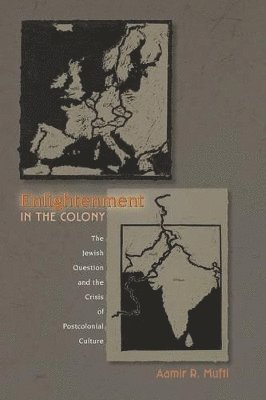
Enlightenment in the Colony opens up the history of the "Jewish question" for the first time to a broader discussion--one of the social exclusion of religious and cultural minorities in modern times, and in particular the crisis of Muslim identity in modern India. Aamir Mufti identifies the Hindu-Muslim conflict in India as a colonial variation of what he calls "the exemplary crisis of minority"--Jewishness in Europe. He shows how the emergence of this conflict in the late nineteenth century represented an early instance of the reinscription of the "Jewish question" in a non-Western society undergoing modernization under colonial rule. In so doing, he charts one particular route by which this European phenomenon linked to nation-states takes on a global significance. Mufti examines the literary dimensions of this crisis of identity through close readings of canonical texts of modern Western--mostly British-literature, as well as major works of modern Indian literature in Urdu and English.He argues that the one characteristic shared by all emerging national cultures since the nineteenth century is the minoritization of some social and cultural fragment of the population, and that national belonging and minority separatism go hand in hand with modernization. Enlightenment in the Colony calls for the adoption of secular, minority, and exilic perspectives in criticism and intellectual life as a means to critique the very forms of marginalization that give rise to the uniquely powerful minority voice in world literatures.

131 kr
Skickas inom 5-8 vardagar
Tracing intersecting global genealogies of the new right from the United States to India, this issue focuses on the Right’s attachment to crisis and catastrophe to justify its calls to return to “traditional” social and political structures. The contributors argue that these neotraditionalist countercultural intellectual movements form the basis of global white supremacist political projects that are disseminated through a new media landscape. Articles include discussions of the Right’s favored narratives of political, infrastructural, economic, and ecological crisis and precarity; its reclaiming of nativist politics; birtherist fantasies of US white supremacy; and the political vision of violence as the only remaining mechanism of collective governance available to imagined white minorities.Contributors. April Anson, Anindita Banerjee, Paul A. BovÉ, Leah Feldman, Olivia Harrison, Aamir R. Mufti, Donald E. Pease