Aaron R. Hanlon - Böcker
Visar alla böcker från författaren Aaron R. Hanlon. Handla med fri frakt och snabb leverans.
6 produkter
6 produkter
416 kr
Skickas inom 7-10 vardagar
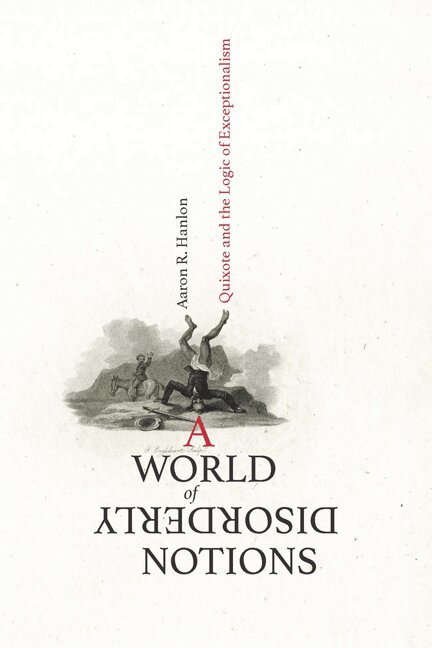
From Jonathan Swift to Washington Irving, those looking to propose and justify exceptions to social and political norms turned to Cervantes's notoriously mad comic hero as a model. A World of Disorderly Notions examines the literary and political effects of Don Quixote, arguing that what makes this iconic character so influential across oceans and cultures is not his madness but his logic. Aaron Hanlon contends that the logic of quixotism is in fact exceptionalism—the strategy of rendering oneself an exception to everyone else's rules.As British and American societies of the Enlightenment developed the need to question the acceptance of various forms of imperialism and social contract theory—and to explain both the virtues and limitations of revolutions past and ongoing—it was Quixote's exceptionalism, not his madness, that captured the imaginations of so many writers and statesmen. As a consequence, the eighteenth century witnessed an explosion of imitations of Quixote in fiction and polemical writing, by writers such as Jonathan Swift, Charlotte Lennox, Henry Fielding, and Washington Irving, among others.Combining literary history and political theory, Hanlon clarifies an ongoing and immediately relevant history of exceptionalism, of how states from Golden Age Spain to imperial Britain to the formative United States rendered themselves exceptions so they could act with impunity. In so doing, he tells the story of how Quixote became exceptional.
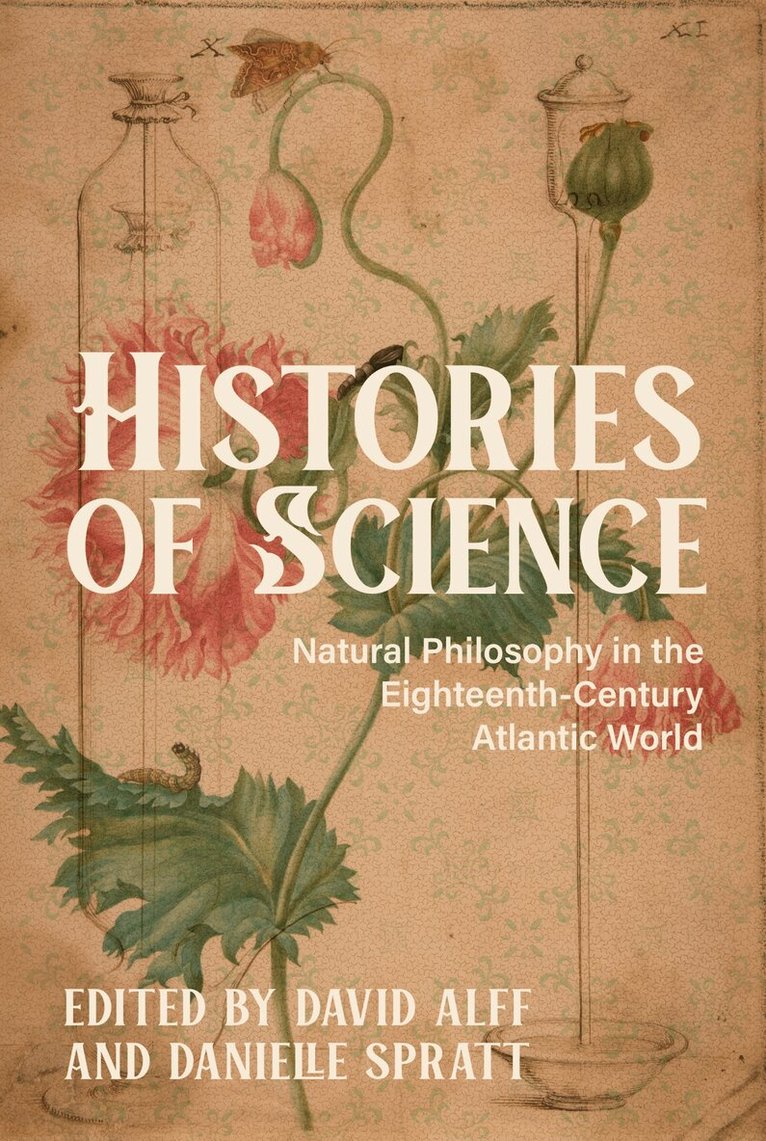
Histories of Science
Natural Philosophy in the Eighteenth-Century Atlantic World
Inbunden, Engelska, 2025
1 480 kr
Skickas inom 10-15 vardagar
Spreading the news of scientific breakthroughs in the eighteenth centuryHistories of Science shows how different forms of media communicated scientific breakthroughs during the long eighteenth century, bringing together eighteen humanities scholars to discuss the representation, reception, and application of natural philosophy in the Atlantic world. In particular, the authors focus on descriptions of scientific discoveries in popular print, with essays on topics as varied as placebo pills, irrigation systems, and navigational technology. And while each contributor advances a discrete argument, the collection coheres in its shared questions of methodology, historicity, and ethics. Histories of Science expands our record of the past, our understanding of the present, and our ability to imagine the future.
Histories of Science
Natural Philosophy in the Eighteenth-Century Atlantic World
Häftad, Engelska, 2025
468 kr
Skickas inom 10-15 vardagar
Spreading the news of scientific breakthroughs in the eighteenth centuryHistories of Science shows how different forms of media communicated scientific breakthroughs during the long eighteenth century, bringing together eighteen humanities scholars to discuss the representation, reception, and application of natural philosophy in the Atlantic world. In particular, the authors focus on descriptions of scientific discoveries in popular print, with essays on topics as varied as placebo pills, irrigation systems, and navigational technology. And while each contributor advances a discrete argument, the collection coheres in its shared questions of methodology, historicity, and ethics. Histories of Science expands our record of the past, our understanding of the present, and our ability to imagine the future.
269 kr
Skickas inom 7-10 vardagar
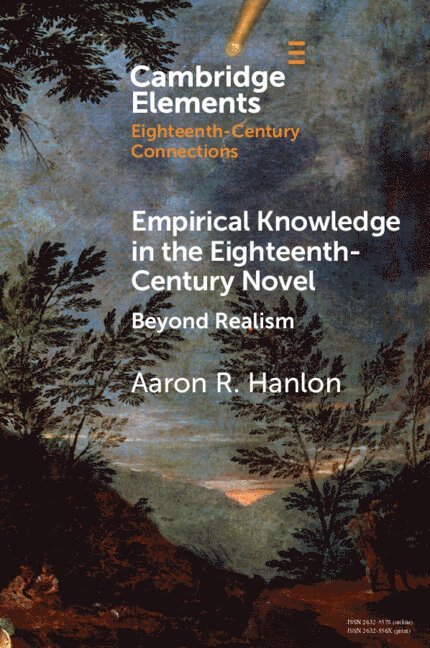
This Element examines the eighteenth-century novel's contributions to empirical knowledge. Realism has been the conventional framework for treating this subject within literary studies. This Element identifies the limitations of the realism framework for addressing the question of knowledge in the eighteenth-century novel. Moving beyond the familiar focus in the study of novelistic realism on problems of perception and representation, this Element focuses instead on how the eighteenth-century novel staged problems of inductive reasoning. It argues that we should understand the novel's contributions to empirical knowledge primarily in terms of what the novel offered as training ground for methods of reasoning, rather than what it offered in terms of formal innovations for representing knowledge. We learn from such a shift that the eighteenth-century novel was not a failed experiment in realism, or in representing things as they are, but a valuable system for reasoning and thought experiment.
446 kr
Skickas inom 7-10 vardagar
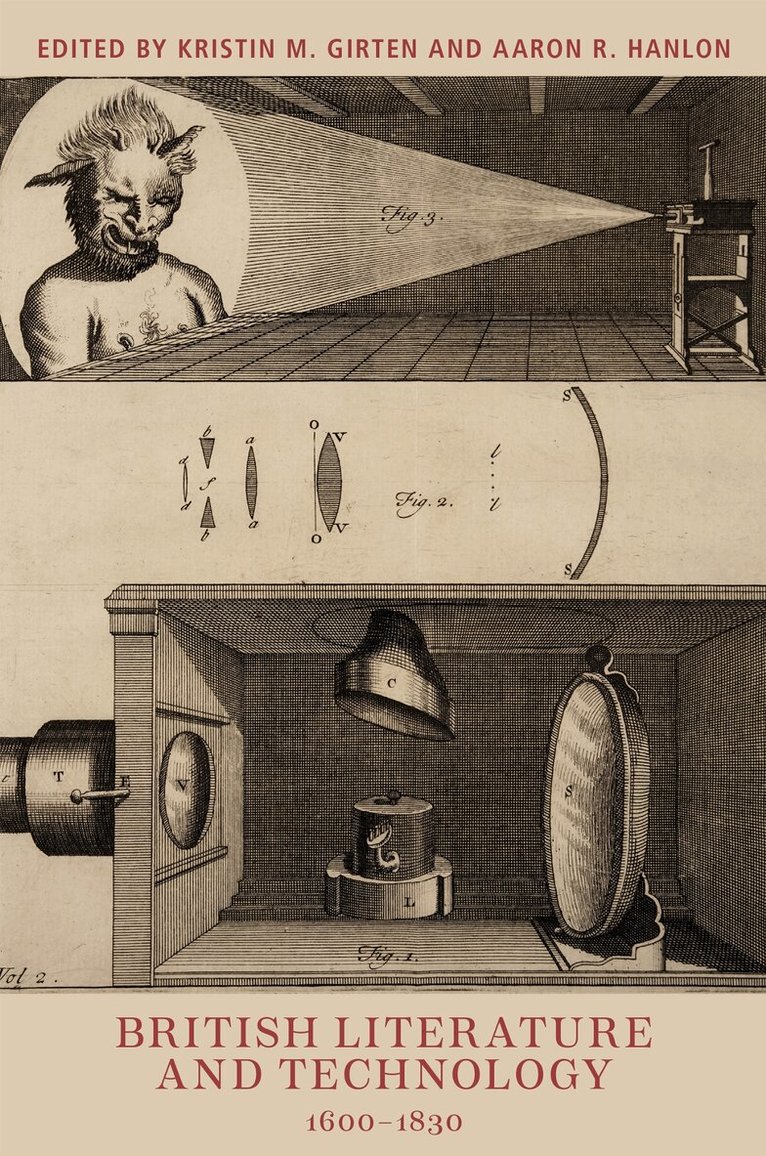
Enlightenment-era writers had not yet come to take technology for granted, but nonetheless were-as we are today-both attracted to and repelled by its potential. This volume registers the deep history of such ambivalence, examining technology’s influence on Enlightenment British literature, as well as the impact of literature on conceptions of, attitudes toward, and implementations of technology. Offering a counterbalance to the abundance of studies on literature and science in seventeenth- and eighteenth-century Britain, this volume’s focus encompasses approaches to literary history that help us understand technologies like the steam engine and the telegraph along with representations of technology in literature such as the “political machine.” Contributors ultimately show how literature across genres provided important sites for Enlightenment readers to recognize themselves as “chimeras”-“hybrids of machine and organism”-and to explore the modern self as “a creature of social reality as well as a creature of fiction.”
1 805 kr
Skickas inom 7-10 vardagar
Enlightenment-era writers had not yet come to take technology for granted, but nonetheless were-as we are today-both attracted to and repelled by its potential. This volume registers the deep history of such ambivalence, examining technology’s influence on Enlightenment British literature, as well as the impact of literature on conceptions of, attitudes toward, and implementations of technology. Offering a counterbalance to the abundance of studies on literature and science in seventeenth- and eighteenth-century Britain, this volume’s focus encompasses approaches to literary history that help us understand technologies like the steam engine and the telegraph along with representations of technology in literature such as the “political machine.” Contributors ultimately show how literature across genres provided important sites for Enlightenment readers to recognize themselves as “chimeras”-“hybrids of machine and organism”-and to explore the modern self as “a creature of social reality as well as a creature of fiction.”