Aaron S. Allen - Böcker
Visar alla böcker från författaren Aaron S. Allen. Handla med fri frakt och snabb leverans.
4 produkter
4 produkter
956 kr
Skickas inom 7-10 vardagar
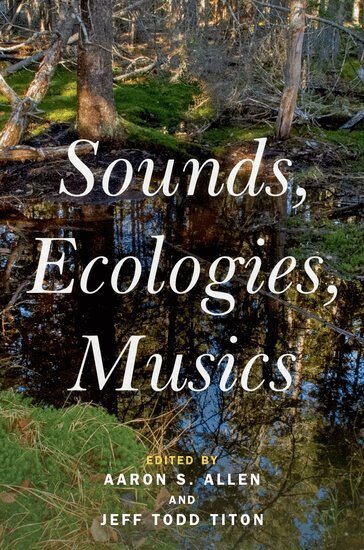
Sounds, Ecologies, Musics poses exciting challenges and provides fresh opportunities for scholars, scientists, environmental activists, musicians, and listeners to consider music and sound from ecological standpoints. Authors in Part I examine the natural and built environment and how music and sound are woven into it, how the environment enables music and sound, and how the natural and cultural production of music and sound in turn impact the environment. In Part II, contributors consider music and sound in relation to ecological knowledges that appear to conflict with, yet may be viewed as complementary to, Western science: traditional and Indigenous ecological and environmental knowledges. Part III features multidisciplinary and interdisciplinary approaches by scholars, scientists, and practitioners who probe the ecological imaginary regarding the complex ideas and contested keywords that characterize ecomusicology: sound, music, culture, society, environment, and nature. A common theme across the book is the idea of diverse ecologies. Once confined to the natural sciences, the word "ecology" is common today in the social sciences, humanities, and arts - yet its diverse uses have become imprecise and confusing. Engaging the conflicting and complementary meanings of "ecology" requires embracing a both/and approach. Diverse ecologies are illustrated in the methodological, terminological, and topical variety of the chapters as well as the contributors' choice of sources and their disciplinary backgrounds. In times of mounting human and planetary crises, Sounds, Ecologies, Musics challenges disciplinarity and broadens the interdisciplinary field of ecomusicologies. These theoretical and practical studies expand sonic, scholarly, and political activism from the diversity-equity-inclusion agenda of social justice to embrace the more diverse and inclusive agenda of ecocentric ecojustice.
349 kr
Skickas inom 5-8 vardagar
Sounds, Ecologies, Musics poses exciting challenges and provides fresh opportunities for scholars, scientists, environmental activists, musicians, and listeners to consider music and sound from ecological standpoints. Authors in Part I examine the natural and built environment and how music and sound are woven into it, how the environment enables music and sound, and how the natural and cultural production of music and sound in turn impact the environment. In Part II, contributors consider music and sound in relation to ecological knowledges that appear to conflict with, yet may be viewed as complementary to, Western science: traditional and Indigenous ecological and environmental knowledges. Part III features multidisciplinary and interdisciplinary approaches by scholars, scientists, and practitioners who probe the ecological imaginary regarding the complex ideas and contested keywords that characterize ecomusicology: sound, music, culture, society, environment, and nature. A common theme across the book is the idea of diverse ecologies. Once confined to the natural sciences, the word "ecology" is common today in the social sciences, humanities, and arts - yet its diverse uses have become imprecise and confusing. Engaging the conflicting and complementary meanings of "ecology" requires embracing a both/and approach. Diverse ecologies are illustrated in the methodological, terminological, and topical variety of the chapters as well as the contributors' choice of sources and their disciplinary backgrounds. In times of mounting human and planetary crises, Sounds, Ecologies, Musics challenges disciplinarity and broadens the interdisciplinary field of ecomusicologies. These theoretical and practical studies expand sonic, scholarly, and political activism from the diversity-equity-inclusion agenda of social justice to embrace the more diverse and inclusive agenda of ecocentric ecojustice.
814 kr
Skickas inom 10-15 vardagar
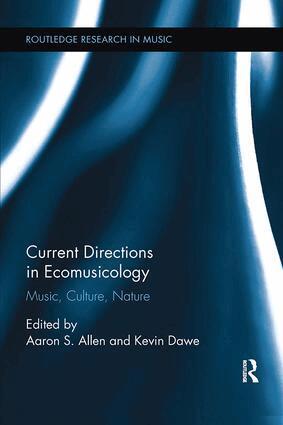
AWARD WINNER OF THE 2018 SOCIETY OF ETHNOMUSICLOGY ELLEN KOSKOFF PRIZEThis volume is the first sustained examination of the complex perspectives that comprise ecomusicology—the study of the intersections of music/sound, culture/society, and nature/environment. Twenty-two authors provide a range of theoretical, methodological, and empirical chapters representing disciplines such as anthropology, biology, ecology, environmental studies, ethnomusicology, history, literature, musicology, performance studies, and psychology. They bring their specialized training to bear on interdisciplinary topics, both individually and in collaboration. Emerging from the whole is a view of ecomusicology as a field, a place where many disciplines come together. The topics addressed in this volume—contemporary composers and traditional musics, acoustic ecology and politicized soundscapes, material sustainability and environmental crisis, familiar and unfamiliar sounds, local places and global warming, birds and mice, hearing and listening, biomusic and soundscape ecology, and more—engage with conversations in the various realms of music study as well as in environmental studies and cultural studies. As with any healthy ecosystem, the field of ecomusicology is dynamic, but this edited collection provides a snapshot of it in a formative period. Each chapter is short, designed to be accessible to the nonspecialist, and includes extensive bibliographies; some chapters also provide further materials on a companion website: http://www.ecomusicology.info/cde/. An introduction and interspersed editorial summaries help guide readers through four current directions—ecological, fieldwork, critical, and textual—in the field of ecomusicology.
2 643 kr
Skickas inom 10-15 vardagar
AWARD WINNER OF THE 2018 SOCIETY OF ETHNOMUSICLOGY ELLEN KOSKOFF PRIZEThis volume is the first sustained examination of the complex perspectives that comprise ecomusicology—the study of the intersections of music/sound, culture/society, and nature/environment. Twenty-two authors provide a range of theoretical, methodological, and empirical chapters representing disciplines such as anthropology, biology, ecology, environmental studies, ethnomusicology, history, literature, musicology, performance studies, and psychology. They bring their specialized training to bear on interdisciplinary topics, both individually and in collaboration. Emerging from the whole is a view of ecomusicology as a field, a place where many disciplines come together. The topics addressed in this volume—contemporary composers and traditional musics, acoustic ecology and politicized soundscapes, material sustainability and environmental crisis, familiar and unfamiliar sounds, local places and global warming, birds and mice, hearing and listening, biomusic and soundscape ecology, and more—engage with conversations in the various realms of music study as well as in environmental studies and cultural studies. As with any healthy ecosystem, the field of ecomusicology is dynamic, but this edited collection provides a snapshot of it in a formative period. Each chapter is short, designed to be accessible to the nonspecialist, and includes extensive bibliographies; some chapters also provide further materials on a companion website: http://www.ecomusicology.info/cde/. An introduction and interspersed editorial summaries help guide readers through four current directions—ecological, fieldwork, critical, and textual—in the field of ecomusicology.