Jeff Todd Titon - Böcker
Visar alla böcker från författaren Jeff Todd Titon. Handla med fri frakt och snabb leverans.
8 produkter
8 produkter
956 kr
Skickas inom 7-10 vardagar
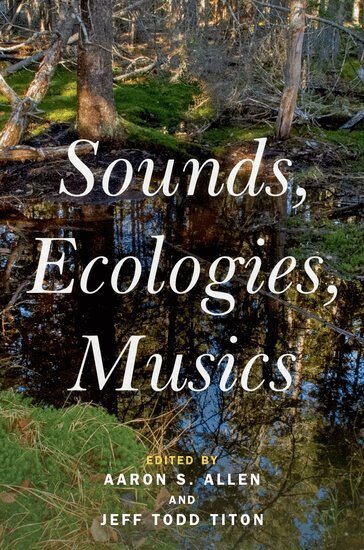
Sounds, Ecologies, Musics poses exciting challenges and provides fresh opportunities for scholars, scientists, environmental activists, musicians, and listeners to consider music and sound from ecological standpoints. Authors in Part I examine the natural and built environment and how music and sound are woven into it, how the environment enables music and sound, and how the natural and cultural production of music and sound in turn impact the environment. In Part II, contributors consider music and sound in relation to ecological knowledges that appear to conflict with, yet may be viewed as complementary to, Western science: traditional and Indigenous ecological and environmental knowledges. Part III features multidisciplinary and interdisciplinary approaches by scholars, scientists, and practitioners who probe the ecological imaginary regarding the complex ideas and contested keywords that characterize ecomusicology: sound, music, culture, society, environment, and nature. A common theme across the book is the idea of diverse ecologies. Once confined to the natural sciences, the word "ecology" is common today in the social sciences, humanities, and arts - yet its diverse uses have become imprecise and confusing. Engaging the conflicting and complementary meanings of "ecology" requires embracing a both/and approach. Diverse ecologies are illustrated in the methodological, terminological, and topical variety of the chapters as well as the contributors' choice of sources and their disciplinary backgrounds. In times of mounting human and planetary crises, Sounds, Ecologies, Musics challenges disciplinarity and broadens the interdisciplinary field of ecomusicologies. These theoretical and practical studies expand sonic, scholarly, and political activism from the diversity-equity-inclusion agenda of social justice to embrace the more diverse and inclusive agenda of ecocentric ecojustice.
349 kr
Skickas inom 5-8 vardagar
Sounds, Ecologies, Musics poses exciting challenges and provides fresh opportunities for scholars, scientists, environmental activists, musicians, and listeners to consider music and sound from ecological standpoints. Authors in Part I examine the natural and built environment and how music and sound are woven into it, how the environment enables music and sound, and how the natural and cultural production of music and sound in turn impact the environment. In Part II, contributors consider music and sound in relation to ecological knowledges that appear to conflict with, yet may be viewed as complementary to, Western science: traditional and Indigenous ecological and environmental knowledges. Part III features multidisciplinary and interdisciplinary approaches by scholars, scientists, and practitioners who probe the ecological imaginary regarding the complex ideas and contested keywords that characterize ecomusicology: sound, music, culture, society, environment, and nature. A common theme across the book is the idea of diverse ecologies. Once confined to the natural sciences, the word "ecology" is common today in the social sciences, humanities, and arts - yet its diverse uses have become imprecise and confusing. Engaging the conflicting and complementary meanings of "ecology" requires embracing a both/and approach. Diverse ecologies are illustrated in the methodological, terminological, and topical variety of the chapters as well as the contributors' choice of sources and their disciplinary backgrounds. In times of mounting human and planetary crises, Sounds, Ecologies, Musics challenges disciplinarity and broadens the interdisciplinary field of ecomusicologies. These theoretical and practical studies expand sonic, scholarly, and political activism from the diversity-equity-inclusion agenda of social justice to embrace the more diverse and inclusive agenda of ecocentric ecojustice.
2 258 kr
Skickas inom 5-8 vardagar
Applied studies scholarship has triggered a not-so-quiet revolution in the discipline of ethnomusicology. The current generation of applied ethnomusicologists has moved toward participatory action research, involving themselves in musical communities and working directly on their behalf. The essays in The Oxford Handbook of Applied Ethnomusicology, edited by Svanibor Pettan and Jeff Todd Titon, theorize applied ethnomusicology, offer histories, and detail practical examples with the goal of stimulating further development in the field.The essays in the book, all newly commissioned for the volume, reflect scholarship and data gleaned from eleven countries by over twenty contributors. Themes and locations of the research discussed encompass all world continents. The authors present case studies encompassing multiple places; other that discuss circumstances within a geopolitical unit, either near or far. Many of the authors consider marginalized peoples and communities; others argue for participatory action research. All are united in their interest in overarching themes such as conflict, education, archives, and the status of indigenous peoples and immigrants. A volume that at once defines its field, advances it, and even acts as a large-scale applied ethnomusicology project in the way it connects ideas and methodology, The Oxford Handbook of Applied Ethnomusicology is a seminal contribution to the study of ethnomusicology, theoretical and applied.
282 kr
Skickas inom 7-10 vardagar
"C.L. Franklin, the most imitated soul preacher in history, was a combination of soul and science and substance and sweetness."--Reverend Jesse L. Jackson, from the ForewordFew black preachers have been better known that the Reverend C. L. Franklin; none has been considered a better preacher. This collection of twenty of Franklin's best sermons shows the development of his style. A learned man, Franklin had attended both seminary and college, yet in his sermons used the old-fashioned, extemporaneous style of preaching, "whooping" or chanting, combining oratory and intoned poetry to reach both head and heart.Dozens of Franklin's sermons were released on record albums, and he went on preaching tours with gospel groups that included his daughter, Aretha Franklin, reaching virtually every corner of the United States.This volume begins with Franklin's life history, told in his own words.In an afterword, Jeff Titon reviews the African-American sermon traditionand Franklin's place in it.
1 100 kr
Skickas inom 10-15 vardagar
How does sound ecology—an acoustic connective tissue among communities—also become a basis for a healthy economy and a just community? Jeff Todd Titon's lived experiences shed light on the power of song, the ecology of musical cultures, and even cultural sustainability and resilience. In Toward a Sound Ecology, Titon's collected essays address his growing concerns with people making music, holistic ecological approaches to music, and sacred transformations of sound. Titon also demonstrates how to conduct socially responsible fieldwork and compose engaging and accessible ethnography that speaks to a diverse readership. Toward a Sound Ecology is an anthology of Titon's key writings, which are situated chronologically within three particular areas of interest: fieldwork, cultural and musical sustainability, and sound ecology. According to Titon—a foundational figure in folklore and ethnomusicology—a re-orientation away from a world of texts and objects and toward a world of sound connections will reveal the basis of a universal kinship.
403 kr
Skickas inom 10-15 vardagar
How does sound ecology—an acoustic connective tissue among communities—also become a basis for a healthy economy and a just community? Jeff Todd Titon's lived experiences shed light on the power of song, the ecology of musical cultures, and even cultural sustainability and resilience. In Toward a Sound Ecology, Titon's collected essays address his growing concerns with people making music, holistic ecological approaches to music, and sacred transformations of sound. Titon also demonstrates how to conduct socially responsible fieldwork and compose engaging and accessible ethnography that speaks to a diverse readership. Toward a Sound Ecology is an anthology of Titon's key writings, which are situated chronologically within three particular areas of interest: fieldwork, cultural and musical sustainability, and sound ecology. According to Titon—a foundational figure in folklore and ethnomusicology—a re-orientation away from a world of texts and objects and toward a world of sound connections will reveal the basis of a universal kinship.
513 kr
Skickas inom 10-15 vardagar
Hailed as a classic in music studies when it was first published in 1977, Early Downhome Blues is a detailed look at traditional country blues artists and their work.Combining musical analysis and cultural history approaches, Titon examines the origins of downhome blues in African American society. He also explores what happened to the art form when the blues were commercially recorded and became part of the larger American culture. From forty-seven musical transcriptions, Titon derives a grammar of early downhome blues melody. His book is enriched with the recollections of blues performers, audience members, and those working in the recording industry.In a new afterword, Titon reflects on the genesis of this book in the blues revival of the 1960s and the politics of tourism in the current revival under way.|Kalman examines the crucial period of 1967-1970 at Yale Law School, when the mainstream liberal faculty was challenged by left-liberal students who aimed to unlock the democratic visions of law and social change they associated with Yale's legal realists of the 1930s. Law students during this phase of the school's history included Bill Clinton, Hillary Rodham Clinton, and Clarence Thomas.
418 kr
Skickas inom 10-15 vardagar
The Fellowship Independent Baptist Church near Stanley, Virginia, was a group of fundamental Christian believers broadly representative of southern Appalachian belief and practice. Jeff Todd Titon worked with this Baptist community for more than ten years in his attempt to determine the nature of language in the practice of their religion. He traces specialized vocabulary and its applications through the acts of being saved, praying, preaching, teaching, and in particular singing. Titon argues that religious language is performed and the context of its occurrence is crucial to our understanding and to a holistic view of not only religious practice but of folklife and ethnomusicology. Titon’s monumental study of The Fellowship Independence Baptist Church produced not only the first edition book but also an album and documentary film.In this second edition of Powerhouse for God, Titon revisits The Fellowship Independent Baptist Church nearly four decades later. Brother John Sherfey, the charismatic preacher steeped in Appalachian tradition has passed away and left his congregation to his son, Donnie, to lead. While Appalachian Virginia has changed markedly over the decades, the town of Stanley and the Fellowship Church have not. Titon relates this rarity in his new Afterword: a church founded on Biblical literalism and untouched by modern progressivism in an area of Appalachia that has seen an evolution in population, industry, and immigration.Titon’s unforgettable study of folklife, musicology, and Appalachian religion is available for a new generation of scholars to build upon.