Abigail Krasner Balbale - Böcker
Visar alla böcker från författaren Abigail Krasner Balbale. Handla med fri frakt och snabb leverans.
5 produkter
5 produkter
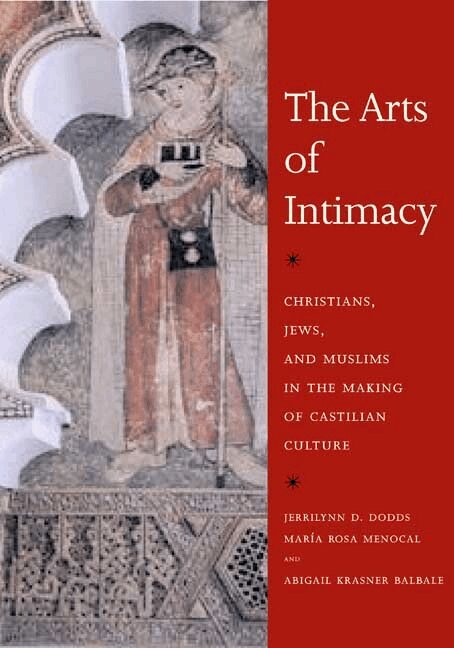
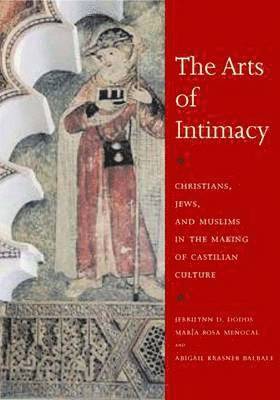
Arts of Intimacy
Christians, Jews, and Muslims in the Making of Castilian Culture
Inbunden, Engelska, 2008
410 kr
Tillfälligt slut
This splendidly illustrated book is a history of medieval Castile from the 11th to 14th centuries, told from a largely cultural standpoint. Whilst the political narrative of these centuries may emphasise war and intolerance - the inexorable forward march of the reconquista, the authors argue that the cultural record tells a very different story. They emphasise the concept of hybridisation, and show how interaction rather than antagonism more often informed cultural transactions between Christians, Muslims and Jews in the great cities of the region, focusing on Toledo, Seville and Cordoba. The extraordinary architecture of the region receives probably the most attention, but none of the visual arts miss out, and there are also extensive discussions and translations of the poetry and written culture of the three communities. A beautiful testament to a unique artistic culture, and an engaging presentation of the growing argument for a surpringly mixed cultural world.
Arts of Intimacy
Christians, Jews, and Muslims in the Making of Castilian Culture
Häftad, Engelska, 2009
247 kr
Skickas inom 7-10 vardagar
A dynamic vision of medieval Castilian culture and the Arabic, Hebrew, and Latin strands that are woven into its fabricNamed a Book of the Year by the Times Literary Supplement, this lavishly illustrated work explores the vibrant interaction among different and sometimes opposing cultures, and how their contacts with one another transformed them all. It chronicles the tumultuous history of Castile in the wake of the Christian capture of the Islamic city of Tulaytula, now Toledo, in the eleventh century and traces the development of Castilian culture as it was forged in the new intimacy of Christians with the Muslims and Jews they had overcome. The authors paint a portrait of the culture through its arts, architecture, poetry and prose, uniquely combining literary and visual arts. Concentrating on the eleventh and twelfth centuries, the book reveals the extent to which Castilian identity is deeply rooted in the experience of confrontation, interaction, and at times union with Hebrew and Arabic cultures during the first centuries of its creation. Abundantly illustrated, the volume serves as a splendid souvenir of southern Spain; beautifully written, it illuminates a culture deeply enriched by others.
Del 7 - Harvard Series in Islamic Law
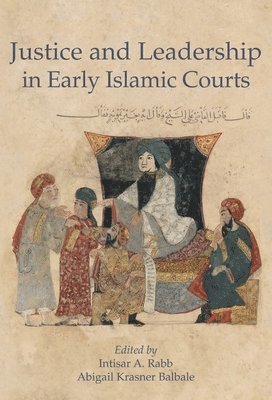
Justice and Leadership in Early Islamic Courts
Inbunden, Engelska, 2017
361 kr
Skickas inom 7-10 vardagar
This book presents an in-depth exploration of the administration of justice during Islam’s founding period, 632–1250 CE. Inspired by the scholarship of Roy Parviz Mottahedeh and composed in his honor, this volume brings together ten leading scholars of Islamic law to examine the history of early Islamic courts. This approach draws attention to both how and why the courts and the people associated with them functioned in early Islamic societies: When a dispute occurred, what happened in the courts? How did judges conceive of justice and their role in it? When and how did they give attention to politics and procedure?Each author draws on diverse sources that illuminate a broader and deeper vision of law and society than traditional legal literature alone can provide, including historical chronicles, biographical dictionaries, legal canons, exegetical works, and mirrors for princes. Altogether, the volume offers both a substantive intervention on early Islamic courts and on methods for studying legal history as social history. It illuminates the varied and dynamic legal landscapes stretching across early Islam, and maps new approaches to interdisciplinary legal history.
621 kr
Skickas inom 10-15 vardagar
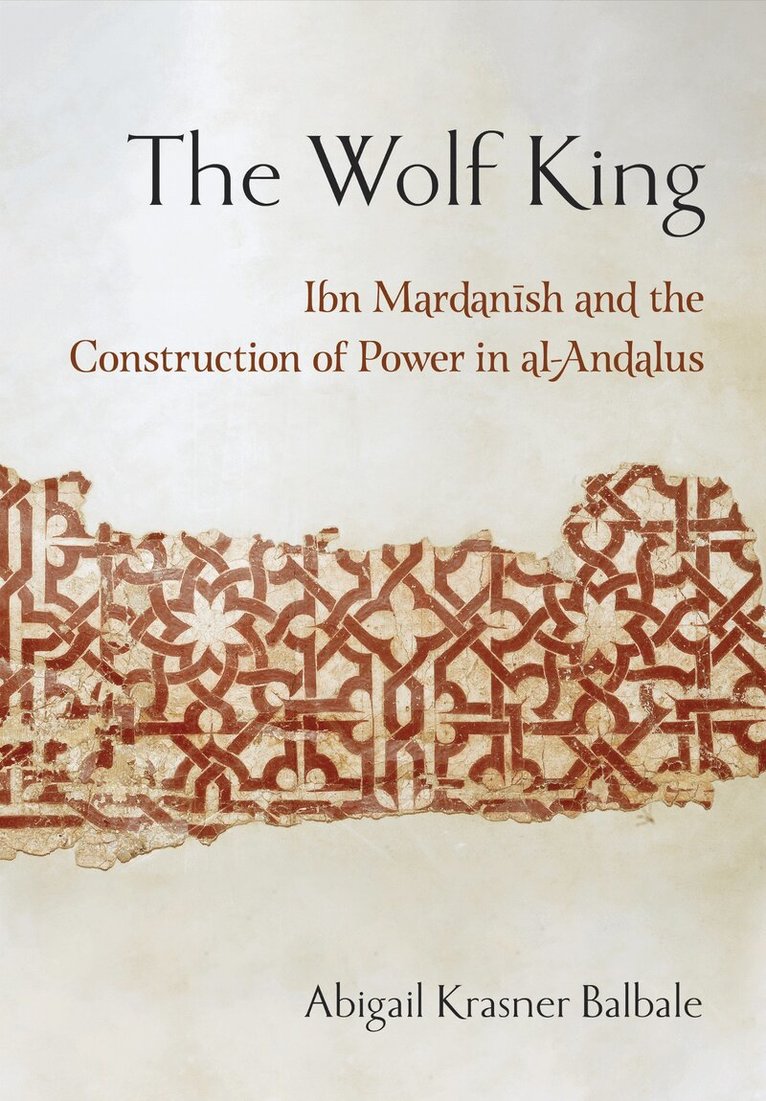
Winner of the Wallace K. Ferguson PrizeWinner of the Dionisius A. Agius Book PrizeThe Wolf King explores how political power was conceptualized, constructed, and wielded in twelfth-century al-Andalus, focusing on the eventful reign of Muhammad ibn Sad ibn Ahmad ibn Mardanīsh (r. 1147–1172). Celebrated in Castilian and Latin sources as el rey lobo/rex lupus and denigrated by Almohad and later Arabic sources as irreligious and disloyal to fellow Muslims because he fought the Almohads and served as vassal to the Castilians, Ibn Mardanīsh ruled a kingdom that at its peak constituted nearly half of al-Andalus and served as an important buffer between the Almohads and the Christian kingdoms of Castile and Aragon.Through a close examination of contemporary sources across the region, Abigail Krasner Balbale shows that Ibn Mardanīsh's short-lived dynasty was actually an attempt to integrate al-Andalus more closely with the Islamic East—particularly the Abbasid caliphate. At stake in his battles against the Almohads was the very idea of the caliphate in this period, as well as who could define righteous religious authority. The Wolf King makes effective use of chronicles, chancery documents, poetry, architecture, coinage, and artifacts to uncover how Ibn Mardanīsh adapted language and cultural forms from around the Islamic world to assert and consolidate power—and then tracks how these strategies, and the memory of Ibn Mardanīsh more generally, influenced expressions of kingship in subsequent periods.Open access edition funded by the National Endowment for the Humanities.
354 kr
Skickas inom 10-15 vardagar
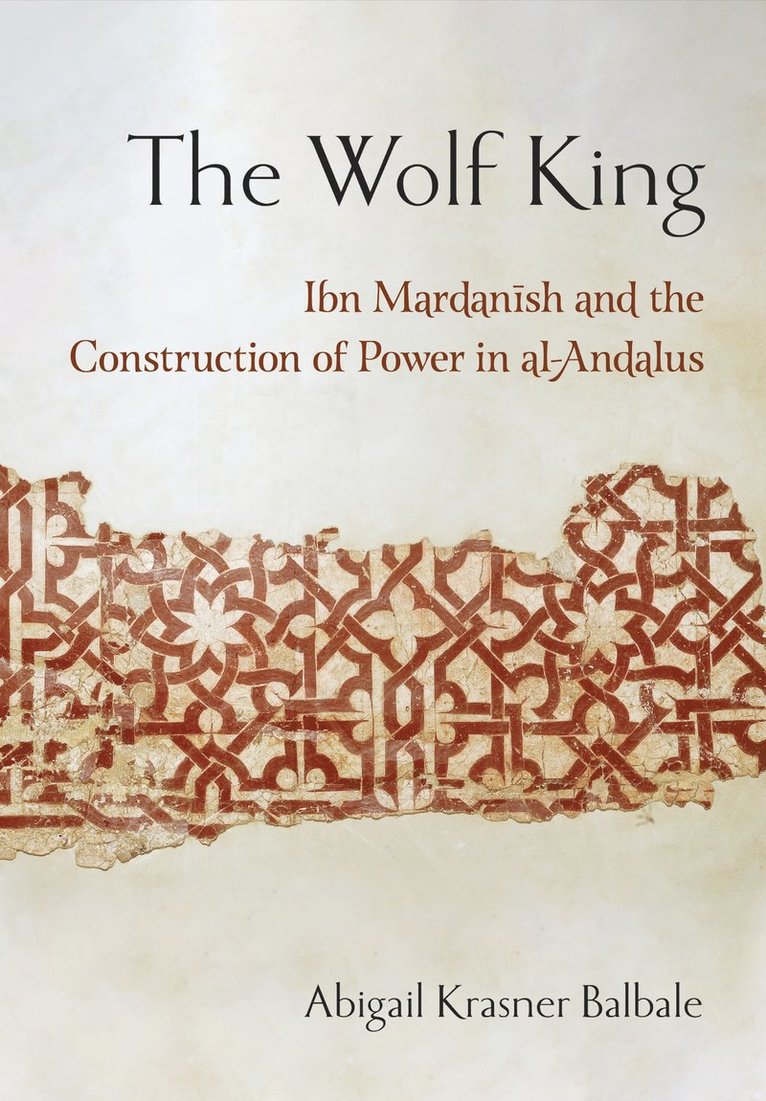
Winner of the Wallace K. Ferguson PrizeWinner of the Dionisius A. Agius Book PrizeThe Wolf King explores how political power was conceptualized, constructed, and wielded in twelfth-century al-Andalus, focusing on the eventful reign of Muhammad ibn Sad ibn Ahmad ibn Mardanīsh (r. 1147–1172). Celebrated in Castilian and Latin sources as el rey lobo/rex lupus and denigrated by Almohad and later Arabic sources as irreligious and disloyal to fellow Muslims because he fought the Almohads and served as vassal to the Castilians, Ibn Mardanīsh ruled a kingdom that at its peak constituted nearly half of al-Andalus and served as an important buffer between the Almohads and the Christian kingdoms of Castile and Aragon.Through a close examination of contemporary sources across the region, Abigail Krasner Balbale shows that Ibn Mardanīsh's short-lived dynasty was actually an attempt to integrate al-Andalus more closely with the Islamic East—particularly the Abbasid caliphate. At stake in his battles against the Almohads was the very idea of the caliphate in this period, as well as who could define righteous religious authority. The Wolf King makes effective use of chronicles, chancery documents, poetry, architecture, coinage, and artifacts to uncover how Ibn Mardanīsh adapted language and cultural forms from around the Islamic world to assert and consolidate power—and then tracks how these strategies, and the memory of Ibn Mardanīsh more generally, influenced expressions of kingship in subsequent periods.Open access edition funded by the National Endowment for the Humanities.