A.C. Arntzenius - Böcker
Visar alla böcker från författaren A.C. Arntzenius. Handla med fri frakt och snabb leverans.
2 produkter
2 produkter
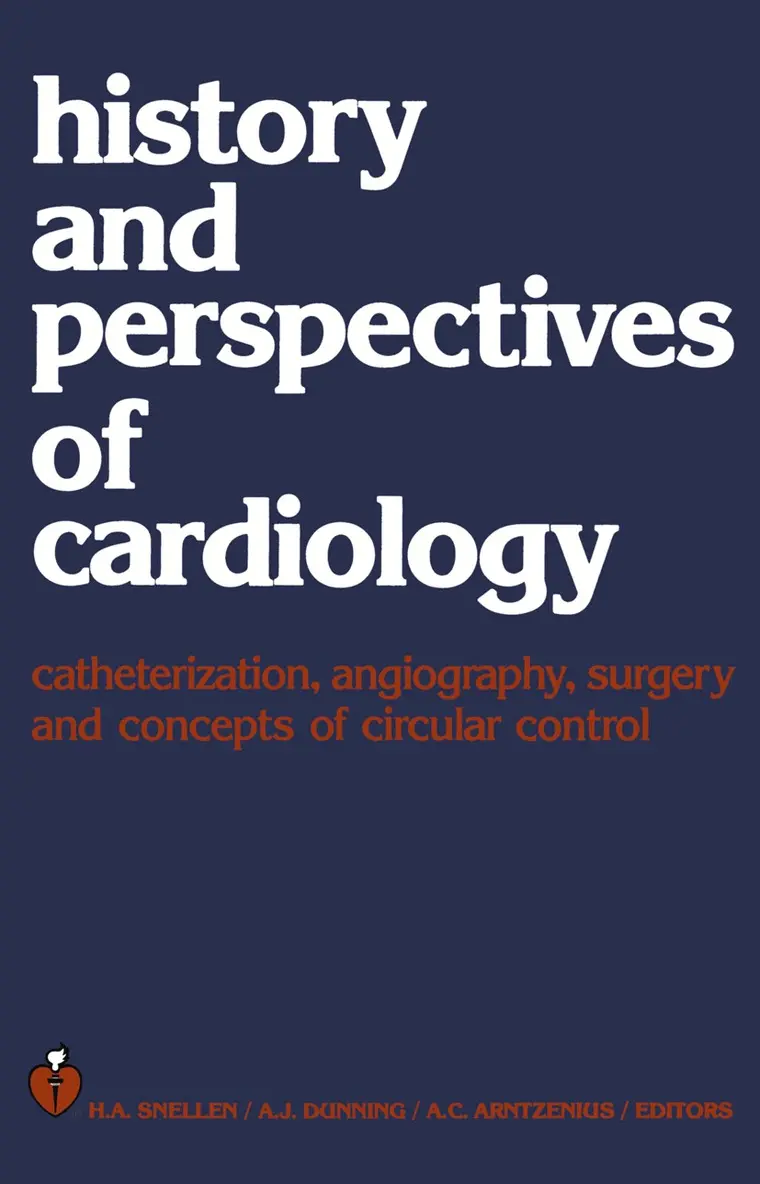
History and perspectives of cardiology
Catheterization, angiography, surgery and concepts of circular control
Häftad, Engelska, 2011
550 kr
Skickas inom 10-15 vardagar
The following presents the proceedings of the Einthoven meeting in Leiden, 1-2 November 1979. This meeting aimed at reviewing the historical develop ment of a few selected cardiological topics as a continuous process. Essentially this means reviewing three phases: the early history, the recent past, and the present with an outlook to the future. Mainly because of the chosen fields - clearly our choice of heart catheterization, angiocardiography, and cardiac surgery was not accidental- the emphasis was on recent history, of which its pioneers and their contemporaries can still testify. The opportunity for the older generation to meet again, and for the younger to hear pioneers tell about their work and to listen to experts recreating the past as the forerunner of the present, was a unique and stimulating occasion enjoyed by old and young alike. With great regret it was announced that Dr. Werner Forssmann, who had promised to attend the meeting and was looking forward to it, had died unexpectedly a few months ago. Instead of his personal contribution to the history of the pioneering age, a short tribute to his memory was paid by Dr. Loogen, professor of cardiology in Dusseldorf, and by Sir John McMichael, who showed part of an old movie on heart catheterization, in which Dr. Forssmann explained his part in this development. In his welcoming address, Dr.
550 kr
Skickas inom 10-15 vardagar
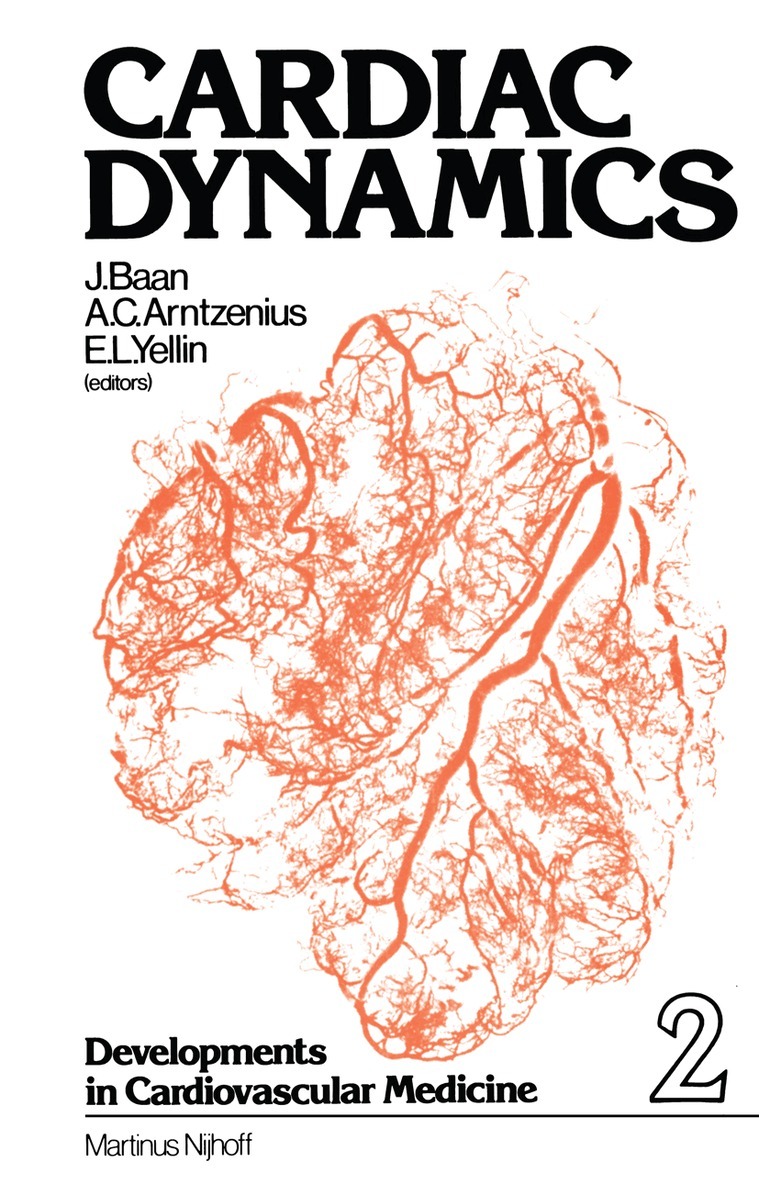
Cardiac Dynamics is the name of a relatively young field of study, born from the fruitful interaction between branches of two different disciplines: medicine and physics. "Dynamics" is the branch of physics which deals with the action of forces on bodies or particles in motion or at rest. "Cardiac" relates to the clinical field of cardiology but also to cardiophysiology, both of which are specialized branches of medicine. Narrower than the well established field of Hemodynamics, Cardiac Dynamics is restricted to dynamic phenomena occurring in and around the heart. The mathematical treatment of such phenomena, however, is vastly more complex because of the intricate nature of the mechanisms involved in the cardiac action. Thus, whereas hemodynamics is concerned with predominantly passive (visco-) elastic structures - vessels - containing time-variant flow of viscous flui- blood -, the mechanical study of the heart requires additional con siderations such as: active elastic components representing the contractile mechanism of cardiac muscle, complex geometry and fiber structure in the myocardial wall, autoregulatory mechanisms, and intricate flow patterns associated with valve motion. Viewed in this light it is not surprising that attempts to describe ventricular pump function and to quantify contractile performance have not reached the level of sophistication which is common in e. g. arterial hemodynamics. For the same reason, many of the often simplified approaches to describe ventricular mechanics failed to stand up to more rigorous theoretical, experimental or clinical testing.