Adam Sabra – författare
Visar alla böcker från författaren Adam Sabra. Handla med fri frakt och snabb leverans.
6 produkter
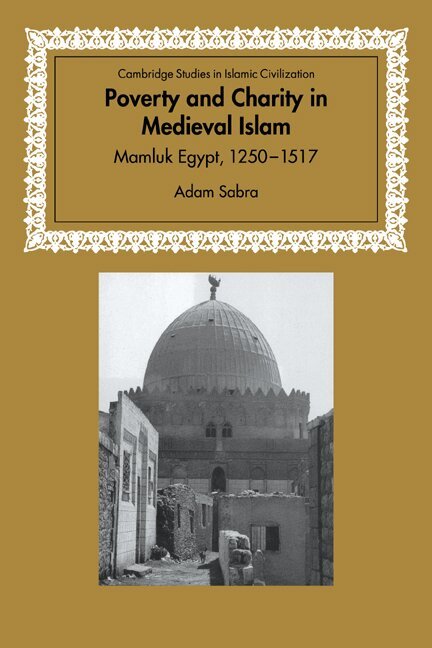
Poverty and Charity in Medieval Islam
Mamluk Egypt, 1250-1517
Häftad, 2006
838 kr
Lägg i varukorg
The study of poverty and charity in Islamic history has made significant advances and Adam Sabra's book represents a full-length treatment of the subject. By focusing on Mamluk Cairo, the author explores the attitude of medieval Muslims to poverty - why and how did they give alms - and the …
Poverty and Charity in Medieval Islam
Mamluk Egypt, 1250-1517
Inbunden, 2000
1677 kr
Lägg i varukorg
The study of poverty and charity in Islamic history has made significant advances and Adam Sabra's book represents a full-length treatment of the subject. By focusing on Mamluk Cairo, the author explores the attitude of medieval Muslims to poverty - why and how did they give alms - and the …
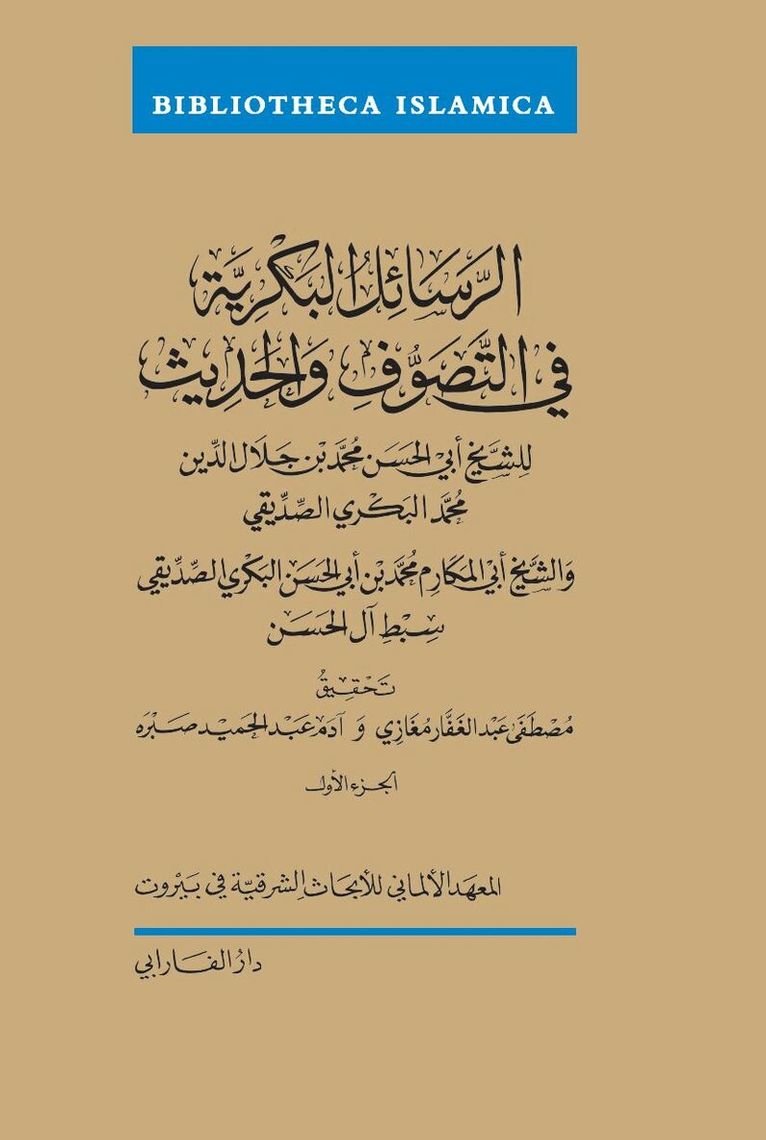
Treatises on Sufism and Ḥadīth
الرسائل البكرية في التصوف والحديث
Av Abū al-Ḥasan ibn Muḥammad al-Bakrī al-Ṣiddīqī, Muḥammad ibn Abī al-Ḥasan al-Bakrī al-Ṣiddīqī m. fl.
Inbunden, 2026
2494 kr
Kommande
These two volumes offer a collection of the short treatises of two influential Egyptian religious scholars of the sixteenth century. Abū al-Ḥasan Muḥammad al-Bakrī (898-952/1492-1545) and his son Muḥammad ibn Abī al-Ḥasan al-Bakrī al-Ṣiddīqī Sibṭ Āl al-Ḥasan (930-94/1524-86), who lived between …
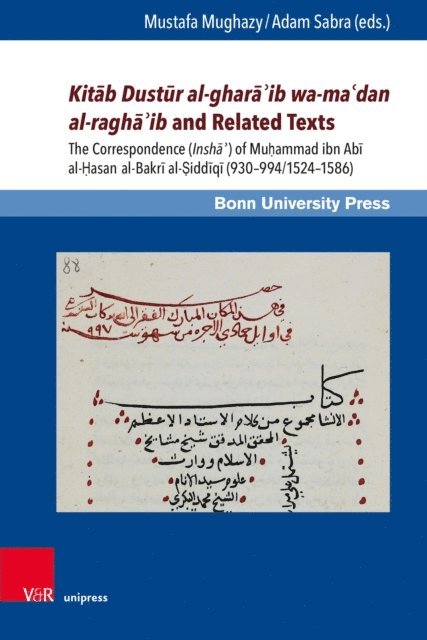
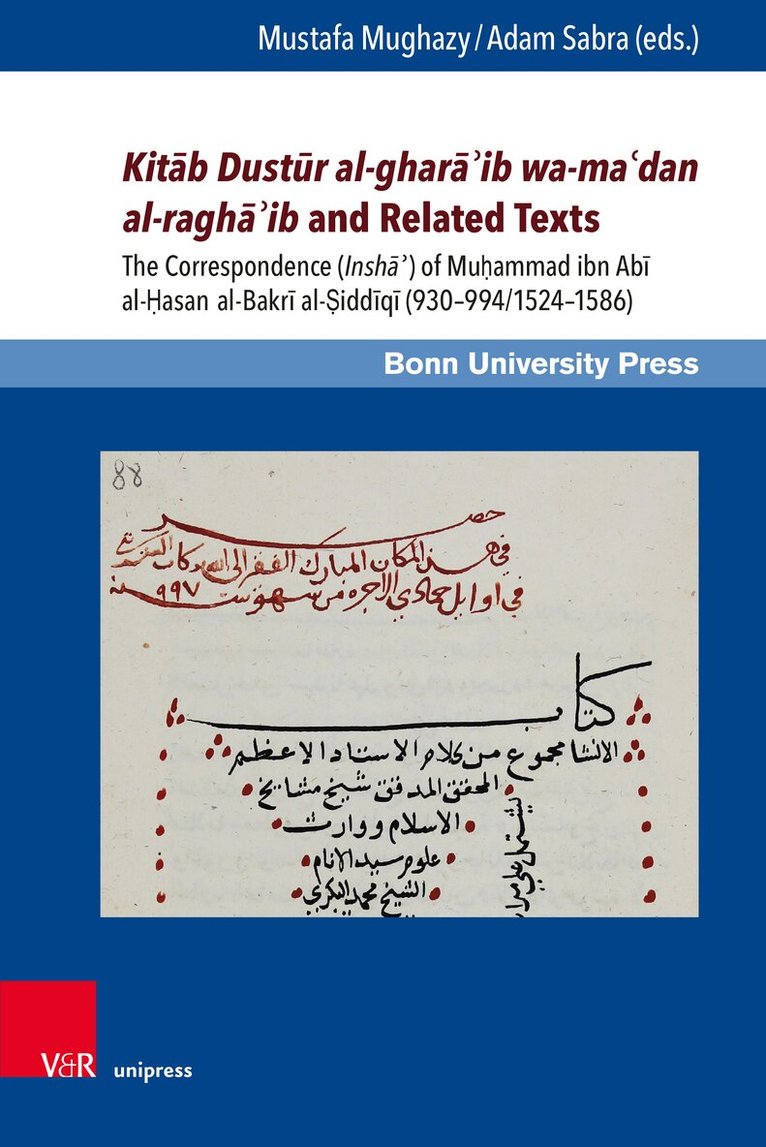
Kitab Dustur al-ghara?ib wa-ma?dan al-ragha?ib and Related Texts
The Correspondence (Inshāʾ) of Muḥammad ibn Abī al-Ḥasan al-Bakrī al-Ṣiddīqī (930–994/1524–1586)
Av Adam Sabra, Mustafa Mughazy
E-bok, 2020
919 kr
Lägg i varukorg
This is the first publication of the official correspondence of the leading religious scholar and literary figure, Shaykh Muhammad ibn Abi al-Hasan al-Bakri al-Siddiqi al-Shafi''i Sibt Al al-Hasan. It provides a window into the world of an influential religious scholar in sixteenth century Cairo …
Kitāb Dustūr al-gharāʾib wa-maʿdan al-raghāʾib and Related Texts
The Correspondence (Inshāʾ) of Muḥammad ibn Abī al-Ḥasan al-Bakrī al-Ṣiddīqī (930–994/1524–1586)
Av Mustafa Mughazy, Adam Sabra
Inbunden, 2020
1240 kr
Lägg i varukorg
This is the first publication of the official correspondence of the leading religious scholar and literary figure, Shaykh Muhammad ibn Abi al-Hasan al-Bakri al-Siddiqi al-Shafi‘i Sibt Al al-Hasan. It provides a window into the world of an influential religious scholar in sixteenth century Cairo and …
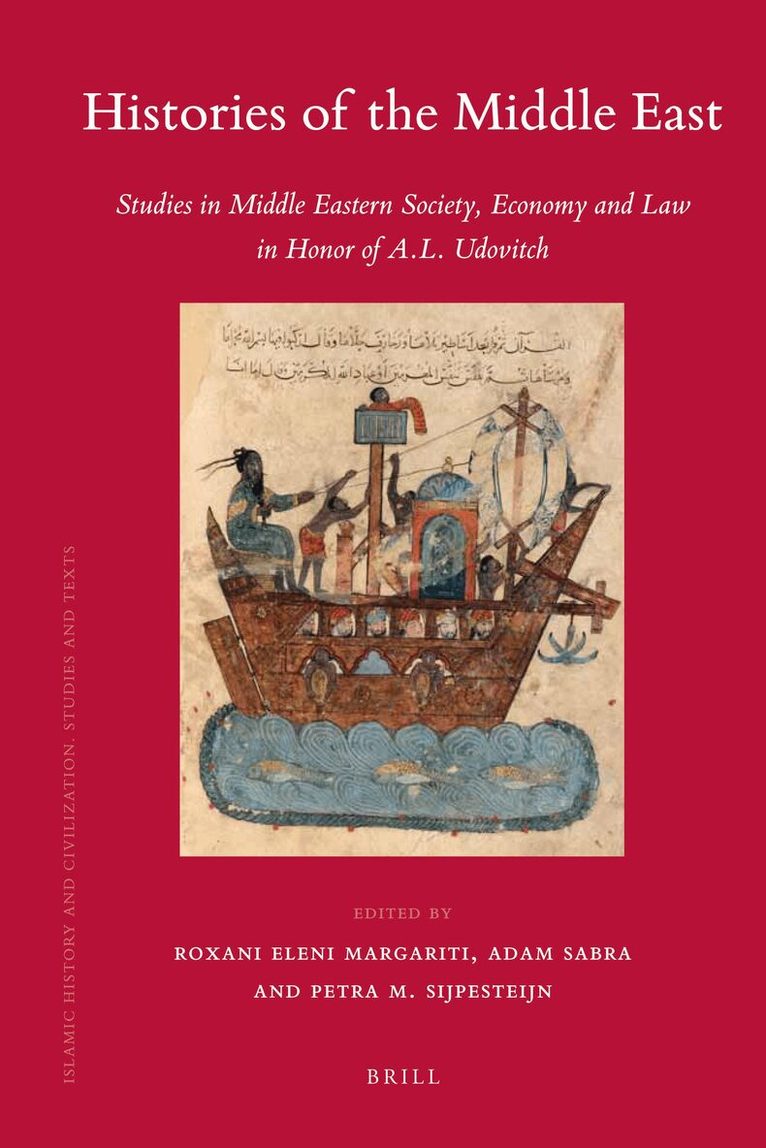
Histories of the Middle East
Studies in Middle Eastern Society, Economy and Law in Honor of A.L. Udovitch
Av Margariti Eleni Roxani, Adam Sabra m. fl.
Inbunden, 2010
2439 kr
Lägg i varukorg
For four decades Abraham L. Udovitch has been a leading scholar of the medieval Islamic world, its economic institutions, social structures, and legal theory and practice. In pursuing his quest to understand and explain the complex phenomena that these broad rubrics entail, he has published widely, …