Adam Swift - Böcker
Visar alla böcker från författaren Adam Swift. Handla med fri frakt och snabb leverans.
15 produkter
15 produkter
257 kr
Skickas inom 7-10 vardagar
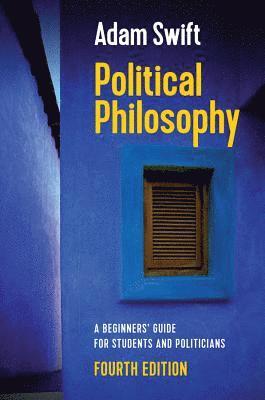
Politicians invoke grand ideas: social justice, democracy, community, liberty, equality. But what do these ideas really mean? How can politicians across the political spectrum appeal to the same values?This fourth edition of Adam Swift's highly readable introduction to political philosophy answers these important questions, and includes new material on issues such as nationalism, immigration and multiculturalism, as well as updated guides to further reading. This lively and accessible book is ideal for students, but it also brings the insights of the world's leading political philosophers to a wide general audience. Using plenty of examples, it equips readers to think for themselves about the ideas that shape political life.Democracy works best when both politicians and voters move beyond rhetoric to think clearly and carefully about the values and principles that should govern their society. But clear thinking is difficult in an age when established orthodoxies have fallen by the wayside and political debate is becoming increasingly tribal and raucous. Bringing political philosophy out of the ivory tower and within the reach of all, this book provides us with tools to cut through the complexities and penetrate the smokescreens of modern politics. In so doing, it makes a valuable contribution to the democratic process and this new edition will continue to be essential reading for students of political philosophy and theory.
781 kr
Skickas inom 5-8 vardagar
What is the relation between social class and social justice? This is currently a matter of public as well as academic controversy. While nobody would deny that the distribution of rewards in industrial societies is unequal, there is sharp disagreement about whether this inequality can be justified. Some see existing patterns of social mobility as evidence of inequality of opportunity. Others regard them as meritocratic, simply reflecting the distribution of abilities among the population. This fascinating, interdisciplinary study brings together recent developments in normative thinking about social justice with new empirical findings about educational attainment and social mobility. The result is a path-breaking contribution to our thinking about issues of class and justice, one that will be of interest to both sociologists and political theorists for many years to come.
1 975 kr
Skickas inom 5-8 vardagar
What is the relation between social class and social justice? This is currently a matter of public as well as academic controversy. While nobody would deny that the distribution of rewards in industrial societies is unequal, there is sharp disagreement about whether this inequality can be justified. Some see existing patterns of social mobility as evidence of inequality of opportunity. Others regard them as meritocratic, simply reflecting the distribution of abilities among the population. This fascinating, interdisciplinary study brings together recent developments in normative thinking about social justice with new empirical findings about educational attainment and social mobility. The result is a path-breaking contribution to our thinking about issues of class and justice, one that will be of interest to both sociologists and political theorists for many years to come.
268 kr
Skickas inom 5-8 vardagar
Should religious schools be an option? Should they receive public funding? Are they bad for community cohesion? What should we make of the charge that they indoctrinate? How should they be regulated? People disagree on the answers to these questions. Some maintain that religious schools should not be permitted. If parents want to raise their children in a particular faith at home, then that is up to them, but schools should not be involved. Others think it obvious that parents should be free to send their children to religious schools. Any government that ruled that out would be violating parents' right to religious freedom, or their right to raise their children according to their own beliefs. In order to make progress on these issues, we need a way of thinking about them that enables us to understand more clearly what is at stake. This book provides a framework that identifies the different kinds of normative considerations that are in play and provides the basis for understanding why people disagree about religious schools. It uses a method that involves moving from the relevant normative considerations--especially the child's potential to acquire personal autonomy and to develop a capacity and disposition to treat others as equals--to specific policy proposals for governing religious schools in England today, taking into account the legal and political constraints on policy options and the likely unintended consequences of reforms.A unique feature of the book is that its three authors have somewhat different perspectives on the implications of the normative framework they each endorse, which they draw out in separate chapters. Despite reaching different conclusions on some philosophical issues concerning religious schools, the framework and method they share enables them to converge on a regulatory framework that forbids directive teaching aimed at imparting religious beliefs in publicy-funded religious schools, and that makes the charitable status of private religious schools conditional on avoiding this kind of teaching.
956 kr
Skickas inom 5-8 vardagar
Should religious schools be an option? Should they receive public funding? Are they bad for community cohesion? What should we make of the charge that they indoctrinate? How should they be regulated? People disagree on the answers to these questions. Some maintain that religious schools should not be permitted. If parents want to raise their children in a particular faith at home, then that is up to them, but schools should not be involved. Others think it obvious that parents should be free to send their children to religious schools. Any government that ruled that out would be violating parents' right to religious freedom, or their right to raise their children according to their own beliefs. In order to make progress on these issues, we need a way of thinking about them that enables us to understand more clearly what is at stake. This book provides a framework that identifies the different kinds of normative considerations that are in play and provides the basis for understanding why people disagree about religious schools. It uses a method that involves moving from the relevant normative considerations--especially the child's potential to acquire personal autonomy and to develop a capacity and disposition to treat others as equals--to specific policy proposals for governing religious schools in England today, taking into account the legal and political constraints on policy options and the likely unintended consequences of reforms.A unique feature of the book is that its three authors have somewhat different perspectives on the implications of the normative framework they each endorse, which they draw out in separate chapters. Despite reaching different conclusions on some philosophical issues concerning religious schools, the framework and method they share enables them to converge on a regulatory framework that forbids directive teaching aimed at imparting religious beliefs in publicy-funded religious schools, and that makes the charitable status of private religious schools conditional on avoiding this kind of teaching.
767 kr
Skickas inom 7-10 vardagar
We spend a lot of time arguing about how schools might be improved. But we rarely take a step back to ask what we as a society should be looking for from education what exactly should those who make decisions be trying to achieve? In Educational Goods, two philosophers and two social scientists address this very question. They begin by broadening the language for talking about educational policy: "educational goods" are the knowledge, skills, and attitudes that children develop for their own benefit and that of others; "childhood goods" are the valuable experiences and freedoms that make childhood a distinct phase of life. Balancing those, and understanding that not all of them can be measured through traditional methods, is a key first step. From there, they show how to think clearly about how those goods are distributed and propose a method for combining values and evidence to reach decisions. They conclude by showing the method in action, offering detailed accounts of how it might be applied in school finance, accountability, and choice.The result is a reimagining of our decision making about schools, one that will sharpen our thinking on familiar debates and push us toward better outcomes.
237 kr
Skickas inom 7-10 vardagar
We spend a lot of time arguing about how schools might be improved. But we rarely take a step back to ask what we as a society should be looking for from education what exactly should those who make decisions be trying to achieve? In Educational Goods, two philosophers and two social scientists address this very question. They begin by broadening the language for talking about educational policy: "educational goods" are the knowledge, skills, and attitudes that children develop for their own benefit and that of others; "childhood goods" are the valuable experiences and freedoms that make childhood a distinct phase of life. Balancing those, and understanding that not all of them can be measured through traditional methods, is a key first step. From there, they show how to think clearly about how those goods are distributed and propose a method for combining values and evidence to reach decisions. They conclude by showing the method in action, offering detailed accounts of how it might be applied in school finance, accountability, and choice.The result is a reimagining of our decision making about schools, one that will sharpen our thinking on familiar debates and push us toward better outcomes.
408 kr
Skickas inom 10-15 vardagar
This core textbook examines the economic paradigms at work in media industries and markets, enabling analysis of the media system as a whole. In addition to succinct accounts of neo-classical and critical political economics, this insightful text offers fresh perspectives for understanding media drawn from two ‘heterodox’ approaches: institutional economics and evolutionary economics. Applying these paradigms to vital topics and case studies, Stuart Cunningham, Terry Flew and Adam Swift stress the value – and limits – of contending economic approaches in understanding how the media operates today.Succinct and accessible, this text is essential reading for all students of media and communication studies, as well as those from economics, policy studies, business studies and marketing backgrounds with an interest in the media.
1 393 kr
Tillfälligt slut
How not to be a hypocrite: the indispensable guide to school choice that morally perplexed parents have been waiting for.Many of us believe in social justice and equality of opportunity - but we also want the best for our kids. How can we square our political principles with our special concern for our own children? This marvellous book takes us through the moral minefield that is school choice today.Does a commitment to social justice mean you have to send your children to the local comprehensive - regardless of its academic results? Is it hypocritical to disapprove of private schools and yet send your child to one? Some parents feel guilty but shouldn't. Others should feel guilty but don't. Read How Not to be a Hypocrite, then answer the questionnaire, and work out where you stand on this crucial issue.
661 kr
Skickas inom 10-15 vardagar
How not to be a hypocrite: the indispensable guide to school choice that morally perplexed parents have been waiting for.Many of us believe in social justice and equality of opportunity - but we also want the best for our kids. How can we square our political principles with our special concern for our own children? This marvellous book takes us through the moral minefield that is school choice today.Does a commitment to social justice mean you have to send your children to the local comprehensive - regardless of its academic results? Is it hypocritical to disapprove of private schools and yet send your child to one? Some parents feel guilty but shouldn't. Others should feel guilty but don't. Read How Not to be a Hypocrite, then answer the questionnaire, and work out where you stand on this crucial issue.
482 kr
Skickas inom 7-10 vardagar
This is a substantially updated edition of the established guide to this key debate in modern political philosophy.
276 kr
Skickas inom 7-10 vardagar
The family is hotly contested ideological terrain. Some defend the traditional two-parent heterosexual family while others welcome its demise. Opinions vary about how much control parents should have over their children's upbringing. Family Values provides a major new theoretical account of the morality and politics of the family, telling us why the family is valuable, who has the right to parent, and what rights parents should--and should not--have over their children. Harry Brighouse and Adam Swift argue that parent-child relationships produce the "familial relationship goods" that people need to flourish. Children's healthy development depends on intimate relationships with authoritative adults, while the distinctive joys and challenges of parenting are part of a fulfilling life for adults. Yet the relationships that make these goods possible have little to do with biology, and do not require the extensive rights that parents currently enjoy.Challenging some of our most commonly held beliefs about the family, Brighouse and Swift explain why a child's interest in autonomy severely limits parents' right to shape their children's values, and why parents have no fundamental right to confer wealth or advantage on their children. Family Values reaffirms the vital importance of the family as a social institution while challenging its role in the reproduction of social inequality and carefully balancing the interests of parents and children.
Politics, Media and Democracy in Australia
Public and Producer Perceptions of the Political Public Sphere
Häftad, Engelska, 2017
834 kr
Skickas inom 10-15 vardagar
In Australia, as in many comparable democracies, the role of the media in the political process is high on the public agenda. There is a perception of widespread disillusionment with and disengagement from politics amongst voters, and criticism of the media for failing to fulfil their democratic responsibilities adequately. This book evaluates public perceptions of the performance of the political media in the context of the declared aims and objectives of media producers. From there the authors present findings for improving the capacity of political media to engage and inform their audiences in ways which enhance the quality and popular legitimacy of the democratic process. These conclusions are of import not only to Australians, but to observers of mediated politics in the UK, the US and other countries where similar debates around the ‘crisis of public communication’ are on-going.
Politics, Media and Democracy in Australia
Public and Producer Perceptions of the Political Public Sphere
Inbunden, Engelska, 2017
2 088 kr
Skickas inom 10-15 vardagar
In Australia, as in many comparable democracies, the role of the media in the political process is high on the public agenda. There is a perception of widespread disillusionment with and disengagement from politics amongst voters, and criticism of the media for failing to fulfil their democratic responsibilities adequately. This book evaluates public perceptions of the performance of the political media in the context of the declared aims and objectives of media producers. From there the authors present findings for improving the capacity of political media to engage and inform their audiences in ways which enhance the quality and popular legitimacy of the democratic process. These conclusions are of import not only to Australians, but to observers of mediated politics in the UK, the US and other countries where similar debates around the ‘crisis of public communication’ are on-going.
688 kr
Skickas inom 7-10 vardagar
Politicians invoke grand ideas: social justice, democracy, community, liberty, equality. But what do these ideas really mean? How can politicians across the political spectrum appeal to the same values?This fourth edition of Adam Swift's highly readable introduction to political philosophy answers these important questions, and includes new material on issues such as nationalism, immigration and multiculturalism, as well as updated guides to further reading. This lively and accessible book is ideal for students, but it also brings the insights of the world's leading political philosophers to a wide general audience. Using plenty of examples, it equips readers to think for themselves about the ideas that shape political life.Democracy works best when both politicians and voters move beyond rhetoric to think clearly and carefully about the values and principles that should govern their society. But clear thinking is difficult in an age when established orthodoxies have fallen by the wayside and political debate is becoming increasingly tribal and raucous. Bringing political philosophy out of the ivory tower and within the reach of all, this book provides us with tools to cut through the complexities and penetrate the smokescreens of modern politics. In so doing, it makes a valuable contribution to the democratic process and this new edition will continue to be essential reading for students of political philosophy and theory.