Adela Pineda Franco - Böcker
Visar alla böcker från författaren Adela Pineda Franco. Handla med fri frakt och snabb leverans.
5 produkter
5 produkter
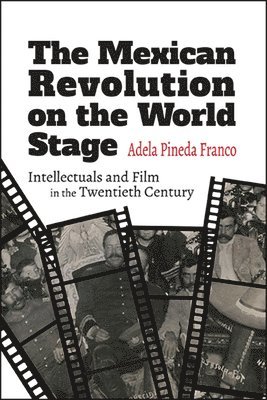
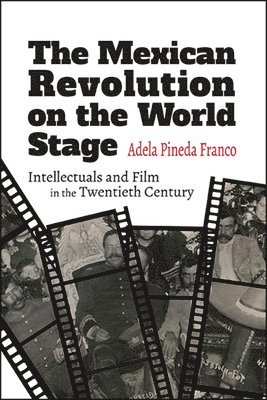
Mexican Revolution on the World Stage
Intellectuals and Film in the Twentieth Century
Häftad, Engelska, 2019
626 kr
Skickas inom 3-6 vardagar
Explores the wide-ranging impact of the Mexican Revolution on global cinema and Western intellectual thought.The first major social revolution of the twentieth century, the Mexican Revolution was visually documented in technologically novel ways and to an unprecedented degree during its initial armed phase (1910–21) and the subsequent years of reconstruction (1921–40). Offering a sweeping and compelling new account of this iconic revolution, The Mexican Revolution on the World Stage reveals its profound impact on both global cinema and intellectual thought in and beyond Mexico. Focusing on the period from 1940 to 1970, Adela Pineda Franco examines a group of North American, European, and Latin American filmmakers and intellectuals who mined this extensive visual archive to produce politically engaged cinematic works that also reflect and respond to their own sociohistorical contexts. The author weaves together multilayered analysis of individual films, the history of their production and reception, and broader intellectual developments to illuminate the complex relationship between culture and revolution at the onset of World War II, during the Cold War, and amid the anti-systemic movements agitating Latin America in the 1960s. Ambitious in scope, this book charts an innovative transnational history of not only the visual representation but also the very idea of revolution.
Mexican Revolution on the World Stage
Intellectuals and Film in the Twentieth Century
Inbunden, Engelska, 2019
1 088 kr
Tillfälligt slut
Explores the wide-ranging impact of the Mexican Revolution on global cinema and Western intellectual thought.The first major social revolution of the twentieth century, the Mexican Revolution was visually documented in technologically novel ways and to an unprecedented degree during its initial armed phase (1910–21) and the subsequent years of reconstruction (1921–40). Offering a sweeping and compelling new account of this iconic revolution, The Mexican Revolution on the World Stage reveals its profound impact on both global cinema and intellectual thought in and beyond Mexico. Focusing on the period from 1940 to 1970, Adela Pineda Franco examines a group of North American, European, and Latin American filmmakers and intellectuals who mined this extensive visual archive to produce politically engaged cinematic works that also reflect and respond to their own sociohistorical contexts. The author weaves together multilayered analysis of individual films, the history of their production and reception, and broader intellectual developments to illuminate the complex relationship between culture and revolution at the onset of World War II, during the Cold War, and amid the anti-systemic movements agitating Latin America in the 1960s. Ambitious in scope, this book charts an innovative transnational history of not only the visual representation but also the very idea of revolution.
205 kr
Skickas inom 7-10 vardagar
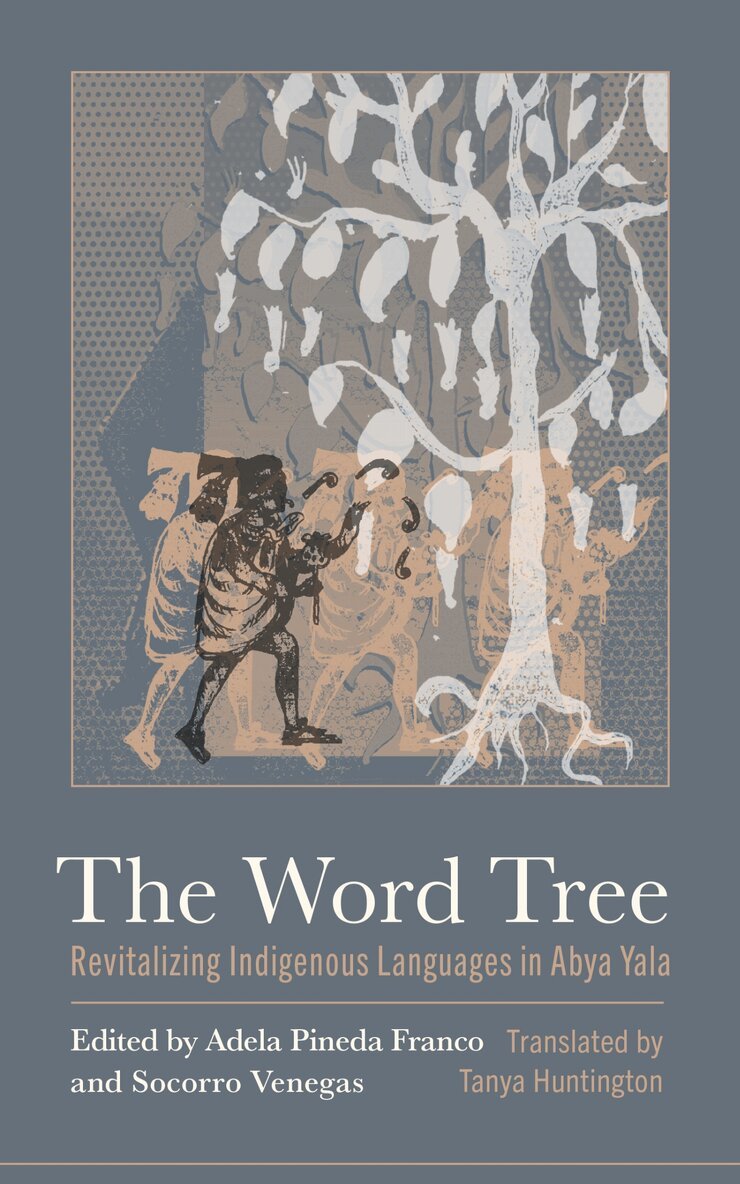
A collaborative effort to address some of the chronic issues affecting the preservation and revitalization of indigenous languages.What does it mean to "revitalize" an indigenous language when approximately 6,700 of the nearly 7,000 left in the world need protection? Where to begin? Each language offers a sense of history, identity, and belonging within society to the people actively using it. The Word Tree begins by hearing directly from those still communicating in some of these less dominant languages, from Achi'es to Zapotec, and offers the metaphor of a tree whose political roots sustain the trunk of education that will bear the fruit of learning languages anew. Whether describing the tension between indigenous and state-recognized languages; the process of linguistics displacement resulting from migration; or the value of locally focused efforts in a cultural cooperative, these nine essays offer fresh and useful perspectives. The Word Tree is the result of a collaboration between the National Autonomous University of Mexico and the University of Texas at Austin. Gathering diverse concerns, experiences, explorations, proposals, and perspectives on the revitalization of some of the continent's most imperiled indigenous languages, the contributors aim to introduce their struggle for existence to a modern world. From south to north, the Quecha or Runasimi, Maya, Zapotec or Diidxaza, Chatino, Mephaa or Tlapaneco, Miteco, Mixe or Auukj, and Nahuatl languages exist in all their vast complexities and contexts. At its most fundamental level, this book is a call to develop alternative paths for human existence in which caring for one another is the consensus.
207 kr
Skickas inom 5-8 vardagar
Observed in Mexico and parts of the United States, El Día de Muertos, or Day of the Dead, is a celebratory holiday. Los Muertos is the first anthology of fiction relating to or inspired by this bicultural tradition. Each of the two dozen Mexican and Mexican American writers featured here has a unique affinity for the myriad ideas connected closely to the El Día de Muertos—some in less obvious ways. The stories connect to the metaphors and connotations related to memorializing the dead, some reflecting on the ritualized and religious aspects of what has become a commercialized holiday and others reacting to such cultural appropriations.In celebration and reconciliation, stories like Alessandra Narváez Varela’s, told from the point of view of a Día de los Muertos wreath, and Marytza Rubio’s, about a young woman trying to rewrite a young man’s death through parallel dimensions, illustrate the ways Latino cultures process death. From Kirstin Valdez Quade’s little girl struggling to accept her mother’s abandonment to David Rice’s character forgiving himself in remembrance of his daughter’s namesake, each character fully embraces what it means to look death in the face and celebrate the losses of the departed. From solemn ofrendas and milagros to everyday acts far removed from any trace of pan de muerto or papel picado, these diverse stories call us to appreciate the holiday’s broader cultural significance.Writers include Ana Gloria Álvarez Pedrajo, Rosa Beltrán, Ana García Bergua, Ana Castillo, Lucha Corpi, Elizabeth Gonzalez James, Diana López, Lorraine M. López, Alberto Reyes Morgan, Manuel Muñoz, Alessandra Narváez-Varela, Guadalupe Nettel, Daniel A. Olivas, Pedro Ángel Palou, Rene S Perez II, Kirstin Valdez Quade, David Rice, Alberto Ríos, Ito Romo, Marytza K. Rubio, Socorro Venegas, and Désirée Zamorano.
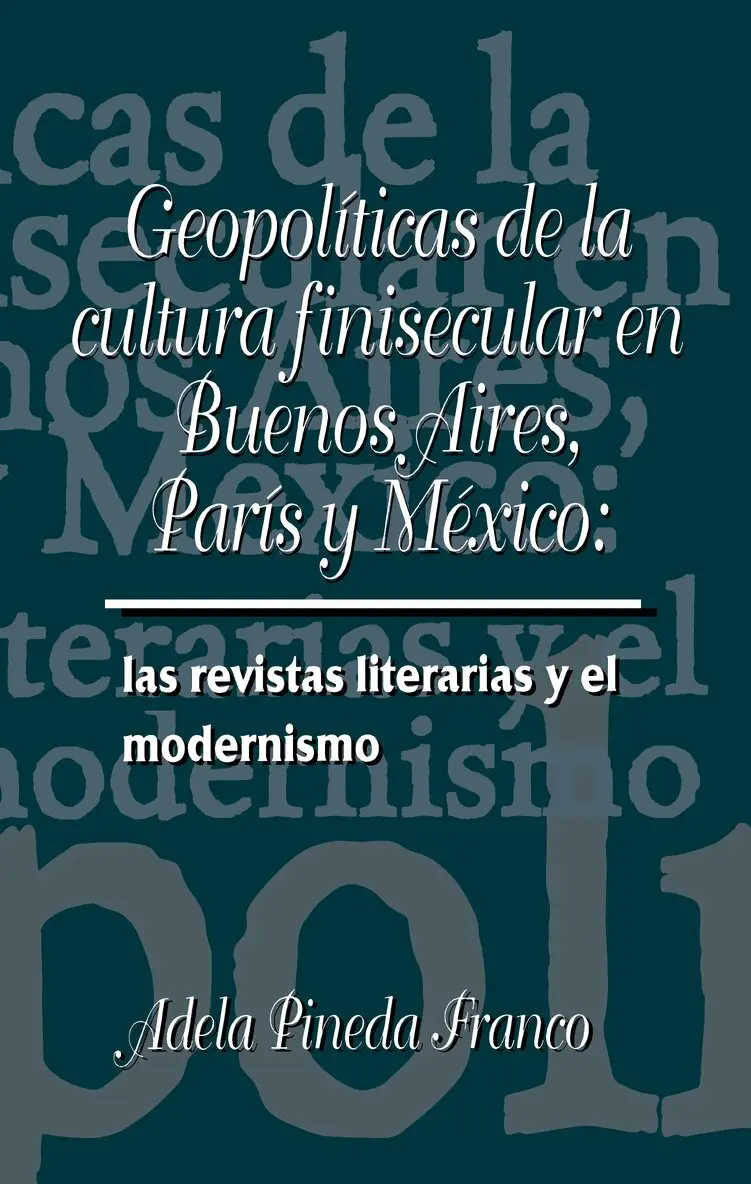
Geopolíticas de la cultura finesecular en Buenos Aires, París y México: las revistas literarias y el modernismo
Häftad, Spanska, 2006
754 kr
Skickas inom 7-10 vardagar
La escritura de este libro fué motivada por una reflexión sobre el sentido de inmediatez y permeabilidad de prácticas culturales y literarias ya existentes. Las revistas literarias son vehículos idóneos para tal reflexión ya que están destinadas a no perdurar desde su lanzamiento. Mirando las revistas literarias de finales del siglo XIX, uno se percata de que letra e imagen se dan la mano para evocar los aires de la modernidad.Aquí se analizan cuatro revistas que pertenecen a contextos heterogéneos: la Revista América (1894), de Buenos Aires, el Mercure de France (1980-1933), de París, y la Revista Azul (1894-96) y la Revista Moderna (1989-1911) de México. La lectura de los mensajes de modernidad de estas publicaciones está determinada por factores como las condiciones materiales de producción y circulación de las revistas, la posición de sus productores en el campo cultural, sus negociaciones con otros campos y su inscripción geopolítica.Estos géneros fueron creados para ser leídos de manera álgida e inmediata, arraigados a la actualidad mientras que el lector actual se acerca a ellos con una perspectiva de reconstrucción de esa modernidad. ¿Cómo podemos establecer un puente entre estas dos lecturas?~The creation of this book was motivated by a reflection on the sense of immediacy and permeability of existing cultural and literary practices. Literary magazines are ideal vehicles for such reflection since they are destined not to last from their inception. Looking at the literary magazines of the late 19th century, one realises that letter and image go hand in hand in evoking modernity.Here we analyse four magazines that belong to heterogeneous contexts: Revista América (1894), from Buenos Aires, Mercure de France (1980-1933), from Paris, and Revista Azul (1894-96) and Revista Moderna (1989-1911) from México. The reading of the messages of modernity of these publications is determined by factors such as the material conditions of production and circulation of the magazines, the position of their producers in the cultural field, their negotiations with other fields and their geopolitical inscription.These genres were created to be read in a vivid and immediate way, rooted in the present while the current reader approaches them with a perspective of reconstructing that modernity but can we establish a connection between these two readings?