Adrian Koopman – författare
Visar alla böcker från författaren Adrian Koopman. Handla med fri frakt och snabb leverans.
4 produkter
4 produkter
397 kr
Skickas inom 11-20 vardagar
In this book, Adrian Koopman describes the complex relationship between birds, the Zulu language and Zulu culture. A number of chapters look at the underlying meaning of bird names, and here we will find that the Zulu name of the Goliath Heron means ‘what gives birth to baby crocodiles’, the dikkop (umbangaqhwa) means ‘what causes frost’, and the African Hoopoe is a party-goer who wears a colourful blanket. The book goes further than just Zulu names, exploring the underlying meanings of bird names from other South African languages and languages from Central and East Africa. Here we find birds with names that translate as ‘cool-porridge’, ‘kiss-banana-flower’ and ‘waiter-at-the-end-of-the furrow’.A focus on Zulu traditional oral literature details the roles birds have played in Zulu praise poetry (including the praise poems of certain birds themselves) and in proverbs, riddles and children’s games. Also considered is traditional bird lore, examining the role played by various species as omens and portents, as indicators of bad luck and evil, as forecasters of rain and storm, and as harbingers of the seasons. Here we see that the Bateleur Eagle (ingqungqulu) is linked to war, the Southern Ground Hornbill (insingizi) to thunder and heavy rain, the Red-chested Cuckoo (uphezukokhono) to the start of the ploughing season, and the Jacobin Cuckoo (inkanku) to the start of summer.Zulu Bird Names and Bird Lore discusses the Zulu Bird Name Project, a series of Zulu bird name workshops held between 2013 and 2017 with Zulu-speaking bird guides designed to confirm (or otherwise) all previously recorded Zulu names for birds, while at the same time devising new names for those without previously recorded names. The result has been a list of species-specific names for all birds in the Zulu-speaking region. Finally, the book turns to the role such new bird names can play in conservation education and in avi-tourism.
2 596 kr
Kommande
This volume provides comprehensive analysis of bird naming systems in southern Africa, examining scientific nomenclature, English and Afrikaans vernacular names, and indigenous African language names, including:Comprehensive analysis of bird naming systems across scientific, vernacular, and indigenous languages in southern AfricaHistorical examination of English bird names from Anglo-Saxon origins through contemporary standardization effortsDetailed study of Afrikaans bird names tracing development from Cape Dutch to modern usageExtensive documentation of African language bird names including semantic categories, cultural integration, and environmental contextsAnalysis of scientific nomenclature examining etymological origins, semantic patterns, and interface with vernacular naming systemsThis title has been co-published with UKZN Press. T&F does not sell or distribute the print versions in Sub-Saharan Africa.
310 kr
Skickas inom 7-10 vardagar
Amagama Izinyoni: Zulu Names of Birds lists all the bird species found in KwaZulu-Natal and surrounds, gives the proposed standardised Zulu name for each species, and explains the underlying meaning and how the name came into being. All earlier names for these birds, even if no longer in current use, have been recorded here, making this a historical repository of Zulu bird names as well. This book is the result of the six-year Zulu Bird Name Project. Between 2013 and 2018, annual workshops, organised and facilitated by the three authors, brought together a total of eighteen mother-tongue Zulu-speaking bird experts to research the names of bird species present in the Zulu-speaking area of South Africa. At the start of the project, only approximately 40 per cent of the bird species of this area had species-specific Zulu names; by the end of the project all 550 species had unique names. The comprehensive introduction explains the methodology used in the Zulu bird name workshops, providing a template for linguists and ornithologists who might wish to do similar bird-naming exercises in the other African languages of southern Africa. The introduction also provides some linguistic and onomastic insights into bird naming generally and Zulu bird names in particular.
285 kr
Skickas
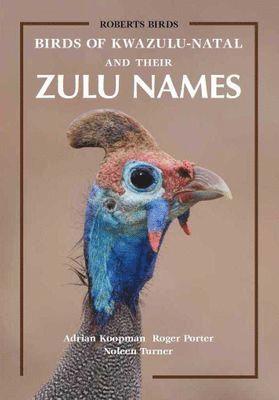
Accompanied by superb photographs, this ground-breaking book is the first practical field guide to record the Zulu names of bird species commonly found in KwaZulu-Natal. Where one name was previously used to describe a number of birds belonging to the same genus (i.e. ukhozi for most eagles), the need existed to give species specific names. The authors hope this book will be used to inspire a greater interest, awareness and protection of the avifaunal heritage of KwaZulu-Natal. It is vital for the heritage of all South Africans that these names are recorded and made widely available. Noleen Turner, a passionate birder and honorary research professor at the University of KwaZulu-Natal, in collaboration with Prof Adrian Koopman and Roger Porter, led this seven-year project, together with 18 expert Zulu bird guides from various parts of KwaZulu-Natal. The recording, derivation and crafting of these names has been a lengthy but fascinating process. Turner notes that the project has included not only the consideration of biodiversity management, but also the pursuit of social ecology, the long neglected but crucial 'people's' aspect of conservation. She said when it came to Zulu names for birds, they had to fill in the gaps, and of the 550 species analysed, some were confirmation of well-known names, such as inkazwi for the fish eagle; some were selected from the most commonly known names such as inkankane for the hadeda ibis. Some names were redirected: for example, the name for the Brown-headed Kingfisher indwazela became the generic name for all kingfishers (ndwaza referring to the motionless position while waiting for prey). Other new names were coined based on appearance, calls, behaviour and distribution such as isankawu (the bird whose call sounds like a vervet monkey) for the Southern Pochard, or umacutha derived from the Zulu word cutha (meaning to draw the body tense) as the generic name for herons, which perfectly describes the bird's behaviour before it lunges at its prey.