Roger Porter – författare
Visar alla böcker från författaren Roger Porter. Handla med fri frakt och snabb leverans.
3 produkter
3 produkter
534 kr
Skickas inom 10-15 vardagar
Thermal analysis cuts a broad swathe through contemporary science. Within this domain, advances in instrumentation permit the application of quantitative calorimetry to the full spectrum of modern materials. This can be illustrated perhaps no better than by the set of contributions which make up this Volume 4 of Analytical Calorimetry. The research supported in this fourth volume of Analytical Calorimetry covers a wide variety of topics. The range indicates the sophistication which thermal analysis is reaching and additional ly the ever-widening applications that are being developed. The contributions to the Volume represent, in part, papers presented before the Division of Analytical Chemistry at the Fourth Symposium on Analytical Chemistry held at the 172nd National Meeting of the American Chemical Society, August 29 - September 3, 1976. Several additional key contributions are included by prominent workers in the field. Julian F. Johnson Roger S. Porter v Quantitative Scanning Calorimetry with Computerized Data Acquisition and Reduction . . . . . . . 1 Aris Doelman, Annie R. Gregges, and Edward M. Barrall, II Thermodynamic Properties of a Series of P-N-Alkyl-P'-Cyanobiphenyls 19 E. M. Barrall II, R. J. Cox, A. Doelman, N. Clecak, J. A. Logan, and A. R. Gregges Thermodynamic Properties of a Series of 37 P-N-Alkoxy-P'-Cyanobiphenyls R. J. Cox, E. M. Barrall II, A. Doelman, N. J. Clecak, J. A. Logan, R. D. Diller, and A. R. Gregges A New Equation for Predicting Polyethylene Lifetimes from Thermal Data 51 Cary F.

310 kr
Skickas inom 7-10 vardagar
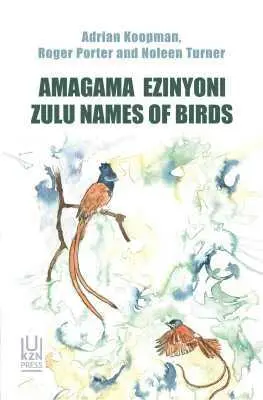
Amagama Izinyoni: Zulu Names of Birds lists all the bird species found in KwaZulu-Natal and surrounds, gives the proposed standardised Zulu name for each species, and explains the underlying meaning and how the name came into being. All earlier names for these birds, even if no longer in current use, have been recorded here, making this a historical repository of Zulu bird names as well. This book is the result of the six-year Zulu Bird Name Project. Between 2013 and 2018, annual workshops, organised and facilitated by the three authors, brought together a total of eighteen mother-tongue Zulu-speaking bird experts to research the names of bird species present in the Zulu-speaking area of South Africa. At the start of the project, only approximately 40 per cent of the bird species of this area had species-specific Zulu names; by the end of the project all 550 species had unique names. The comprehensive introduction explains the methodology used in the Zulu bird name workshops, providing a template for linguists and ornithologists who might wish to do similar bird-naming exercises in the other African languages of southern Africa. The introduction also provides some linguistic and onomastic insights into bird naming generally and Zulu bird names in particular.
285 kr
Skickas
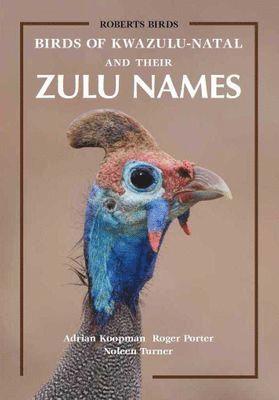
Accompanied by superb photographs, this ground-breaking book is the first practical field guide to record the Zulu names of bird species commonly found in KwaZulu-Natal. Where one name was previously used to describe a number of birds belonging to the same genus (i.e. ukhozi for most eagles), the need existed to give species specific names. The authors hope this book will be used to inspire a greater interest, awareness and protection of the avifaunal heritage of KwaZulu-Natal. It is vital for the heritage of all South Africans that these names are recorded and made widely available. Noleen Turner, a passionate birder and honorary research professor at the University of KwaZulu-Natal, in collaboration with Prof Adrian Koopman and Roger Porter, led this seven-year project, together with 18 expert Zulu bird guides from various parts of KwaZulu-Natal. The recording, derivation and crafting of these names has been a lengthy but fascinating process. Turner notes that the project has included not only the consideration of biodiversity management, but also the pursuit of social ecology, the long neglected but crucial 'people's' aspect of conservation. She said when it came to Zulu names for birds, they had to fill in the gaps, and of the 550 species analysed, some were confirmation of well-known names, such as inkazwi for the fish eagle; some were selected from the most commonly known names such as inkankane for the hadeda ibis. Some names were redirected: for example, the name for the Brown-headed Kingfisher indwazela became the generic name for all kingfishers (ndwaza referring to the motionless position while waiting for prey). Other new names were coined based on appearance, calls, behaviour and distribution such as isankawu (the bird whose call sounds like a vervet monkey) for the Southern Pochard, or umacutha derived from the Zulu word cutha (meaning to draw the body tense) as the generic name for herons, which perfectly describes the bird's behaviour before it lunges at its prey.