Adrian Rice – författare
Visar alla böcker från författaren Adrian Rice. Handla med fri frakt och snabb leverans.
11 produkter
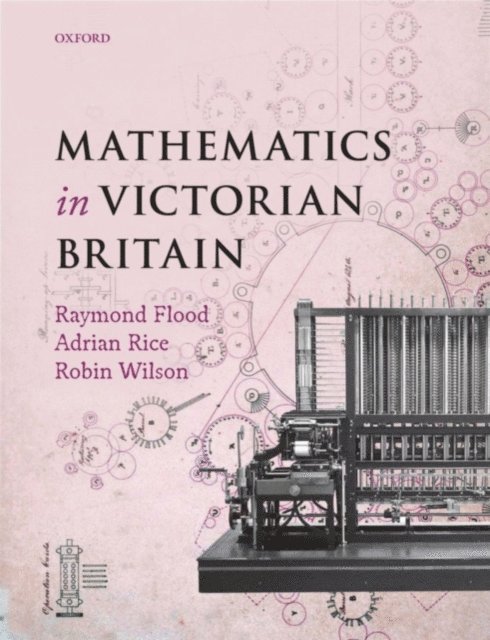
Mathematics in Victorian Britain
Av photographer and broadcaster Foreword by Dr Adam Hart-Davis, Robin Wilson m. fl.
E-bok, 2011
685 kr
Lägg i varukorg
During the Victorian era, industrial and economic growth led to a phenomenal rise in productivity and invention. That spirit of creativity and ingenuity was reflected in the massive expansion in scope and complexity of many scientific disciplines during this time, with subjects evolving rapidly and …
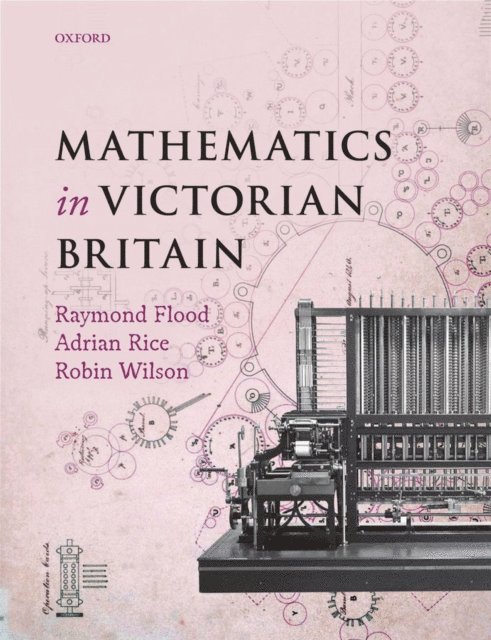
Mathematics in Victorian Britain
Av photographer and broadcaster Foreword by Dr Adam Hart-Davis, Robin Wilson m. fl.
E-bok, 2011
685 kr
Lägg i varukorg
During the Victorian era, industrial and economic growth led to a phenomenal rise in productivity and invention. That spirit of creativity and ingenuity was reflected in the massive expansion in scope and complexity of many scientific disciplines during this time, with subjects evolving rapidly and …
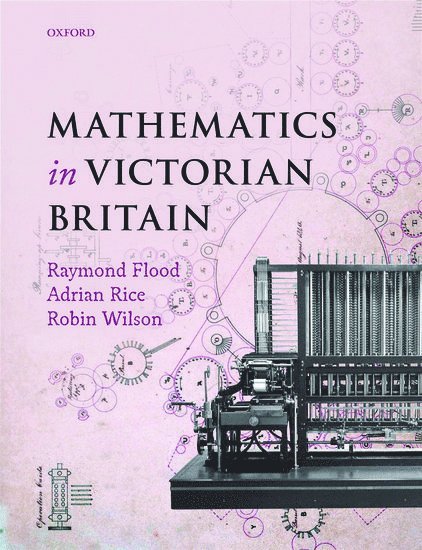
Mathematics in Victorian Britain
Av photographer and broadcaster Foreword by Dr Adam Hart-Davis, Writer, Raymond Flood m. fl.
Inbunden, 2011
928 kr
Lägg i varukorg
During the Victorian era, industrial and economic growth led to a phenomenal rise in productivity and invention. That spirit of creativity and ingenuity was reflected in the massive expansion in scope and complexity of many scientific disciplines during this time, with subjects evolving rapidly and …
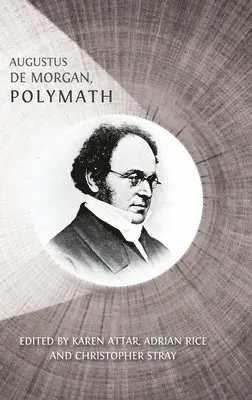
Augustus De Morgan, Polymath: New Perspectives on his Life and Legacy
Häftad, 2024
484 kr
Lägg i varukorg
Augustus De Morgan, Polymath: New Perspectives on his Life and Legacy
Inbunden, 2024
690 kr
Lägg i varukorg
Ada Lovelace
La formación de una científica informática
Av Adrian Rice, Ursula Martin m. fl.
E-bok, 2020
149 kr
Lägg i varukorg
Ada, condesa de Lovelace (1815-1852), fue hija del poeta romántico Lord Byron y su esposa, Anna Isabella. A pesar de ser una actividad inusual para las jóvenes de la época, estudió ciencias y matemáticas desde muy pronto y habitualmente se la considera la primera programadora informática del mundo, …
Ada Lovelace
The Making of a Computer Scientist
Inbunden, 2018
275 kr
Tillfälligt slut
Ada, Countess of Lovelace (1815–1852), daughter of romantic poet Lord Byron and his highly educated wife, Anne Isabella, is sometimes called the world’s first computer programmer and has become an icon for women in technology. But how did a young woman in the nineteenth century, without access to …