A.E. Carter – författare
Visar alla böcker från författaren A.E. Carter. Handla med fri frakt och snabb leverans.
2 produkter
2 produkter
341 kr
Skickas inom 7-10 vardagar
The cult of decadence is usually dismissed as an eccentricity of French literature, a final twitter of Romantic neurosis, convulsing the lunatic fringe of letters during the last third of the nineteenth century. However, the nineteenth century's preoccupation with decadence provides us with a key to the secret places of its thought, to all the obscure passages and backstairs behind the triumphant faÇade. Between 1814 and 1914, there was no sense of disaster, no tragic sense. Civilization had become a habit, a side product of political constitutions and applied science. History was viewed pragmatically: of what use were such traditional symbols as throne and altar? Both are essentially propitiatory, evidence of man's uneasy knowledge that power is dangerous and destiny implacable. And both seemed anachronisms in a world where (it was thought) human reason had solved or would solve all the old problems. The theory of decadence is very largely a protest against this comfortable belief. Had the decadents not written, we should hardly suspect that the nineteenth century suffered from the same doubts and hesitations as all other ages, before and since.
413 kr
Skickas inom 7-10 vardagar
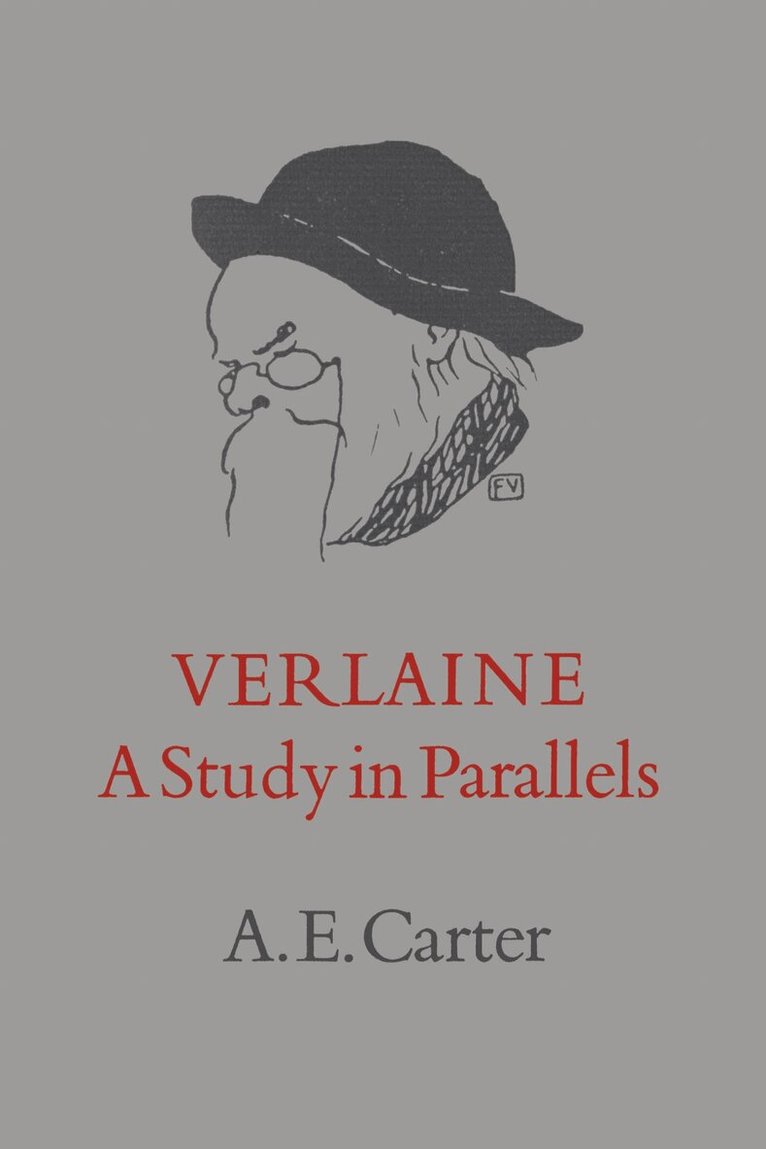
The contradictions of Verlaine's nature are mirrored in his verse, which is alternately mystic, sensuous, exquisite and prosaic. He had extraordinary lyric powers; he was a master of eerie harmonies such as few other poets have achieved, and, in Sagesse, he produced religious verse which challenges comparison with the very best of its kind. Yet here and there can be found a curious weakening in the texture of thought and inspiration: he turns and twists, takes flight, seeks reassurance in platitude and convention – marriage, dogmatic theology, reactionary political creeds. He is even capable of lamenting (as Rimbaud shows him in Une Saison en Enfer) the emotional and poetic experiments which give his work its supreme value. It is almost as though he were afraid of his own talent. The explanation, as far as there is one, lies in a combination of personality and circumstance. This biography attempts to explore the "parallels" (Verlaine's own term) between his life and his poetry. Nearly everything he produced, whether good or bad, was a reflection of some crisis of thought or feeling. No one demonstrates better than Verlaine the antinomies between the artist and his work, between the man and the genius; and in every case we are obliged to admit that the one explains the other. Without the weakness and the squalor we might indeed have had a rational human being and a good husband for Mathilde MautÉ, but we should have had no poet, or no poet like Paul Verlaine. Professor Carter concentrates on the combination of Verlaine's personality and experiences that produced some of the most brilliant poetry in the French language. The result is one of the best critical biographies of Verlaine published to date.