Ágnes Lehóczky - Böcker
Visar alla böcker från författaren Ágnes Lehóczky. Handla med fri frakt och snabb leverans.
5 produkter
5 produkter
173 kr
Skickas inom 5-8 vardagar
328 kr
Skickas inom 5-8 vardagar
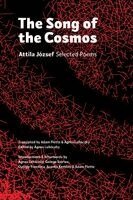
These translations by Piette and Lehoczky form a five-year long project with an ambition to translate a significant selection of the poems of the modernist, socialist, working-class Hungarian poet, Attila Jozsef (1905-1937), one of the most celebrated and loved poets of the 20th century in Hungary. He lived a poverty-stricken, passionate and unstable life as a wanderer, a bohemian, a poet, a thinker, a non-conformist, a hobo and a lover until his untimely death by suicide, struck by a train, in Balatonszarszo on Lake Balaton, aged only 32. His poetry is surrealist, existentialist, Villonesque, tough-minded, quasi anarchist, deeply drenched in Hungarian folklore and the folk song, passionate, lyrical, elegiac, marked by his solitary wandering, his keen observation of the lives of the people, by his psychoanalytically inflected gaze into the unconscious, into the mind and body of lovers, his philosophical focus on dialectic and social injustice. The lyrics, free verse and formal, in an astonishing number of experimental forms, range from the metaphysical to the memoir, have filiations to French medieval, post-symbolist and surrealist poetry, fuse Nietzsche, Marx, Hegel and Freud in daring raids on the inarticulate, sing with haunting vernacular and ancient beauty and rise to extraordinary heights and flights of the imagination, yet are always grounded in the real, in the concrete particulars of the metropolis, the dark streets of the underclasses of this world.This bilingual volume presents a chronological selection of Attila Jozsef's poetry, featuring both English translations and the original Hungarian texts from Bela Stoll's 2005 edition. It provides crucial context for readers. With introductions by George Szirtes, Gyoergy Tverdota, and Aranka Kemeny, the collection aims to recreate 'The Song of the Cosmos', an unpublished collection Jozsef envisioned in the early 1920s. What does the song of the cosmos refer to? Who sings to whom and about what? 'Cosmos' here isn't the physical universe but rather the soul expanded to cosmic proportions, a 'universe imbued with a political subject'. In the sonnet cycle, Jozsef thus wanted to sing the song of the cosmic soul, as a lyrical outpouring of the cosmos and as a song of the human species, channelling cosmic forces and singing as global collective, as global consciousness, a planetary cosmos speaking about and for itself.The volume incorporates a faithful and playful reconstruction of the original graphic design, conceived by Jozsef's artist friend Gyoergy Bekeffi in the 1920s. Miklos Ferencz executed the reconstruction of the original book design specifically for this edition. The final section of the book includes ekphrastic 'guest poems' by George Szirtes, Istvan Voeroes, Adam Piette and Agnes Lehoczky, each creating an imaginary account exploring different possibilities and scenarios of what ifs each playing on one of Jozsef's final poem 'There, I've found my home at last...'. What if Attila Jozsef had not met his own tragic end in December 1937, Balatonszarszo?I generate my brand of lovefeet they stand on strange planetsfrom all the gods I take my leavemy heart is steadfast & alivehere I in my light white shirt(from 'light white shirt', 1937)

188 kr
Skickas inom 5-8 vardagar
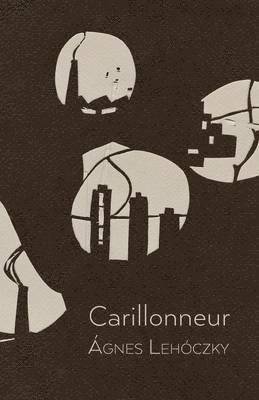
Poems in this collection take a new psychogeographical approach in order to explore urban landscape - both known and new districts of Sheffield and Budapest. Writing from the viewpoint of a outsider employing the palimpsestic texture of the prose poem, offers a new, so-called 'nomadic poetics' which crosses not only languages and borders of physical places but the boundaries of origins and identities, suggesting that human psyche, collective memory and disparate selves overlap each other's psycho-topographic maps. Collaging both factual and invented - both diachronic and synchronic - layers of history and cultural heritage of cities, recycling the neglected and the forgotten, these poems continue to experiment with the poetics of almost-prose narratives re-mapping locations of a hybrid mind from amnesia and imagination.
250 kr
Skickas inom 5-8 vardagar
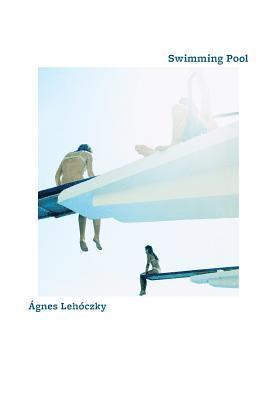
Here the text or the poem is a swimming pool, a pool in which language or thought-as-body glide through cultural and or phenomenological spaces; fluid places for being, thinking or even swimming in the world. It is polyglot within English, let alone in relation to all the other tongues that are almost audible and to the maps of Europe that move to and fro somewhere beneath the text."This is a wonderful, extraordinary poem in so many ways, not quite like anything I know, though reminding me to go back, perhaps, to the Blake of The Marriage of Heaven and Hell, in its embrace of contraries, in its repeated transformation of either/or into both/and, of polarity as requiring both poles, of binaries as always inseparably fused into generous - and generative - singularities, of affirmation as inseparable from negation and vice versa, of interiority as always ambivalently yoked to exteriority, of literalness as layered into metaphor, memory, even allegory, of I as always superimposed on I, of person and voice as moving around in the fluidity of language and social exchange. No wonder that the poem here makes such recourse to layering, folding, piling, refraining, riffing on instabilities in grammatical class (often reaching for a verb from the interior of a noun, for example), concatenating the resulting variations in a singing continuity rather than a stumbling uncertainty between them. Nothing here is ever as simple as an unambiguous noun. What on earth, in the name of currency, is a pool? Occasionally a simple, and for that reason seductive, image is glimpsed: for a moment there is the clarity of a single swimmer's body cutting a line through water, and then that clarity is not so much lost - it never is - but disallowed the status of whole, as ungenerous within these shifting overlays. The literal is thus inseparable from metaphor, perhaps also from allegory, since all is set in motion by a cumulative aggregation - though always already in motion -, moving in and through the long poem-paragraphs, which themselves pile up in breath-defying sentences that themselves keep accumulating on the principle of echo, inclusiveness, alternation, always refusing to settle, even into a narrative possibility that at times beckons. Is this a richness, a playfulness between different potentials that surround one, that is only fully available to a true polyglot (Nabokov is explicitly there in the text, though as lepidopterist; Caroline Bergvall isn't, but was in my mind). I do think the poem - for I think of it as single poem, with poems inside it and beside it, - is very special." -John Hall "This poetry carries a hand-full of soft stones that sink and surface, shiver between decomposition and preservation as she dries herself to recall movement through surfaces beneath and above them. This is a sustained interrogation of the construction of a self that is intricate; intimate as much as broad ranged; larger than the pool the poet enters; and up against melancholy as a prospectus on beauty or the unattainable. The poem compels attention to itself as it expands, alliterates, rhymes, moves off at tangent and is wonderfully obsessive. Pool is polis and micro-thought, dense and reconciled. It demands frailty and errors of perception that become portentous and then elusive in moth flickers, expansive and pulled into itself, frightened and pervasive. The book celebrates a powerful engagement." -Allen Fisher
165 kr
Tillfälligt slut
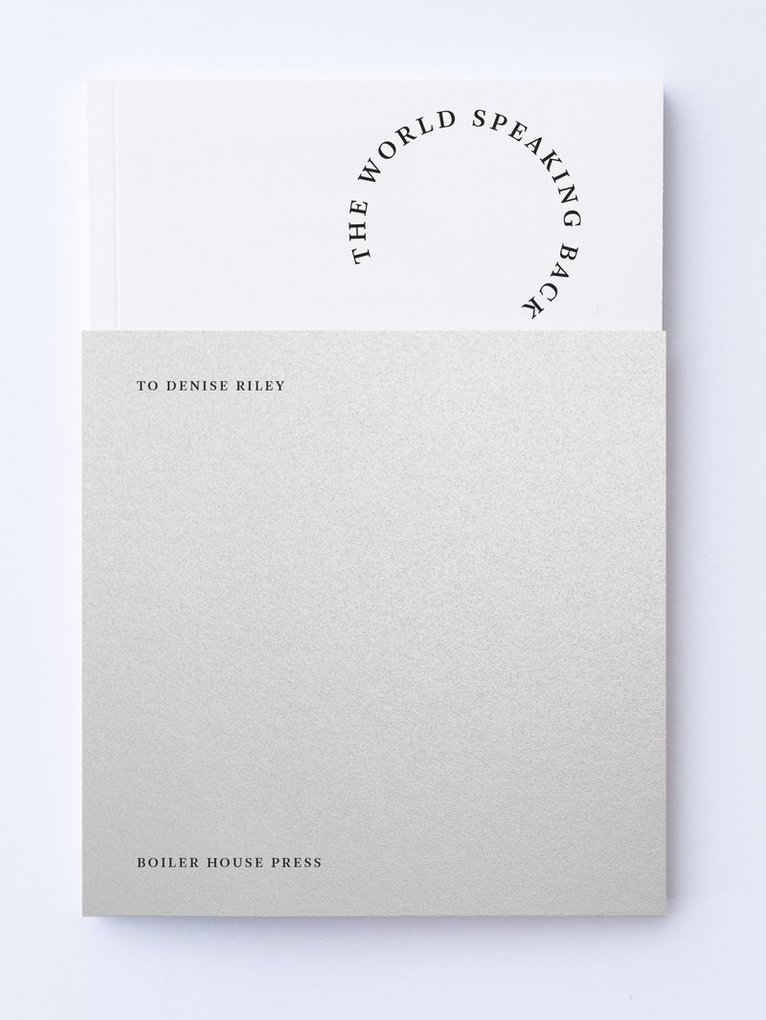
... To Denise Riley is a transnational and transgenerational poetry anthology to celebrate the work, contribution, and influence of one of our major poets and foremost philosophers, Denise Riley. It includes work from ninety-four authors; each has gifted an individual contribution inspired by Riley’s work in some form, be it in the fields of art history, political philosophy, poetics or creative writing; all are offered in tribute to the different spaces and ways in which Riley's work opens new possibilities for its readers. The book has been prepared as a surprise collective gift by the editors, Ágnes Lehóczky and Zoë Skoulding, and publisher, Boiler House Press. Announced to co-incide with her 70th birthday, it will be presented at an event in her honour in April and published later, in July. It is available for pre-order direct from publisher from April. Proceeds will be donated to a charity of Riley's choosing.