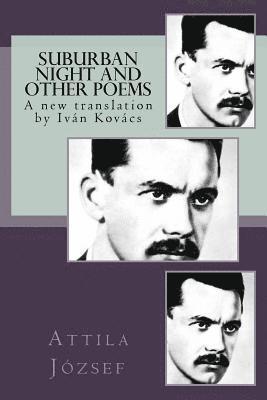
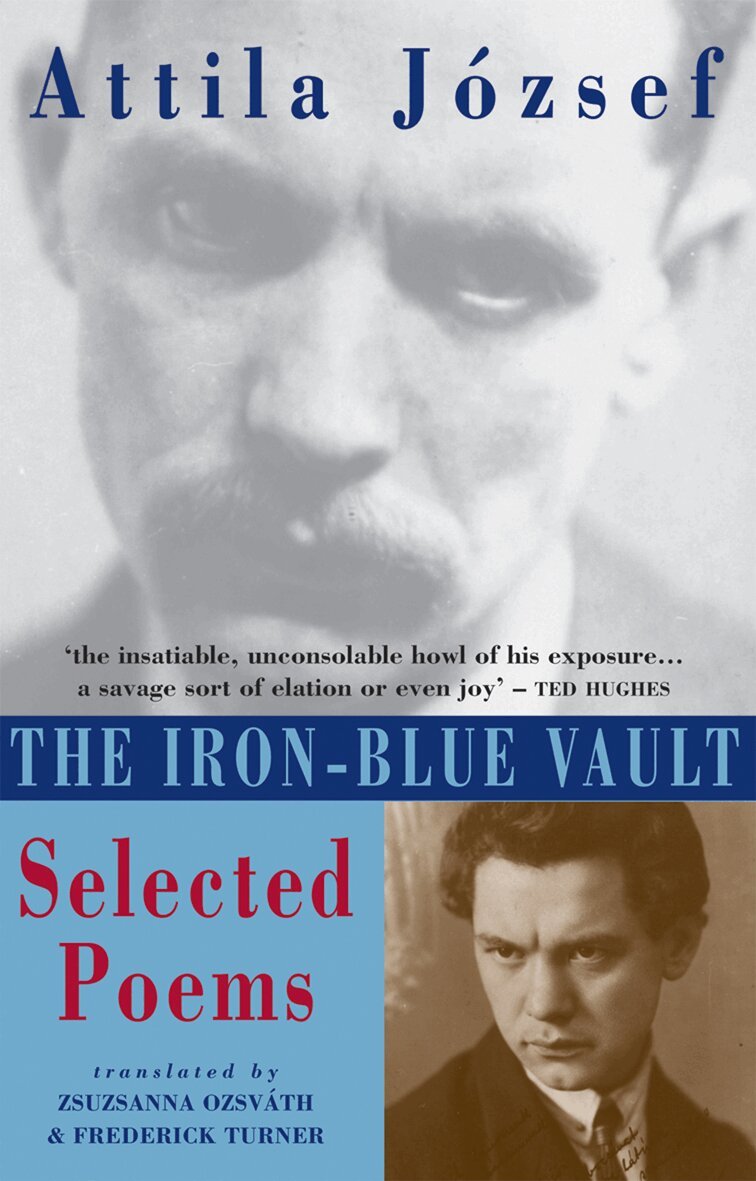
These translations by Piette and Lehoczky form a five-year long project with an ambition to translate a significant selection of the poems of the modernist, socialist, working-class Hungarian poet, Attila Jozsef (1905-1937), one of the most celebrated and loved poets of the 20th century in Hungary. He lived a poverty-stricken, passionate and unstable life as a wanderer, a bohemian, a poet, a thinker, a non-conformist, a hobo and a lover until his untimely death by suicide, struck by a train, in Balatonszarszo on Lake Balaton, aged only 32. His poetry is surrealist, existentialist, Villonesque, tough-minded, quasi anarchist, deeply drenched in Hungarian folklore and the folk song, passionate, lyrical, elegiac, marked by his solitary wandering, his keen observation of the lives of the people, by his psychoanalytically inflected gaze into the unconscious, into the mind and body of lovers, his philosophical focus on dialectic and social injustice. The lyrics, free verse and formal, in an astonishing number of experimental forms, range from the metaphysical to the memoir, have filiations to French medieval, post-symbolist and surrealist poetry, fuse Nietzsche, Marx, Hegel and Freud in daring raids on the inarticulate, sing with haunting vernacular and ancient beauty and rise to extraordinary heights and flights of the imagination, yet are always grounded in the real, in the concrete particulars of the metropolis, the dark streets of the underclasses of this world.This bilingual volume presents a chronological selection of Attila Jozsef's poetry, featuring both English translations and the original Hungarian texts from Bela Stoll's 2005 edition. It provides crucial context for readers. With introductions by George Szirtes, Gyoergy Tverdota, and Aranka Kemeny, the collection aims to recreate 'The Song of the Cosmos', an unpublished collection Jozsef envisioned in the early 1920s. What does the song of the cosmos refer to? Who sings to whom and about what? 'Cosmos' here isn't the physical universe but rather the soul expanded to cosmic proportions, a 'universe imbued with a political subject'. In the sonnet cycle, Jozsef thus wanted to sing the song of the cosmic soul, as a lyrical outpouring of the cosmos and as a song of the human species, channelling cosmic forces and singing as global collective, as global consciousness, a planetary cosmos speaking about and for itself.The volume incorporates a faithful and playful reconstruction of the original graphic design, conceived by Jozsef's artist friend Gyoergy Bekeffi in the 1920s. Miklos Ferencz executed the reconstruction of the original book design specifically for this edition. The final section of the book includes ekphrastic 'guest poems' by George Szirtes, Istvan Voeroes, Adam Piette and Agnes Lehoczky, each creating an imaginary account exploring different possibilities and scenarios of what ifs each playing on one of Jozsef's final poem 'There, I've found my home at last...'. What if Attila Jozsef had not met his own tragic end in December 1937, Balatonszarszo?I generate my brand of lovefeet they stand on strange planetsfrom all the gods I take my leavemy heart is steadfast & alivehere I in my light white shirt(from 'light white shirt', 1937)