Aida A. Hozić - Böcker
Visar alla böcker från författaren Aida A. Hozić. Handla med fri frakt och snabb leverans.
4 produkter
4 produkter
1 757 kr
Skickas inom 5-8 vardagar
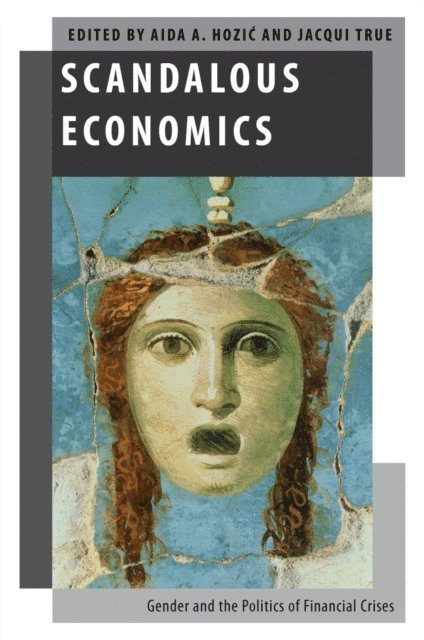
Of all of the lies, fragile alliances, and predatory financial dealings that have been revealed in the wake of the Global Financial Crisis of 2008, we have yet to come to terms with the ways in which structural inequalities around gender and race factor into (and indeed make possible) the current economic order. Scandalous Economics is about "silences" - the astonishing neglect of gender and race in explanations of the Global Financial Crisis. But, it is also about "noises" - the sexual scandals and gendered austerity policies that have relegated public debate, and the crisis itself, into political oblivion. While feminist economists and movements such as Occupy Wall Street have pointed to the distributional inequalities that are an effect of financial deregulation, scholars haven't really grappled with the representational inequalities inherent in the way we view the politics of the market. For example, capitalism won't be made more equitable simply by appointing women to leadership positions within financial firms or corporations. And the next crisis will not be averted if our understandings of gendered inequalities are framed by sexual scandals in media and popular culture. We need to look at the activities and the privileges of the advantaged - the "TED women" of the crisis -- as much as the victimization of the disadvantaged - to fully grasp the interplay between gender and economy in this fragile age of restoration. Scandalous Economics breaks new ground by doing precisely this. It argues that normalization of the post-GFC economic order in the face of its obvious breakdown(s) has been facilitated by co-optation of feminist and queer perspectives into national and international responses to the crisis. Scandalous Economics builds upon the Occupy movement and other critical analysis of the GFC to comprehensively examine gendered material, ideational and representational dimensions that have served to make the crisis and its effects, 'the new normal' in Europe and America as well as Latin America and Asia.
616 kr
Skickas inom 5-8 vardagar
Of all of the lies, fragile alliances, and predatory financial dealings that have been revealed in the wake of the Global Financial Crisis of 2008, we have yet to come to terms with the ways in which structural inequalities around gender and race factor into (and indeed make possible) the current economic order. Scandalous Economics is about "silences" - the astonishing neglect of gender and race in explanations of the Global Financial Crisis. But, it is also about "noises" - the sexual scandals and gendered austerity policies that have relegated public debate, and the crisis itself, into political oblivion. While feminist economists and movements such as Occupy Wall Street have pointed to the distributional inequalities that are an effect of financial deregulation, scholars haven't really grappled with the representational inequalities inherent in the way we view the politics of the market. For example, capitalism won't be made more equitable simply by appointing women to leadership positions within financial firms or corporations. And the next crisis will not be averted if our understandings of gendered inequalities are framed by sexual scandals in media and popular culture. We need to look at the activities and the privileges of the advantaged - the "TED women" of the crisis -- as much as the victimization of the disadvantaged - to fully grasp the interplay between gender and economy in this fragile age of restoration. Scandalous Economics breaks new ground by doing precisely this. It argues that normalization of the post-GFC economic order in the face of its obvious breakdown(s) has been facilitated by co-optation of feminist and queer perspectives into national and international responses to the crisis. Scandalous Economics builds upon the Occupy movement and other critical analysis of the GFC to comprehensively examine gendered material, ideational and representational dimensions that have served to make the crisis and its effects, 'the new normal' in Europe and America as well as Latin America and Asia.
576 kr
Skickas inom 10-15 vardagar
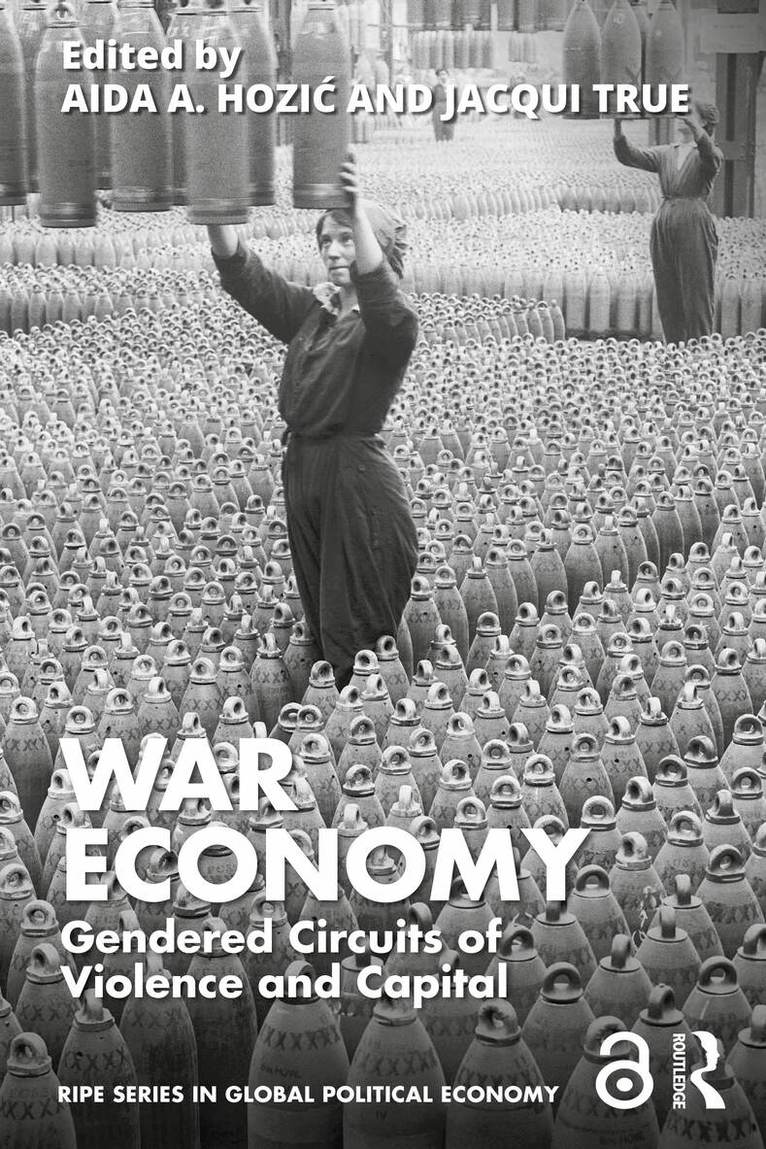
War Economy: Gendered Circuits of Violence and Capital examines the war economy from feminist perspectives, bringing fresh thinking in the context of heightened geopolitical tensions.This book challenges the common understanding of war economy as a state‑driven, top‑down project necessitated by a conflictual international order. It introduces the concept of gendered circuits of violence – different types of violence across space and time – to conceptually and empirically link crises and wars through flows of capital, bodies, weapons, and militarised technologies. It deals with real‑world conflicts, including in Gaza and Russia/Ukraine as well as Bosnia and Herzegovina, Iran, Liberia, and Mexico. With increasing calls for the development of a war economy, especially in Europe, and broad acceptance that the global political economy is rapidly being primed for war, this book’s feminist political economy analysis and alternatives are vital and urgent.War Economy will appeal to students, scholars, and policymakers in the areas of International Political Economy, Politics and International Relations, Gender Studies, Security Studies, and War, Peace, and Conflict Studies.Chapter 1 of this book is freely available as a downloadable Open Access PDF at http://www.taylorfrancis.com under a Creative Commons [Attribution-Non Commercial-No Derivatives (CC BY-NC-ND)] 4.0 license.
2 088 kr
Skickas inom 10-15 vardagar
War Economy: Gendered Circuits of Violence and Capital examines the war economy from feminist perspectives, bringing fresh thinking in the context of heightened geopolitical tensions.This book challenges the common understanding of war economy as a state‑driven, top‑down project necessitated by a conflictual international order. It introduces the concept of gendered circuits of violence – different types of violence across space and time – to conceptually and empirically link crises and wars through flows of capital, bodies, weapons, and militarised technologies. It deals with real‑world conflicts, including in Gaza and Russia/Ukraine as well as Bosnia and Herzegovina, Iran, Liberia, and Mexico. With increasing calls for the development of a war economy, especially in Europe, and broad acceptance that the global political economy is rapidly being primed for war, this book’s feminist political economy analysis and alternatives are vital and urgent.War Economy will appeal to students, scholars, and policymakers in the areas of International Political Economy, Politics and International Relations, Gender Studies, Security Studies, and War, Peace, and Conflict Studies.Chapter 1 of this book is freely available as a downloadable Open Access PDF at http://www.taylorfrancis.com under a Creative Commons [Attribution-Non Commercial-No Derivatives (CC BY-NC-ND)] 4.0 license.