Aitana Guia - Böcker
Visar alla böcker från författaren Aitana Guia. Handla med fri frakt och snabb leverans.
3 produkter
3 produkter
292 kr
Skickas inom 7-10 vardagar
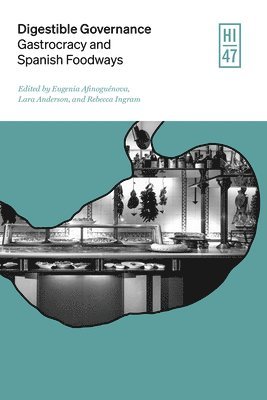
The term “gastrocracy” refers to the appropriation of discourses and practices related to the sourcing, preparation, distribution, and consumption of food for political purposes. The intersections of gastronomy and governance, dating in Spain to the last quarter of the nineteenth century, have become highly visible over the past decade, when political debates around nationalism in its different forms have taken the guise of discussions about regional and local cuisines. Concomitant with the rise of the “slow food” movement and following UNESCO’s addition in 2011 of “Gastronomic Meal of the French” to its list of Intangible Cultural Heritage of Humanity, public and private associations all around Spain have been established with the goal of achieving recognition by UNESCO for Spanish, Catalan, and other national cuisines. In 2016, Gastro Marca EspaÑa—an association and a web portal—was launched to raise the profile of food in Spain’s national brand.Eliciting wide public participation, coopted for political purposes, regarded as a factor of economic development on any scale, and integrated into every so-called banal nationalism, the production, distribution, and consumption of food are highly relevant for historical analysis. Seeking to encourage a broader discussion about Peninsular gastrocracies, this book brings together an interdisciplinary group of scholars from different sides of the Atlantic and the Pacific who have spearheaded research on gastronomy and governance in Spain.
1 451 kr
Skickas inom 5-8 vardagar
The term “gastrocracy” refers to the appropriation of discourses and practices related to the sourcing, preparation, distribution, and consumption of food for political purposes. The intersections of gastronomy and governance, dating in Spain to the last quarter of the nineteenth century, have become highly visible over the past decade, when political debates around nationalism in its different forms have taken the guise of discussions about regional and local cuisines. Concomitant with the rise of the “slow food” movement and following UNESCO’s addition in 2011 of “Gastronomic Meal of the French” to its list of Intangible Cultural Heritage of Humanity, public and private associations all around Spain have been established with the goal of achieving recognition by UNESCO for Spanish, Catalan, and other national cuisines. In 2016, Gastro Marca EspaÑa—an association and a web portal—was launched to raise the profile of food in Spain’s national brand.Eliciting wide public participation, coopted for political purposes, regarded as a factor of economic development on any scale, and integrated into every so-called banal nationalism, the production, distribution, and consumption of food are highly relevant for historical analysis. Seeking to encourage a broader discussion about Peninsular gastrocracies, this book brings together an interdisciplinary group of scholars from different sides of the Atlantic and the Pacific who have spearheaded research on gastronomy and governance in Spain.
Muslim Struggle for Civil Rights in Spain
Promoting Democracy Through Migrant Engagement, 1985-2010
Häftad, Engelska, 2013
519 kr
Skickas inom 7-10 vardagar
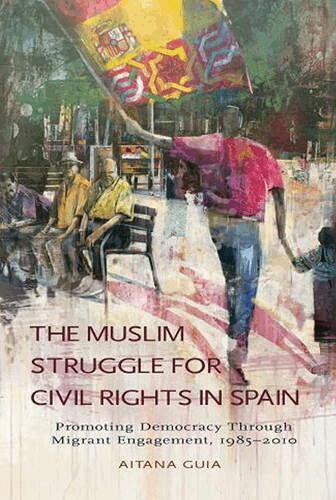
In this history of Spain since 1975, with the collapse of dictatorship and transition to democracy, Aitana Guia demonstrates that a key factor left out of studies on the period -- namely immigration and specifically Muslim immigration -- has helped reinvigorate and strengthen the democratic process. Despite broad diversity and conflicting agendas, Muslim immigrants --often linking up with native converts to Islam -- have mobilized as an effective force. They have challenged the long tradition of Maurophobia exemplified in such mainstream festivities as the Festivals of Moors and Christians; they have taken to task residents and officials who have stood in the way of efforts to construct mosques; and they have defied the members of their own community who have refused to accommodate the rights of women. Beginning in Melilla, in Spanish-held North Africa, and expanding across Spain, the effect of this civil rights movement has been to fill gaps in legislation on immigration and religious pluralism and to set in motion a revision of prevailing interpretations of Spanish history and identity, ultimately forcing Spanish society to open up a space for all immigrants.