Alan Cowan - Böcker
Visar alla böcker från författaren Alan Cowan. Handla med fri frakt och snabb leverans.
3 produkter
3 produkter
3 384 kr
Skickas inom 11-20 vardagar
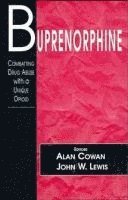
Buprenorphine: Combatting Drug Abuse with a Unique Opioid Editors: Alan Cowan and John W. Lewis Scientists involved in the study of opioid pharmacology and drug abuse have long included among their goals the development of effective analgesics with reduced potential for abuse and dependence, and the development of effective pharmacological agents for the treatment of opioid abuse and dependence. Buprenorphine appears to have made an important scientific and clinical contribution on both of these fronts. In this timely volume, international experts describe the unusual chemical and biological characteristics which make this agent unique, from the opiate receptor, through animal pharmacology, to clinical uses, culminating in a discussion of the use of buprenorphine as a medication in the treatment of opioid abuse. Buprenorphine holds great promise as a significant addition to the therapeutic menu available to drug abuse therapists. Buprenorphine: Combatting Drug Abuse with a Unique Opioid will be indispensable to scientists and clinicians in pharmacology, neurobiology, psychiatry, neurology, and psychology, as well as to the wide spectrum of professionals involved in countering substance abuse.
2 164 kr
Skickas inom 10-15 vardagar
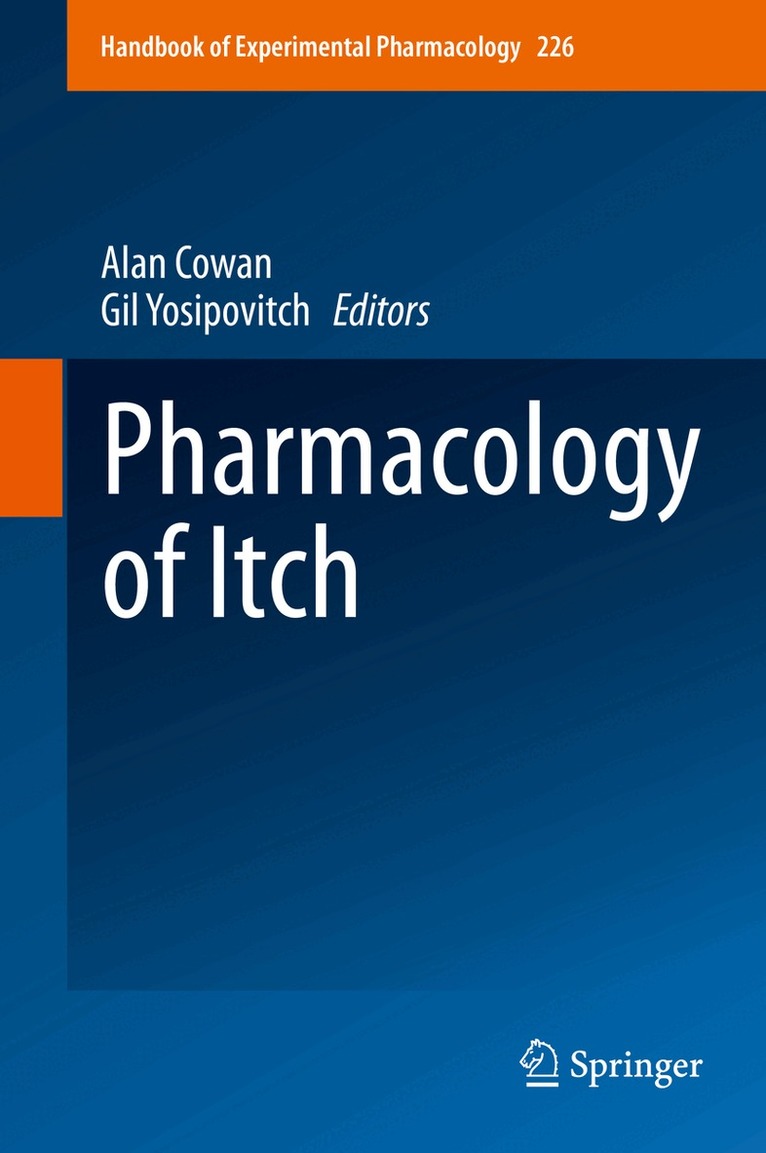
Basic research on the pharmacology of itch has exploded in the wake of two very influential papers that were published in Nature (2007) and Science (2009). Long overlooked as a milder form of pain, itching has rapidly gained a new appreciation in both research and clinical communities because of its complexity and its negative effects on the quality of life of the distressed patients. Like pain, not all itches are the same. Unlike pain, there are no standard drugs equivalent to aspirin and morphine. Epidemiological studies emphasize the high incidence and economic costs of itch (pruritus). It is the most prevalent symptom of a wide variety of allergic and inflammatory skin conditions (e.g., psoriasis, atopic dermatitis), is associated with several systemic diseases (e.g., chronic kidney and liver disease), and occurs in patients undergoing hemodialysis, spinal administration of opioids, and in those suffering from AIDS. The reader will learn about the multiple pathways for itch and their interactions with pain. The relationship between these closely related, yet distinct sensory phenomena, will be emphasized. Both itch and pain use several common molecules to send signals to the brain. Thus, drugs that have been, and are being, developed as analgesics may also attenuate intractable itch. This has been an exciting and very necessary turn of events since traditional H-1 receptor antagonists are ineffective in blocking the pruritus associated with kidney failure and cholestasis. The clinical chapters will provide insights into contemporary treatment regimens for pruritus in different human scenarios.
2 164 kr
Skickas inom 10-15 vardagar
Basic research on the pharmacology of itch has exploded in the wake of two very influential papers that were published in Nature (2007) and Science (2009). Long overlooked as a milder form of pain, itching has rapidly gained a new appreciation in both research and clinical communities because of its complexity and its negative effects on the quality of life of the distressed patients. Like pain, not all itches are the same. Unlike pain, there are no standard drugs equivalent to aspirin and morphine. Epidemiological studies emphasize the high incidence and economic costs of itch (pruritus). It is the most prevalent symptom of a wide variety of allergic and inflammatory skin conditions (e.g., psoriasis, atopic dermatitis), is associated with several systemic diseases (e.g., chronic kidney and liver disease), and occurs in patients undergoing hemodialysis, spinal administration of opioids, and in those suffering from AIDS. The reader will learn about the multiple pathways for itch and their interactions with pain. The relationship between these closely related, yet distinct sensory phenomena, will be emphasized. Both itch and pain use several common molecules to send signals to the brain. Thus, drugs that have been, and are being, developed as analgesics may also attenuate intractable itch. This has been an exciting and very necessary turn of events since traditional H-1 receptor antagonists are ineffective in blocking the pruritus associated with kidney failure and cholestasis. The clinical chapters will provide insights into contemporary treatment regimens for pruritus in different human scenarios.