Alan K. Bowman - Böcker
Visar alla böcker från författaren Alan K. Bowman. Handla med fri frakt och snabb leverans.
9 produkter
9 produkter
Del 96 - Proceedings of the British Academy
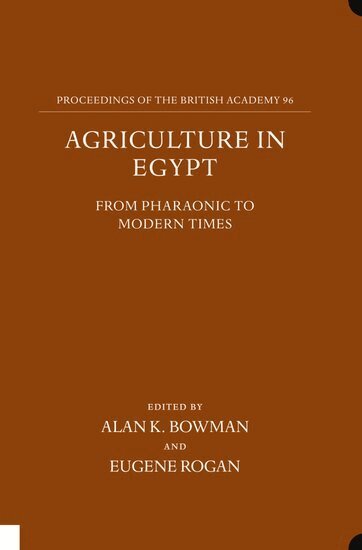
Agriculture in Egypt from Pharaonic to Modern Times
Inbunden, Engelska, 1999
1 578 kr
Skickas inom 7-10 vardagar
From the Pharaohs to the United Arab Republic of the present day, Egypt's agriculture has been subject to very different forms of political power and organization. The papers in this volume draw on the abundant documentary and archaeological evidence to analyse and compare the patterns of agricultural exploitation across historical periods (including Ptolemaic, Roman, and Ottoman times). Among important themes discussed are: the changing composition of agrarian elites, relationships between state, landholders and peasants, the impact of commercialization on the rural economy, technology, irrigation and water control, and changes in crop patterns and production. This volume's comparativist approach to the subject is crucial in crossing the linguistic and historical barriers between the different eras in Egypt's agrarian history.
847 kr
Skickas inom 7-10 vardagar
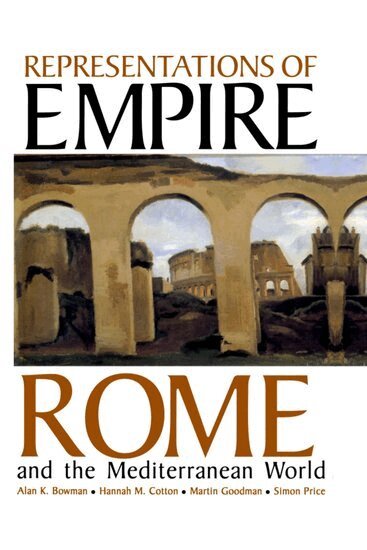
The essays in this volume cover the whole of the period in which Rome dominated the Mediterranean world. The belief shared by all the contributors is that the Roman empire is best understood from the standpoint of the Mediterranean world looking in to Rome, rather than from Rome looking out. The papers focus on the development of political institutions in Rome itself and in her empire, and on the nature of the relationship between Rome and her provincial subjects. They also discuss historiographical approaches to different kinds of source material, literary and documentary - including the major Roman historians, the evidence for the pre-Roman near east, and the Christian writers of later antiquity. This volume reflects the immense complexity of the political and cultural history of the ancient Mediterranean, from the late Republic to the age of Augustine.
592 kr
Skickas inom 7-10 vardagar
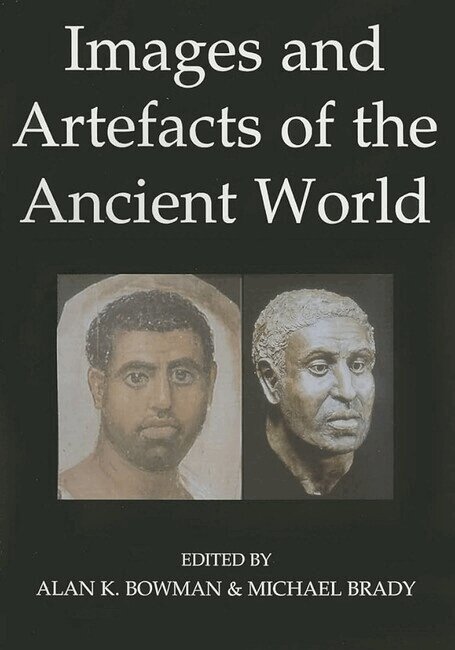
These fifteen papers explore the ways in which recent developments in imaging, image analysis, and image display and diffusion can be applied to objects of material culture in order to enhance historians' understanding of the period from which the objects came (in this case, the remote past). In interpreting artefacts, the historian acts out a perceptual-cognitive task of transforming often noisy and impoverished signals into semantically rich symbols that have to be set within a cultural and historical context. Engineering scientists, equipped with a range of sophisticated techniques, equipment and highly specialised knowledge, are not always as aware as they might be of the range and the exact nature of problems faced by historians in interpreting objects of material culture. By providing the opportunity for scholars from these communities to explain to each other what they are doing and how, the papers explore the ways in which the scientific contributors and the historians are thinking about subjectivity of interpretation, visual cognition, and the need to improve methods of presenting evidence so as to feed directly back into their own scientific thinking and to encourage genuine innovation in their approach to developing methods of image-enhancement and interpretation of objects. A significant further dimension is the improvement of techniques of providing high quality images of important and valuable collections of original artefacts to scholars who cannot always study the originals directly. Another important development discussed here is the fact that such imaging techniques now offer the researcher valuable insurance against the processes of deterioration to which such artefacts are inevitably subject. Seven of the papers are scientific and technical, while the other eight have an archaeological or historical focus.
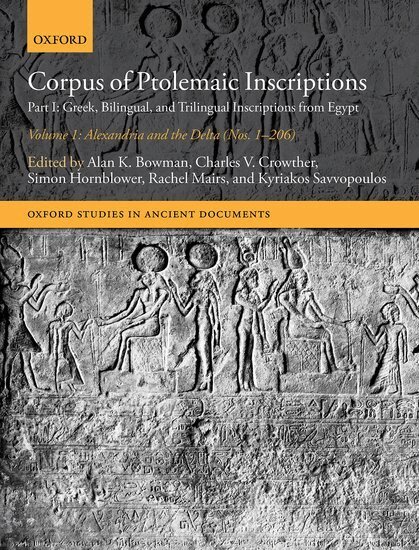
Corpus of Ptolemaic Inscriptions: Volume 1, Alexandria and the Delta (Nos. 1-206)
Part I: Greek, Bilingual, and Trilingual Inscriptions from Egypt
Inbunden, Engelska, 2021
2 360 kr
Skickas inom 5-8 vardagar
This is the first of three volumes of a Corpus publication of the Greek, bilingual and trilingual inscriptions of Ptolemaic Egypt covering the period between Alexander's conquest in 332 BC and the fall of Alexandria to the Romans in 30 BC. The Corpus offers scholarly editions, with translations, full descriptions and supporting commentaries, of more than 650 inscribed documents, of which 206, from Alexandria and the region of the Nile Delta, fall within this first volume. The inscriptions in the Corpus range in scope and significance from major public monuments such as the trilingual Rosetta Stone to private dedicatory plaques and funerary notices. They reflect almost every aspect of public and private life in Hellenistic Egypt: civic, royal and priestly decrees, letters and petitions, royal and private dedications to kings and deities, as well as pilgrimage notices, hymns and epigrams. The inscriptions in the Corpus are drawn from the entire Ptolemaic Kingdom of Egypt, from Alexandria and the Egyptian Delta, through the Fayum, along the Nile Valley, to Upper Egypt, and across the Eastern and Western Deserts. The Corpus supersedes older publications and other partial collections organised by specific region or theme, and offers for the first time a full picture of the Greek and multilingual epigraphic landscape of the Ptolemaic period. It will be an indispensable resource for new and continuing research into the history, society and culture of Ptolemaic Egypt and the wider Hellenistic world.
Corpus of Ptolemaic Inscriptions
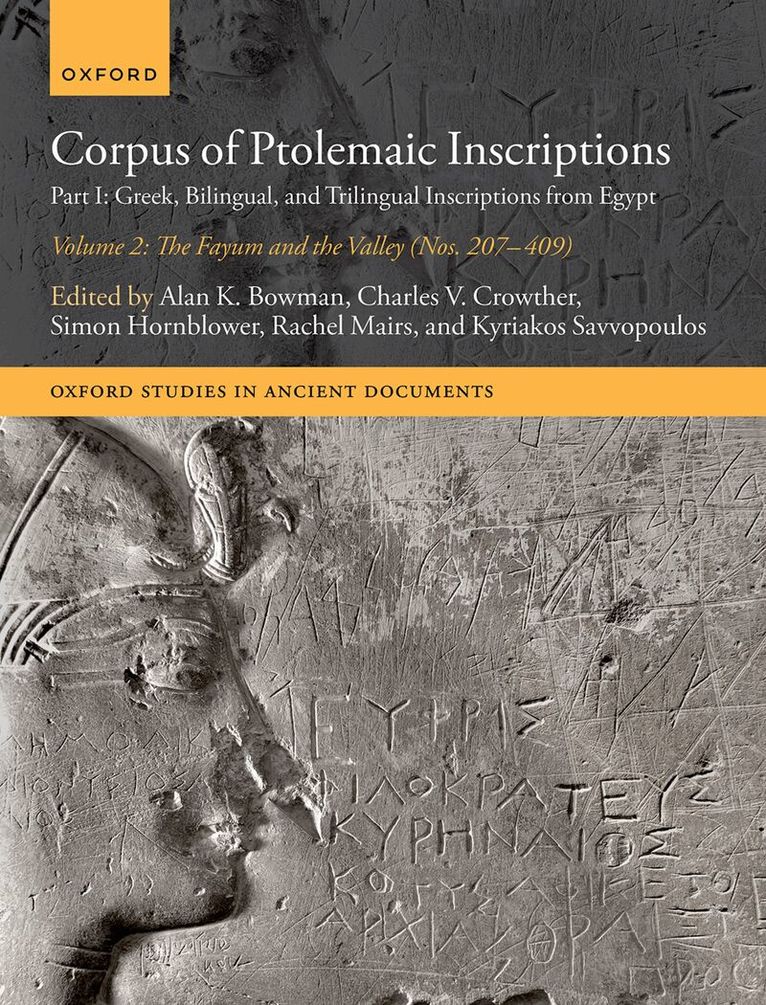
Part I: Greek, Bilingual, and Trilingual Inscriptions from Egypt - Volume 2, The Fayum and the Valley (Nos. 207-409)
Inbunden, Engelska, 2025
3 341 kr
Skickas inom 5-8 vardagar
This is the second of three volumes of a Corpus publication of the Greek, bilingual and trilingual inscriptions from Ptolemaic Egypt covering the period from Alexander's conquest in 332 BC to the fall of Alexandria to the Romans in 30 BC. This volume contains 221 numbered items (some covering multiple short texts) from the Fayum and Middle and Upper Egypt (including the Thebaid). It presents up-to-date scholarly revisions of the texts with translations, full descriptions, and commentaries, drawing on material originally collected by the late P. M. Fraser. The inscriptions from the Fayum illustrate the development of towns and villages in a region which was particularly re-shaped by Greek immigrants, while the texts from Upper Egypt and the Thebaid reflect the persistence of indigenous Egyptian traditions and their interaction with the impact of Greek culture. The inscriptions range from copies of major priestly and royal decrees, civic administrative documents, and asylum petitions involving Egyptian and Greek temples and cults, to dedications to gods, monarchs, and private individuals, funerary texts, pilgrimage notices, and verse inscriptions including re-editions and reassessments of the Isis hymns from Narmouthis and the Herodes funerary epigrams from Edfu together with their Hieroglyphic counterparts. The Corpus supersedes older publications and other partial collections organised by specific region or theme, and offers for the first time a full picture of the Greek and multilingual epigraphic landscape of the Ptolemaic period. It will be an indispensable resource for new and continuing research into the history, society and culture of Ptolemaic Egypt and the wider Hellenistic world.
634 kr
Skickas inom 5-8 vardagar
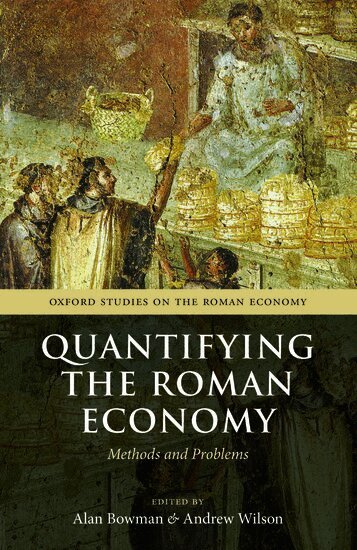
This collection of essays is the first volume in a new series, Oxford Studies on the Roman Economy. Edited by the series editors, it focuses on the economic performance of the Roman empire, analysing the extent to which Roman political domination of the Mediterranean and north-west Europe created the conditions for the integration of agriculture, production, trade, and commerce across the regions of the empire. Using the evidence of both documents and archaeology, the contributors suggest how we can derive a quantified account of economic growth and contraction in the period of the empire's greatest extent and prosperity.
3 999 kr
Skickas inom 7-10 vardagar
The period described in Volume 10 of the second edition of The Cambridge Ancient History begins in the year after the death of Julius Caesar and ends in the year after the fall of Nero, the last of the Julio-Claudian emperors. Its main theme is the transformation of the political configuration of the state and the establishment of the Roman Empire. Chapters 1-6 supply a political narrative history of the period. In chapters 7-12 the institutions of government are described and analysed. Chapters 13-14 offer a survey of the Roman world in this period region by region, and chapters 15-21 deal with the most important social and cultural developments of the era (the city of Rome, the structure of society, art, literature, and law). Central to the period is the achievement of the first emperor, Augustus.
577 kr
Skickas inom 7-10 vardagar
This collection attempts to set the study of literacy in the ancient world in the wider contexts of the debates among anthropologists over the impact of writing on society. Was writing a revolutionary innovation, prompting or participating in social change, or a fundamentally repressive and disciplinary technology? The book consists of a series of studies ranging over the whole of the Mediterranean world and much of northern Europe during a period of more than a millennium (c. 600 BC-AD 800). The areas examined include Pharaonic and Hellenistic Egypt, Persia and the Near East, Judaea, classical Greece, and the Roman and the Byzantine empires. Each of the contributors investigates, in his or her particular area of expertise, the changing roles of writing in history, in particular the extent to which writing played an active role in historical change in antiquity.
1 607 kr
Tillfälligt slut
This is the third in the series of volumes presenting the first editions of the important Latin writing-tablets from the Roman fort of Vindolanda, to the south of Hadrian's Wall. The tablets now form part of the British Museum collections. This volume covers the ink tablets discovered in the excavations of 1991-4, and contains transcriptions, translations and detailed commentaries on about 150 texts and brief descriptions of a further 100 fragments. As in earlier volumes, the texts are mainly either accounts or letters. The accounts include a long record of the supply and consumption of chickens and geese in the commanding officer's residence over a period of more than two years in the first decade of the second century AD. The correspondence includes letters from the archive of Cerialis, the prefect of the Ninth Cohort of Batavians, stationed at Vindolanda in the period AD 97-104. A notable novelty is a unique letter dating from a later period, c. AD 180-200. Fifty of the tablets are reproduced.