Edward Champlin - Böcker
Visar alla böcker från författaren Edward Champlin. Handla med fri frakt och snabb leverans.
5 produkter
5 produkter
1 002 kr
Skickas inom 3-6 vardagar
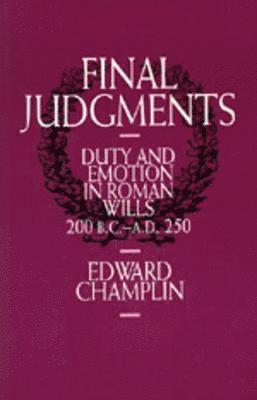
Freed from the familial and social obligations incumbent on the living, the Roman testator could craft his will to be a literal 'last judgment' on family, friends, and society. The Romans were fascinated by the contents of wills, believing the will to be a mirror of the testator's true character and opinions. The wills offer us a unique view of the individual Roman testator's world. Just as classicists, ancient historians, and legal historians will find a mine of information here, the general reader will be fascinated by the book's lively recounting of last testaments. Who were the testators and what were their motives? Why do family, kin, servants, friends, and community all figure in the will, and how are they treated? What sort of afterlife did the Romans anticipate? By examining wills, the book sets several issues in a new light, offering new interpretations of, or new insights into, subjects as diverse as captatio (inheritance-seeking), the structure of the Roman family, the manumission of slaves, public philanthropy, the afterlife and the relation of subject to emperor.Champlin's principal argument is that a strongly felt 'duty of testacy' informed and guided most Romans, a duty to reward or punish all who were important to them, a duty which led them to write their wills early in life and to revise them frequently.
3 999 kr
Skickas inom 7-10 vardagar
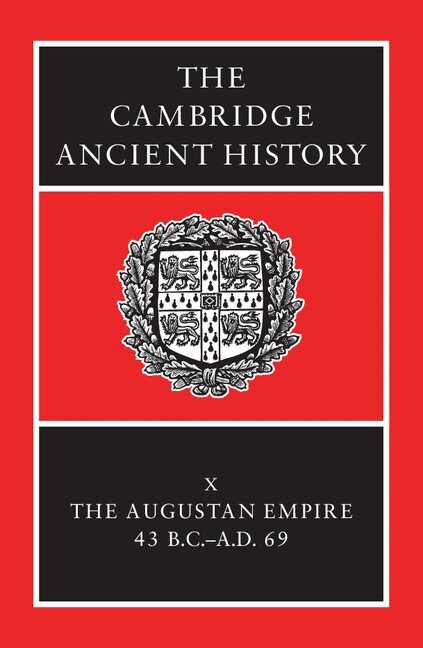
The period described in Volume 10 of the second edition of The Cambridge Ancient History begins in the year after the death of Julius Caesar and ends in the year after the fall of Nero, the last of the Julio-Claudian emperors. Its main theme is the transformation of the political configuration of the state and the establishment of the Roman Empire. Chapters 1-6 supply a political narrative history of the period. In chapters 7-12 the institutions of government are described and analysed. Chapters 13-14 offer a survey of the Roman world in this period region by region, and chapters 15-21 deal with the most important social and cultural developments of the era (the city of Rome, the structure of society, art, literature, and law). Central to the period is the achievement of the first emperor, Augustus.
305 kr
Skickas inom 7-10 vardagar
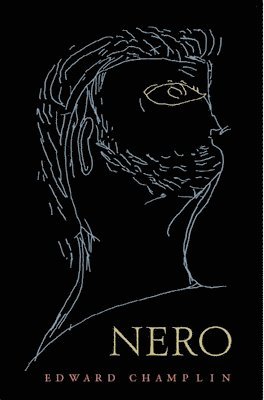
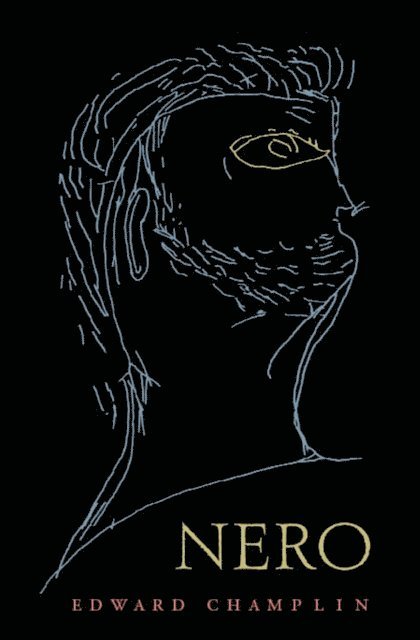
The Roman emperor Nero is remembered by history as the vain and immoral monster who fiddled while Rome burned. Edward Champlin reinterprets Nero's enormities on their own terms, as the self-conscious performances of an imperial actor with a formidable grasp of Roman history and mythology and a canny sense of his audience.Nero murdered his younger brother and rival to the throne, probably at his mother's prompting. He then murdered his mother, with whom he may have slept. He killed his pregnant wife in a fit of rage, then castrated and married a young freedman because he resembled her. He mounted the public stage to act a hero driven mad or a woman giving birth, and raced a ten-horse chariot in the Olympic games. He probably instigated the burning of Rome, for which he then ordered the spectacular punishment of Christians, many of whom were burned as human torches to light up his gardens at night. Without seeking to rehabilitate the historical monster, Champlin renders Nero more vividly intelligible by illuminating the motives behind his theatrical gestures, and revealing the artist who thought of himself as a heroic figure.Nero is a brilliant reconception of a historical account that extends back to Tacitus, Suetonius, and Cassius Dio. The effortless style and artful construction of the book will engage any reader drawn to its intrinsically fascinating subject.
330 kr
Skickas inom 7-10 vardagar
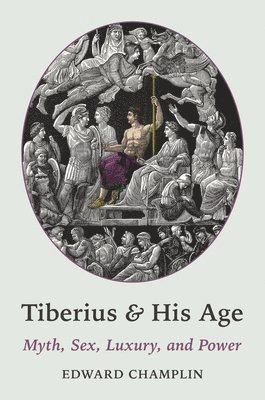
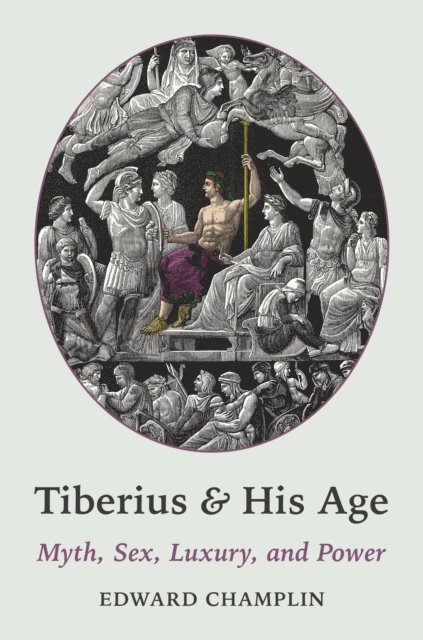
A radical new portrait of the infamous Roman emperorRome’s second emperor, Tiberius (42 BCE–CE 37), has traditionally been seen as a villainous hypocrite—treacherous, grasping, vindictive, and depraved. But in Tiberius and His Age, Edward Champlin draws on vast and diverse evidence to show that Tiberius was—and was seen by contemporaries to be—recognizably human and far more complex than the monster of the hostile tradition that began with Tacitus and Suetonius.Focusing on the overlapping themes of luxury, sex, power, and, especially, myth, Tiberius and His Age examines Tiberius’s standing as a folkloric figure in the Roman popular imagination and his conscious use of mythological themes to consolidate his power. It argues that the striking stories of Tiberius’s sexual depravity, which literary sources passed on to later generations, are ultimately incoherent fictions, the work of a brilliant fantasist who hated the emperor. The book’s portraits of three important figures in Tiberius’s circle—the gourmands Asellius Sabinus and Marcus Apicius and the emperor’s lieutenant, Sejanus—provide new perspectives on the emperor and his age. Tiberius’s passions for astrology, gastronomy, and mythology, which have often been seen as eccentric scholarly diversions, are revealed instead to be central to contemporary Roman debates and keys to understanding his personality, his power, and the lasting image of Roman emperors.Incisive, witty, and original, Tiberius and His Age presents a startlingly new picture of Tiberius and the culture and politics of the early Roman Empire.
331 kr
Kommande
A radical new portrait of the infamous Roman emperorRome’s second emperor, Tiberius (42 BCE–CE 37), has traditionally been seen as a villainous hypocrite—treacherous, grasping, vindictive, and depraved. But in Tiberius and His Age, Edward Champlin draws on vast and diverse evidence to show that Tiberius was—and was seen by contemporaries to be—recognizably human and far more complex than the monster of the hostile tradition that began with Tacitus and Suetonius.Focusing on the overlapping themes of luxury, sex, power, and, especially, myth, Tiberius and His Age examines Tiberius’s standing as a folkloric figure in the Roman popular imagination and his conscious use of mythological themes to consolidate his power. It argues that the striking stories of Tiberius’s sexual depravity, which literary sources passed on to later generations, are ultimately incoherent fictions, the work of a brilliant fantasist who hated the emperor. The book’s portraits of three important figures in Tiberius’s circle—the gourmands Asellius Sabinus and Marcus Apicius and the emperor’s lieutenant, Sejanus—provide new perspectives on the emperor and his age. Tiberius’s passions for astrology, gastronomy, and mythology, which have often been seen as eccentric scholarly diversions, are revealed instead to be central to contemporary Roman debates and keys to understanding his personality, his power, and the lasting image of Roman emperors.Incisive, witty, and original, Tiberius and His Age presents a startlingly new picture of Tiberius and the culture and politics of the early Roman Empire.