Alan Mallach - Böcker
Visar alla böcker från författaren Alan Mallach. Handla med fri frakt och snabb leverans.
13 produkter
13 produkter
Changing American Neighborhood
The Meaning of Place in the Twenty-First Century
Inbunden, Engelska, 2023
1 551 kr
Skickas inom 10-15 vardagar
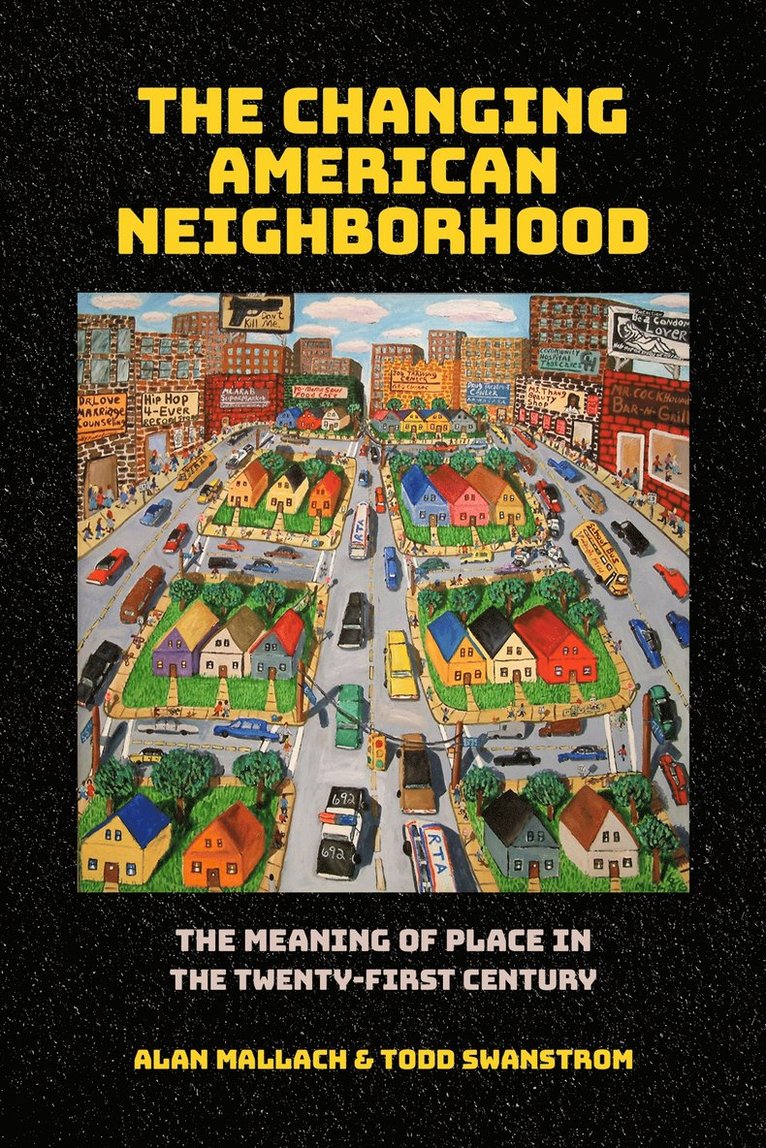
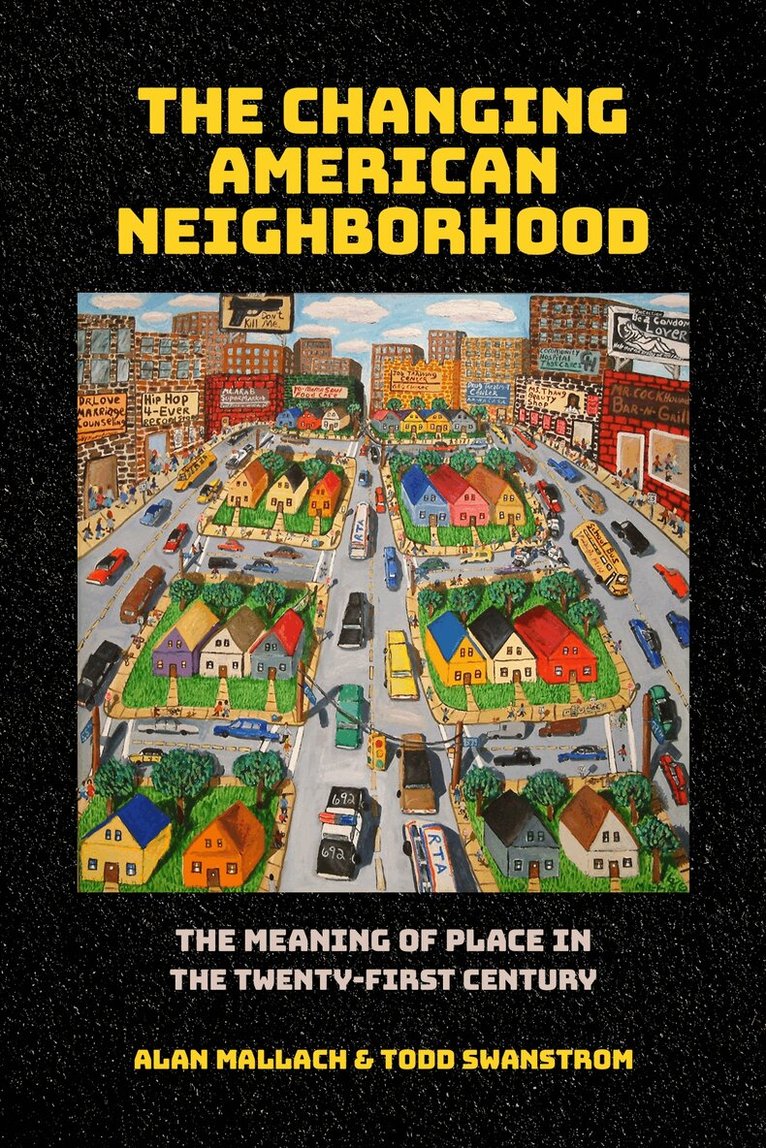
The Changing American Neighborhood argues that the physical and social spaces created by neighborhoods matter more than ever for the health and well-being of twenty-first-century Americans and their communities. Taking a long historical view, this book explores the many dimensions of today's neighborhoods, the forms they take, the forces and factors influencing them, and the people and organizations trying to change them. Challenging conventional interpretations of neighborhoods and neighborhood change, Alan Mallach and Todd Swanstrom adopt a broad, inter-disciplinary perspective that shows how neighborhoods are messy, complex systems, in which change is driven by constant feedback loops that link social, economic and physical conditions, each within distinct spatial and political contexts. The Changing American Neighborhood seeks to understand neighborhoods and neighborhood change not only for their own importance, but for the insights they offer to help guide peoples' efforts sustaining good neighborhoods and rebuilding struggling ones.
Changing American Neighborhood
The Meaning of Place in the Twenty-First Century
Häftad, Engelska, 2023
326 kr
Skickas inom 10-15 vardagar
The Changing American Neighborhood argues that the physical and social spaces created by neighborhoods matter more than ever for the health and well-being of twenty-first-century Americans and their communities. Taking a long historical view, this book explores the many dimensions of today's neighborhoods, the forms they take, the forces and factors influencing them, and the people and organizations trying to change them. Challenging conventional interpretations of neighborhoods and neighborhood change, Alan Mallach and Todd Swanstrom adopt a broad, inter-disciplinary perspective that shows how neighborhoods are messy, complex systems, in which change is driven by constant feedback loops that link social, economic and physical conditions, each within distinct spatial and political contexts. The Changing American Neighborhood seeks to understand neighborhoods and neighborhood change not only for their own importance, but for the insights they offer to help guide peoples' efforts sustaining good neighborhoods and rebuilding struggling ones.
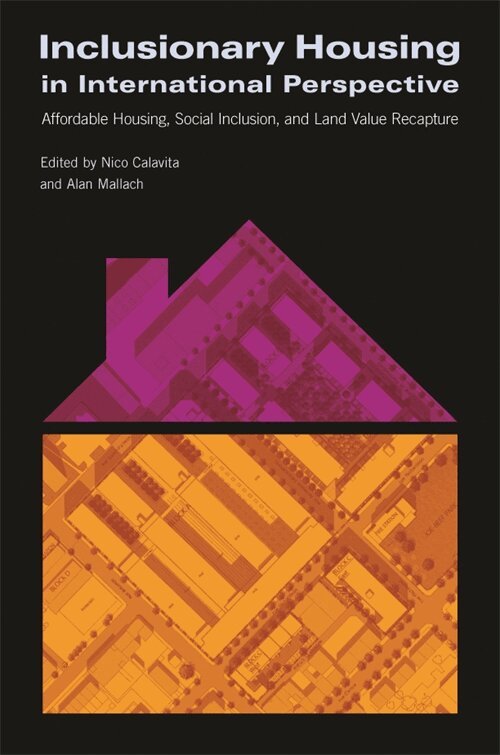
Inclusionary Housing in International Perspectiv – Affordable Housing, Social Inclusion, and Land Value Recapture
Häftad, Engelska, 2010
282 kr
Skickas inom 7-10 vardagar
164 kr
Skickas inom 7-10 vardagar
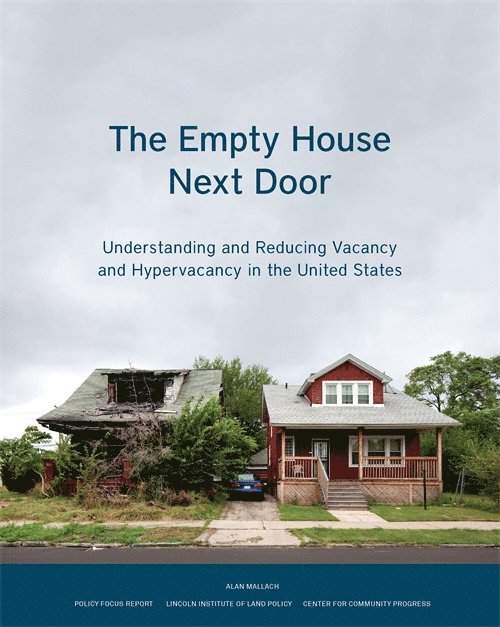
Empty House Next Door – Understanding and Reducing Vacancy and Hypervacancy in the United States
Häftad, Engelska, 2018
164 kr
Skickas inom 7-10 vardagar
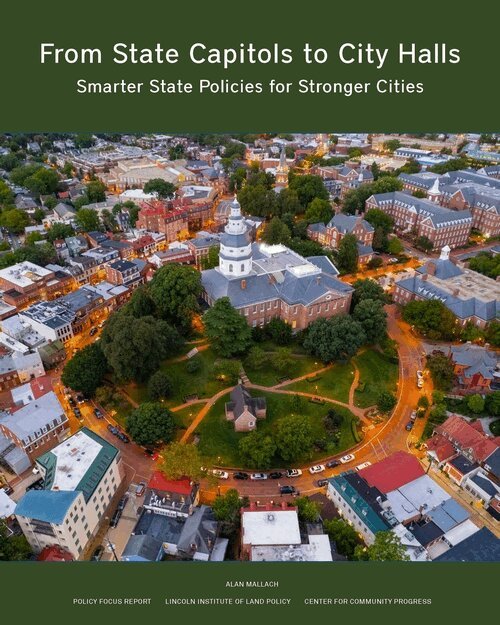
From State Capitols to City Halls – Smarter State Policies for Stronger Cities
Häftad, Engelska, 2022
164 kr
Skickas inom 7-10 vardagar
505 kr
Skickas inom 11-20 vardagar
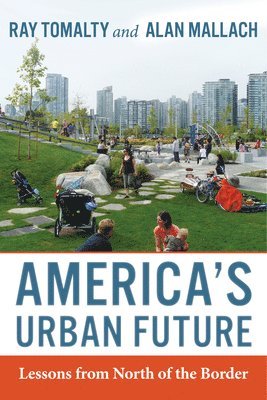
The headlines about cities celebrate their resurgence, with empty nesters and Millennials alike investing in our urban areas, moving away from car dependence, and demanding walkable, transit-oriented neighbourhoods. But, in reality, these changes are taking place in a scattered and piecemeal fashion. While areas of a handful of cities are booming, most US metros continue to follow old patterns of central city decline and suburban sprawl. As demographic shifts change housing markets and climate change ushers in new ways of looking at settlement patterns, pressure for change in urban policy is growing. More and more policy makers are raising questions about the soundness of policies that squander our investment in urban housing, built environment, and infrastructure while continuing to support expansion of sprawling, auto-dependent development. Changing these policies is the central challenge facing US cities and metro regions, and those who manage them or plan their future. In America's Urban Future, urban experts Tomalty and Mallach examine US policy in the light of the Canadian experience and use that experience as a starting point to generate specific policy recommendations.Their recommendations are designed to help the US further its urban revival, build more walkable, energy-efficient communities, and in particular, help land use adapt better to the needs of the ageing population. Tomalty and Mallach show how Canada, a country similar to the US in many respects, has fostered healthier urban centres and more energy- and resource-efficient suburban growth. They call for a rethinking of US public policies across those areas and look closely at what may be achievable at federal, state, and local levels in light of both the constraints and the opportunities inherent in today's political systems and economic realities.
282 kr
Skickas inom 7-10 vardagar
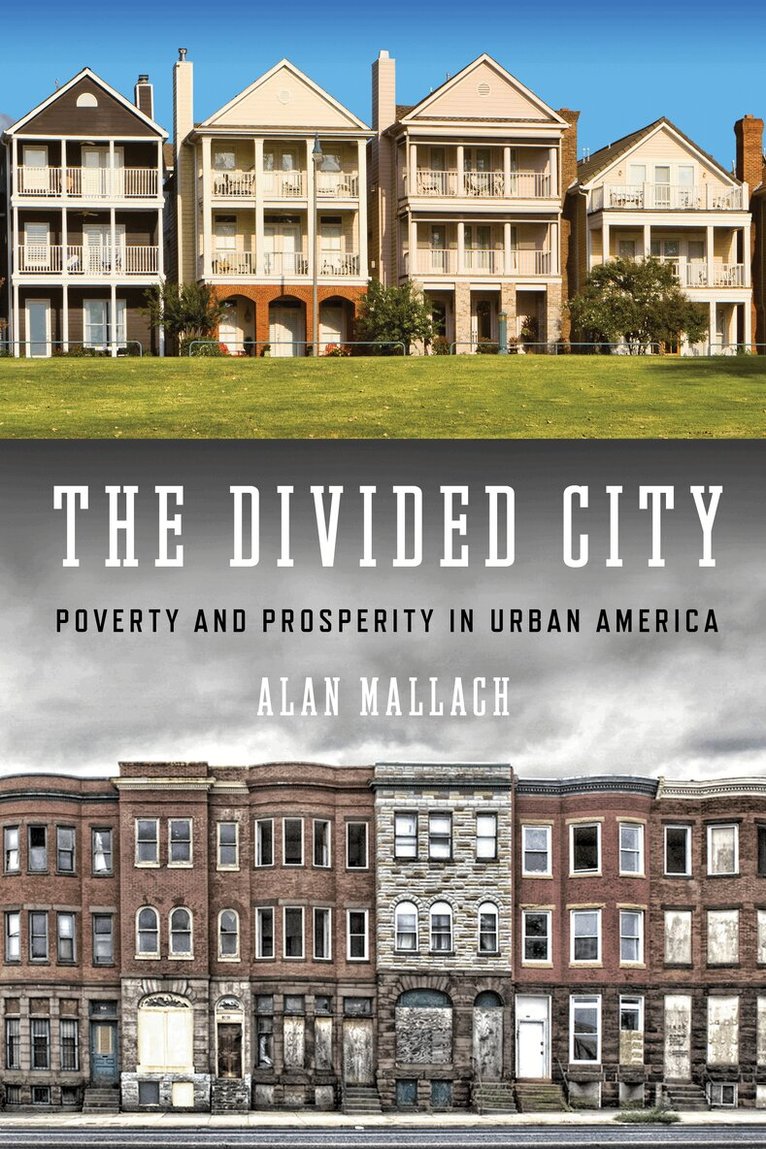
Who really benefits from urban revival? Cities, from trendy coastal areas to the nation’s heartland, are seeing levels of growth beyond the wildest visions of only a few decades ago. But vast areas in the same cities house thousands of people living in poverty who see little or no new hope or opportunity. Even as cities revive, they are becoming more unequal and more segregated. What does this mean for these cities—and the people who live in them?In The Divided City, urban practitioner and scholar Alan Mallach shows us what has happened over the past 15 to 20 years in industrial cities like Pittsburgh, Detroit, Cleveland, and Baltimore, as they have undergone unprecedented, unexpected revival. He draws from his decades of experience working in America’s cities, and pulls in insightful research and data, to spotlight these changes while placing them in their larger economic, social, and political context. Mallach explores the pervasive significance of race in American cities and looks closely at the successes and failures of city governments, nonprofit entities, and citizens as they have tried to address the challenges of change.The Divided City offers strategies to foster greater equality and opportunity. Mallach makes a compelling case that these strategies must be local in addition to being concrete and focusing on people’s needs—education, jobs, housing and quality of life. Change, he argues, will come city by city, not through national plans or utopian schemes.This is the first book to provide a comprehensive, grounded picture of the transformation of America’s older industrial cities. It is neither a dystopian narrative nor a one-sided "the cities are back" story, but a balanced picture rooted in the nitty-gritty reality of these cities. The Divided City is imperative for anyone who cares about cities and who wants to understand how to make today’s urban revival work for everyone.
291 kr
Skickas inom 7-10 vardagar
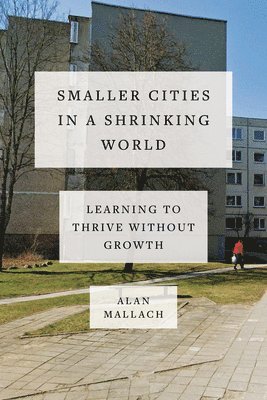
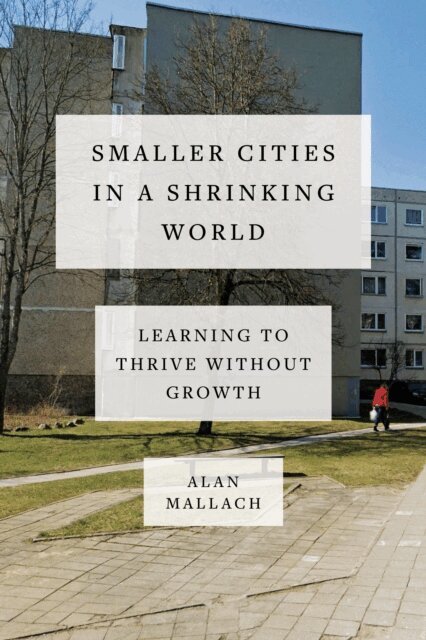
Over the past hundred years, the global motto has been “more, more, more” in terms of growth – of population, of the built environment, of human and financial capital, and of all manner of worldly goods. This was the reality as the world population boomed during the 1960s and 1970s. But reality is changing in front of our eyes. Growth is already slowing down, and according to the most sophisticated demographers, the earth’s population will begin to decline not hundreds of years from now, but within the lifetimes of many of the people now living on the planet.In Smaller Cities in a Shrinking World, urban policy expert Alan Mallach seeks to understand how declining population and economic growth, coupled with the other forces that will influence their fates, particularly climate change, will affect the world’s cities over the coming decades. What will it mean to have a world full of shrinking cities? Does it mean that they are doomed to decline in more ways than simply population numbers, or can we uncouple population decline from economic decay, abandoned buildings and impoverishment?Mallach has spent much of the last thirty or more years working in, looking at, thinking, and writing about shrinking cities, from Trenton, New Jersey, where he was director of housing and economic development, to other American cities like Detroit, Flint, and St. Louis, and from there to cities in Japan and Central and Eastern Europe. He has woven together his experience, research, and analysis in this fascinating, realistic yet hopeful look at how smaller, shrinking cities can thrive, despite the daunting challenges they face.
331 kr
Kommande
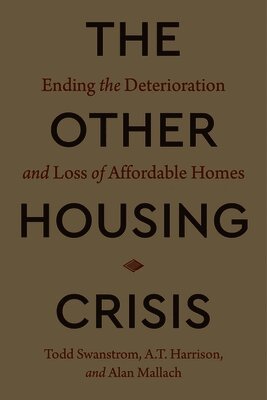
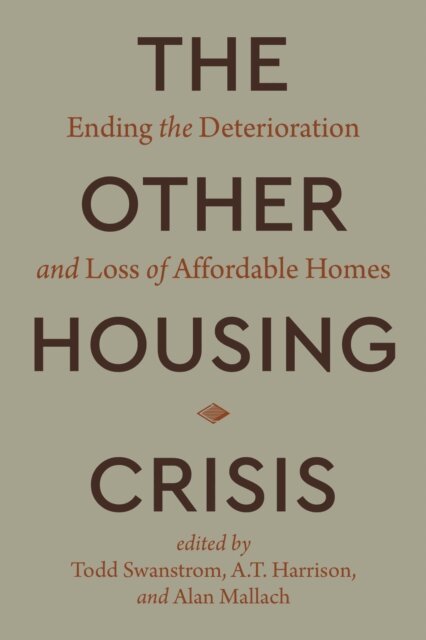
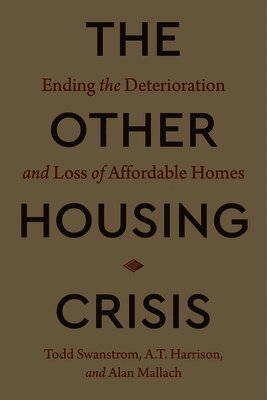
Why fixing America's housing crisis requires repairing older homes and not just building new onesThe United States is in the throes a housing crisis, framed by the media as a crisis of affordability. People pay too much for housing. And the solution, it seems, is to increase the supply of housing to drive down the cost. The national conversation on housing affordability, however, ignores the issue of housing quality. Most people find affordable housing not through public subsidies but by purchasing or renting older housing in the private market. For older housing to be affordable, it is almost always in disrepair and/or is located in a disinvested neighborhood with low market values. Little noticed by the media, millions of American homeowners and renters live in unsafe and unhealthy housing.The Other Housing Crisis brings attention to the neglected issue of housing deterioration and makes the case for more investment in home repairs. Contributions by expert researchers and experienced practitioners examine the damage housing deterioration imposes on the physical, mental, and financial health of residents, as well as the related damage to the environment. Chapters highlight innovative home repair programs in cities across the country—from Austin, Texas, to Memphis, Tennessee, to Philadelphia, Pennsylvania.Many housing units in the United States are deteriorating to the point that they must be demolished. Since 2000, as the supply of affordable housing has been shrinking, the United States has lost an average of about 400,000 older housing units each year. Every repair that saves a home from demolition—deliberate or by neglect—adds to the supply of decent quality affordable housing.The analysis and recommendations in The Other Housing Crisis will help policymakers and practitioners to curb the loss of affordable housing and place housing deterioration and home repair squarely on the national policy agenda. Addressing America’s housing crisis is not a matter of either increasing the supply of housing or preserving existing housing. We need to do both—now.
1 063 kr
Kommande
Why fixing America's housing crisis requires repairing older homes and not just building new onesThe United States is in the throes a housing crisis, framed by the media as a crisis of affordability. People pay too much for housing. And the solution, it seems, is to increase the supply of housing to drive down the cost. The national conversation on housing affordability, however, ignores the issue of housing quality. Most people find affordable housing not through public subsidies but by purchasing or renting older housing in the private market. For older housing to be affordable, it is almost always in disrepair and/or is located in a disinvested neighborhood with low market values. Little noticed by the media, millions of American homeowners and renters live in unsafe and unhealthy housing.The Other Housing Crisis brings attention to the neglected issue of housing deterioration and makes the case for more investment in home repairs. Contributions by expert researchers and experienced practitioners examine the damage housing deterioration imposes on the physical, mental, and financial health of residents, as well as the related damage to the environment. Chapters highlight innovative home repair programs in cities across the country—from Austin, Texas, to Memphis, Tennessee, to Philadelphia, Pennsylvania.Many housing units in the United States are deteriorating to the point that they must be demolished. Since 2000, as the supply of affordable housing has been shrinking, the United States has lost an average of about 400,000 older housing units each year. Every repair that saves a home from demolition—deliberate or by neglect—adds to the supply of decent quality affordable housing.The analysis and recommendations in The Other Housing Crisis will help policymakers and practitioners to curb the loss of affordable housing and place housing deterioration and home repair squarely on the national policy agenda. Addressing America’s housing crisis is not a matter of either increasing the supply of housing or preserving existing housing. We need to do both—now.
1 008 kr
Skickas inom 10-15 vardagar
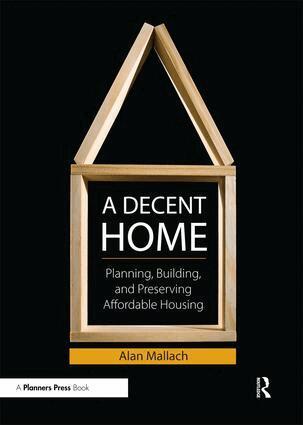
What is a decent home? Does it simply provide shelter from the elements? Is it affordable enough that you can buy the other necessities of life? Does it connect you to a community with adequate social and economic resources? Noted housing expert Mallach turns his decades of experience to these questions in this bookThe author nuanced analysis of housing issues critical to communities across the country will help planners evaluate the housing situation in their own communities and formulate specific plans to address a variety of housing problems. The book is both a practical step-by-step guide to developing affordable housing and a sophisticated introduction to housing policy. Chapters address design, site selection, project approval, financing, and the history of housing policy in the United States. Planners will find useful information about inclusionary and exclusionary zoning, affordable housing preservation, and the risks and rewards of affordable-home-ownership programs. The author also connects the dots among regional economic competitiveness, quality of life, community revitalization, and affordable housing.
2 564 kr
Skickas inom 7-10 vardagar
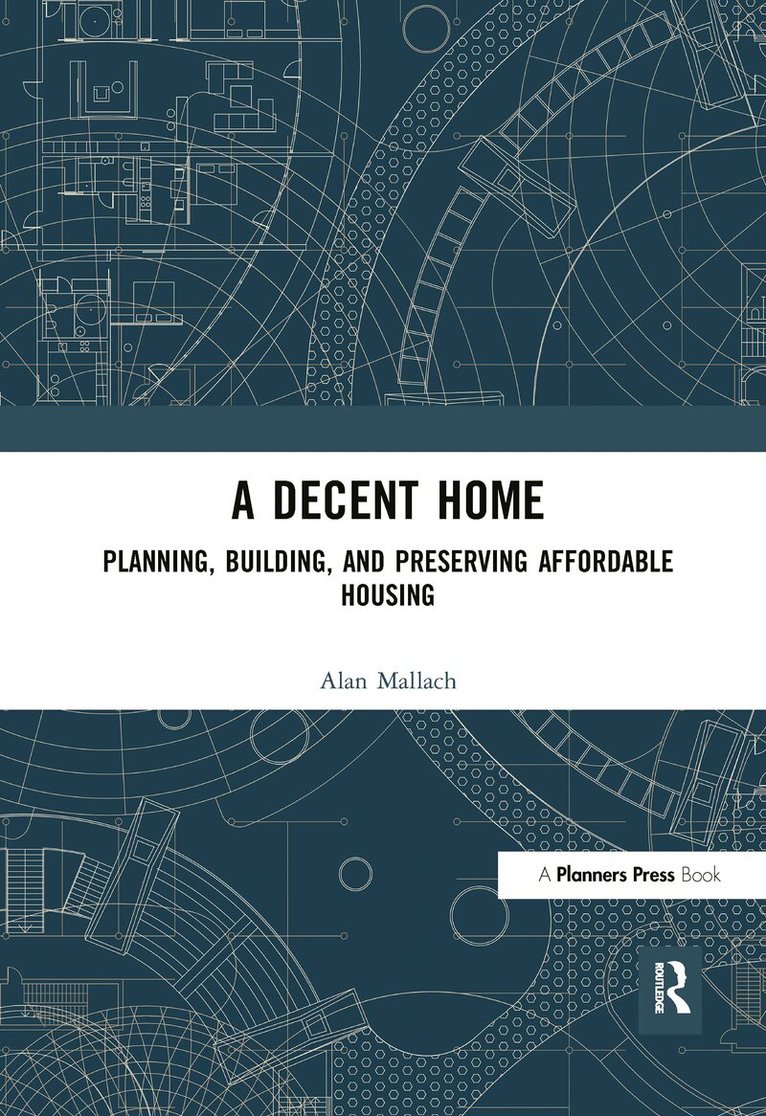
What is a decent home? Does it simply provide shelter from the elements? Is it affordable enough that you can buy the other necessities of life? Does it connect you to a community with adequate social and economic resources? Noted housing expert Alan Mallach turns his decades of experience to these questions in "A Decent Home".Mallach's nuanced analysis of housing issues critical to communities across the country will help planners evaluate the housing situation in their own communities and formulate specific plans to address a variety of housing problems. The book is both a practical step-by-step guide to developing affordable housing and a sophisticated introduction to housing policy. Chapters address design, site selection, project approval, financing, and the history of housing policy in the United States. Planners will find useful information about inclusionary and exclusionary zoning, affordable housing preservation, and the risks and rewards of affordable-home-ownership programs. Mallach also connects the dots among regional economic competitiveness, quality of life, community revitalization, and affordable housing.