Todd Swanstrom - Böcker
Visar alla böcker från författaren Todd Swanstrom. Handla med fri frakt och snabb leverans.
6 produkter
6 produkter
636 kr
Skickas inom 3-6 vardagar
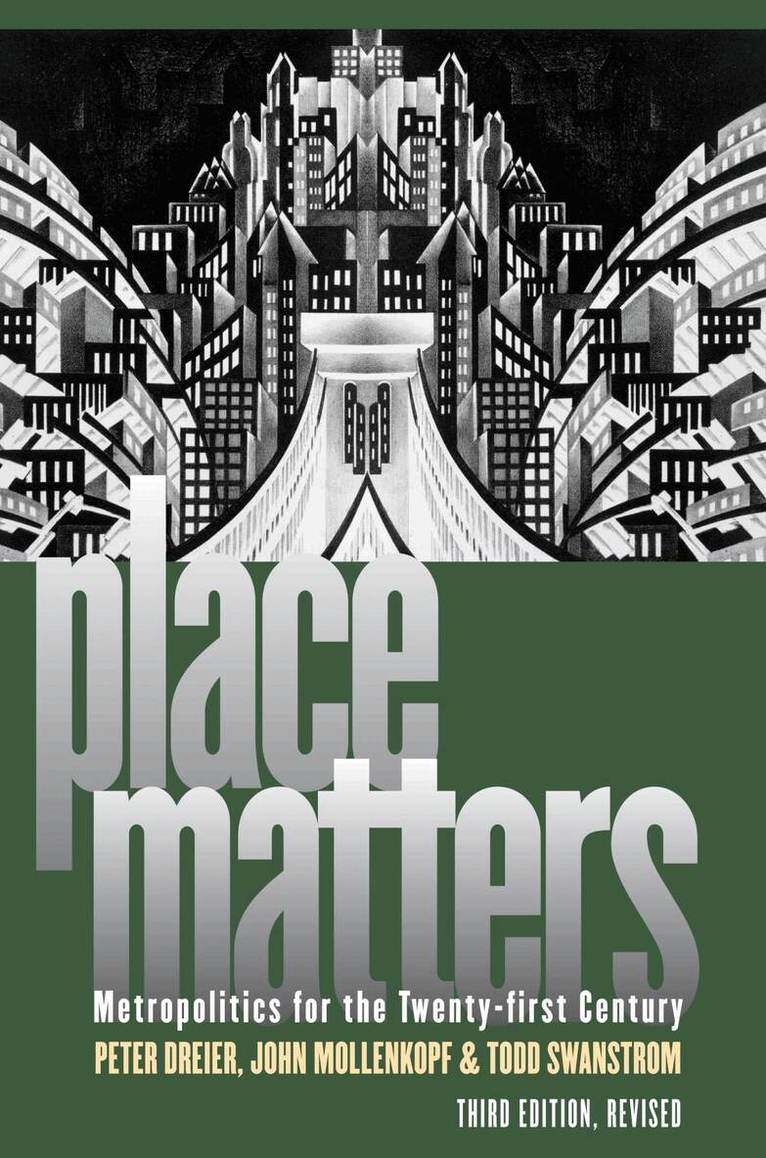
How can the United States create the political will to address our major urban problems—poverty, unemployment, crime, traffic congestion, toxic pollution, education, energy consumption, and housing, among others? That’s the basic question addressed by the new edition of this award-winning book. Thoroughly revised and updated for its third edition, Place Matters examines the major trends and problems shaping our cities and suburbs, explores a range of policy solutions to address them, and looks closely at the potential political coalitions needed to put the country’s “urban crisis” back on the public agenda. The problem of rising inequality is at the centre of Place Matters. During the past several decades, the standard of living for the American middle class has stagnated, the number of poor people has reached its highest level since the 1960s, and the super-rich have dramatically increased their share of the nation’s wealth and income. At the same time, Americans have grown further apart in terms of where they live, work, and play. This trend—economic segregation—no longer simply reflects the racial segregation between white suburbs and minority cities. In cities and suburbs alike, poor, middle class, and wealthy Americans now live in separate geographic spaces. The authors have updated the case studies and examples used to illustrate the book’s key themes, incorporated the latest Census data, and drawn on exit polls and other data to examine the voting patterns and outcomes of the 2012 elections. They have expanded their discussion of how American cities are influenced by and influence global economic and social forces and how American cities compare with their counterparts in other parts of the world. And they draw upon the latest research and case studies not only to examine the negative impacts of income inequality and economic segregation but also assess the efforts that civic and community groups, unions, business, and government are making to tackle them. Fully up to date and far richer and more provocative, this new version surpasses its previous editions and will continue to be an essential volume for all who study urban politics and care about our cities.
287 kr
Skickas inom 10-15 vardagar
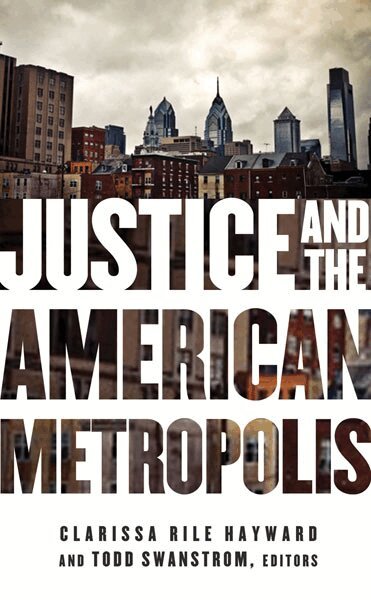
Today’s American cities and suburbs are the sites of “thick injustice”-unjust power relations that are deeply and densely concentrated as well as opaque and seemingly intractable. Thick injustice is hard to see, to assign responsibility for, and to change. Identifying these often invisible and intransigent problems, this volume addresses foundational questions about what justice requires in the contemporary metropolis. Essays focus on inequality within and among cities and suburbs; articulate principles for planning, redevelopment, and urban political leadership; and analyze the connection between metropolitan justice and institutional design. In a world that is progressively more urbanized, and yet no clearer on issues of fairness and equality, this book points the way to a metropolis in which social justice figures prominently in any definition of success.Contributors: Susan S. Fainstein, Harvard U; Richard Thompson Ford, Stanford U; Gerald Frug, Harvard U; Loren King, Wilfrid Laurier U; Margaret Kohn, U of Toronto; Stephen Macedo, Princeton U; Douglas W. Rae, Yale U; Clarence N. Stone, George Washington U; Margaret Weir, U of California, Berkeley; Thad Williamson, U of Richmond.
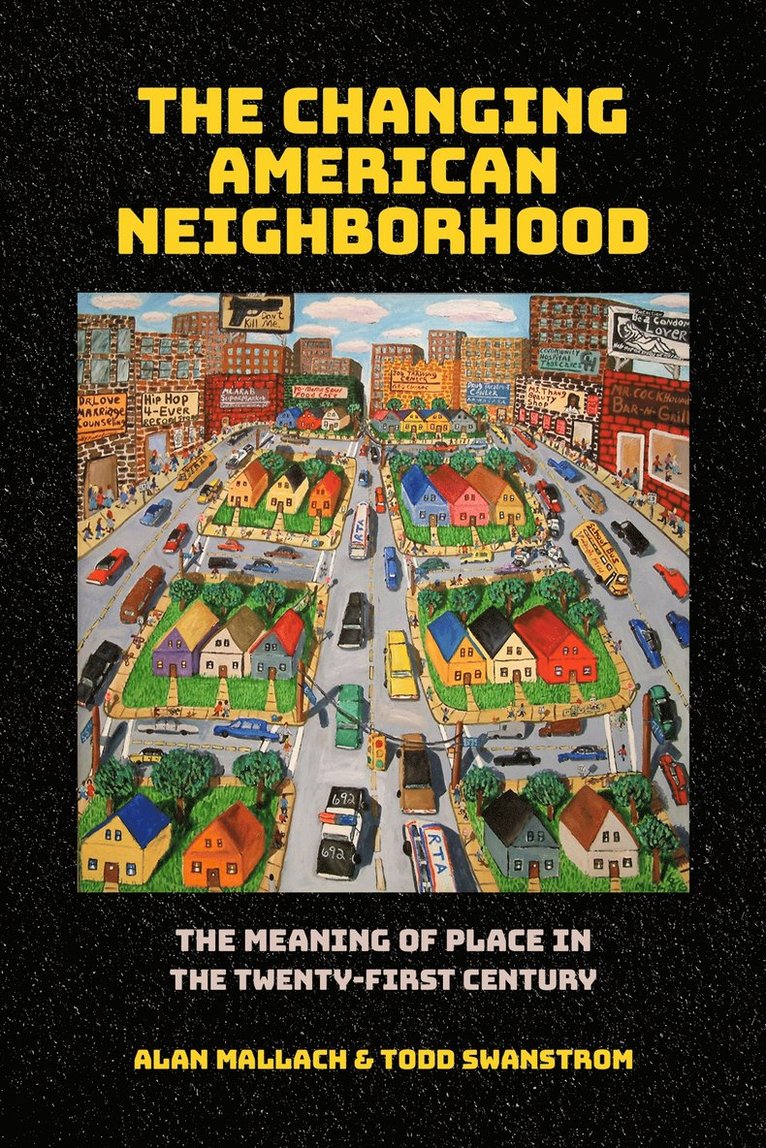
Changing American Neighborhood
The Meaning of Place in the Twenty-First Century
Inbunden, Engelska, 2023
1 518 kr
Skickas inom 10-15 vardagar
The Changing American Neighborhood argues that the physical and social spaces created by neighborhoods matter more than ever for the health and well-being of twenty-first-century Americans and their communities. Taking a long historical view, this book explores the many dimensions of today's neighborhoods, the forms they take, the forces and factors influencing them, and the people and organizations trying to change them. Challenging conventional interpretations of neighborhoods and neighborhood change, Alan Mallach and Todd Swanstrom adopt a broad, inter-disciplinary perspective that shows how neighborhoods are messy, complex systems, in which change is driven by constant feedback loops that link social, economic and physical conditions, each within distinct spatial and political contexts. The Changing American Neighborhood seeks to understand neighborhoods and neighborhood change not only for their own importance, but for the insights they offer to help guide peoples' efforts sustaining good neighborhoods and rebuilding struggling ones.
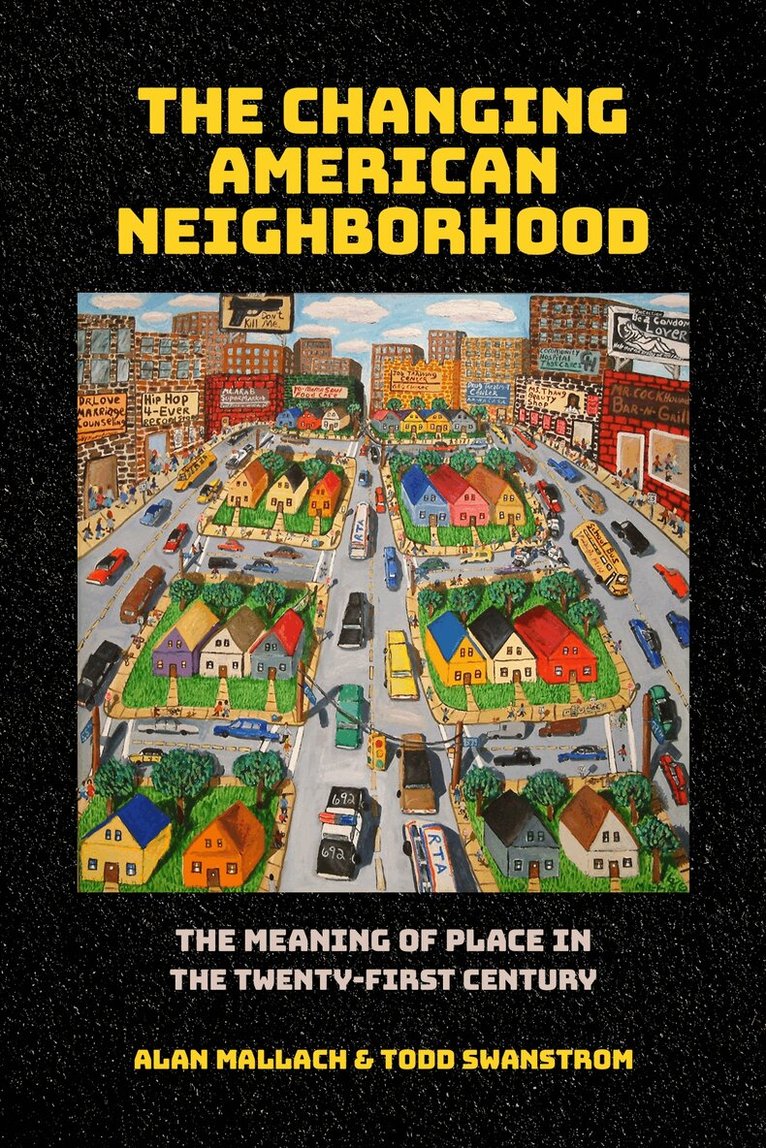
Changing American Neighborhood
The Meaning of Place in the Twenty-First Century
Häftad, Engelska, 2023
327 kr
Skickas inom 10-15 vardagar
The Changing American Neighborhood argues that the physical and social spaces created by neighborhoods matter more than ever for the health and well-being of twenty-first-century Americans and their communities. Taking a long historical view, this book explores the many dimensions of today's neighborhoods, the forms they take, the forces and factors influencing them, and the people and organizations trying to change them. Challenging conventional interpretations of neighborhoods and neighborhood change, Alan Mallach and Todd Swanstrom adopt a broad, inter-disciplinary perspective that shows how neighborhoods are messy, complex systems, in which change is driven by constant feedback loops that link social, economic and physical conditions, each within distinct spatial and political contexts. The Changing American Neighborhood seeks to understand neighborhoods and neighborhood change not only for their own importance, but for the insights they offer to help guide peoples' efforts sustaining good neighborhoods and rebuilding struggling ones.
331 kr
Kommande
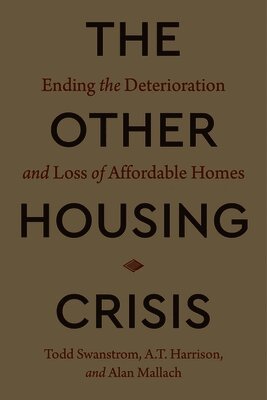
Why fixing America's housing crisis requires repairing older homes and not just building new onesThe United States is in the throes a housing crisis, framed by the media as a crisis of affordability. People pay too much for housing. And the solution, it seems, is to increase the supply of housing to drive down the cost. The national conversation on housing affordability, however, ignores the issue of housing quality. Most people find affordable housing not through public subsidies but by purchasing or renting older housing in the private market. For older housing to be affordable, it is almost always in disrepair and/or is located in a disinvested neighborhood with low market values. Little noticed by the media, millions of American homeowners and renters live in unsafe and unhealthy housing.The Other Housing Crisis brings attention to the neglected issue of housing deterioration and makes the case for more investment in home repairs. Contributions by expert researchers and experienced practitioners examine the damage housing deterioration imposes on the physical, mental, and financial health of residents, as well as the related damage to the environment. Chapters highlight innovative home repair programs in cities across the country—from Austin, Texas, to Memphis, Tennessee, to Philadelphia, Pennsylvania.Many housing units in the United States are deteriorating to the point that they must be demolished. Since 2000, as the supply of affordable housing has been shrinking, the United States has lost an average of about 400,000 older housing units each year. Every repair that saves a home from demolition—deliberate or by neglect—adds to the supply of decent quality affordable housing.The analysis and recommendations in The Other Housing Crisis will help policymakers and practitioners to curb the loss of affordable housing and place housing deterioration and home repair squarely on the national policy agenda. Addressing America’s housing crisis is not a matter of either increasing the supply of housing or preserving existing housing. We need to do both—now.
1 063 kr
Kommande
Why fixing America's housing crisis requires repairing older homes and not just building new onesThe United States is in the throes a housing crisis, framed by the media as a crisis of affordability. People pay too much for housing. And the solution, it seems, is to increase the supply of housing to drive down the cost. The national conversation on housing affordability, however, ignores the issue of housing quality. Most people find affordable housing not through public subsidies but by purchasing or renting older housing in the private market. For older housing to be affordable, it is almost always in disrepair and/or is located in a disinvested neighborhood with low market values. Little noticed by the media, millions of American homeowners and renters live in unsafe and unhealthy housing.The Other Housing Crisis brings attention to the neglected issue of housing deterioration and makes the case for more investment in home repairs. Contributions by expert researchers and experienced practitioners examine the damage housing deterioration imposes on the physical, mental, and financial health of residents, as well as the related damage to the environment. Chapters highlight innovative home repair programs in cities across the country—from Austin, Texas, to Memphis, Tennessee, to Philadelphia, Pennsylvania.Many housing units in the United States are deteriorating to the point that they must be demolished. Since 2000, as the supply of affordable housing has been shrinking, the United States has lost an average of about 400,000 older housing units each year. Every repair that saves a home from demolition—deliberate or by neglect—adds to the supply of decent quality affordable housing.The analysis and recommendations in The Other Housing Crisis will help policymakers and practitioners to curb the loss of affordable housing and place housing deterioration and home repair squarely on the national policy agenda. Addressing America’s housing crisis is not a matter of either increasing the supply of housing or preserving existing housing. We need to do both—now.