Alan Rosenberg - Böcker
Visar alla böcker från författaren Alan Rosenberg. Handla med fri frakt och snabb leverans.
5 produkter
5 produkter
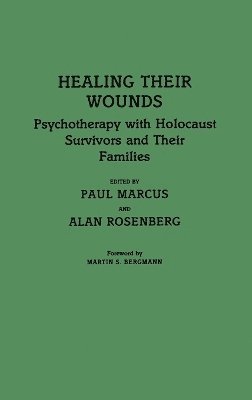
Healing Their Wounds
Psychotherapy with Holocaust Survivors and Their Families
Inbunden, Engelska, 1989
901 kr
Skickas inom 10-15 vardagar
A revelation and a source of hope. Background essays give a historical overview of how the early pessimistic concentration on pathology has given way to greater emphasis on survivors' adaptive potential and strengths. Many contributors stress the importance of remembering and facing the pain that memory brings, an emphasis shared by Jewish tradition. Jewish ChronicleThis is the first comprehensive anthology on the psychological treatment of Holocaust survivors and their families. It covers the full range of current theoretical and therapeutic approaches. It is a major resource for the clinician working with Holocaust survivors and their children, persecuted and traumatized populations, and patients suffering from post-traumatic stress syndrome. The chapters are organized around differing perspectives--classical psychoanalytic, self-psychological, group, family, pastoral, empirical research, eclectic. The editors include writings not usually part of the mainstream and focus on relevant yet often unnoticed issues.This book gives its reader a good sense of how a discipline has struggled and evolved in its efforts to understand the impact of an historical event on its victims. The field's diversity of viewpoints and major controversies are put into sharp focus in this volume. It allows the reader--whether practicing clinician, academic researcher, or lay person--the opportunity to compare a wide range of approaches and draw conclusions. While primarily functioning as a resource, it will also serve as historical record to the Holocaust's unprecedented evil.
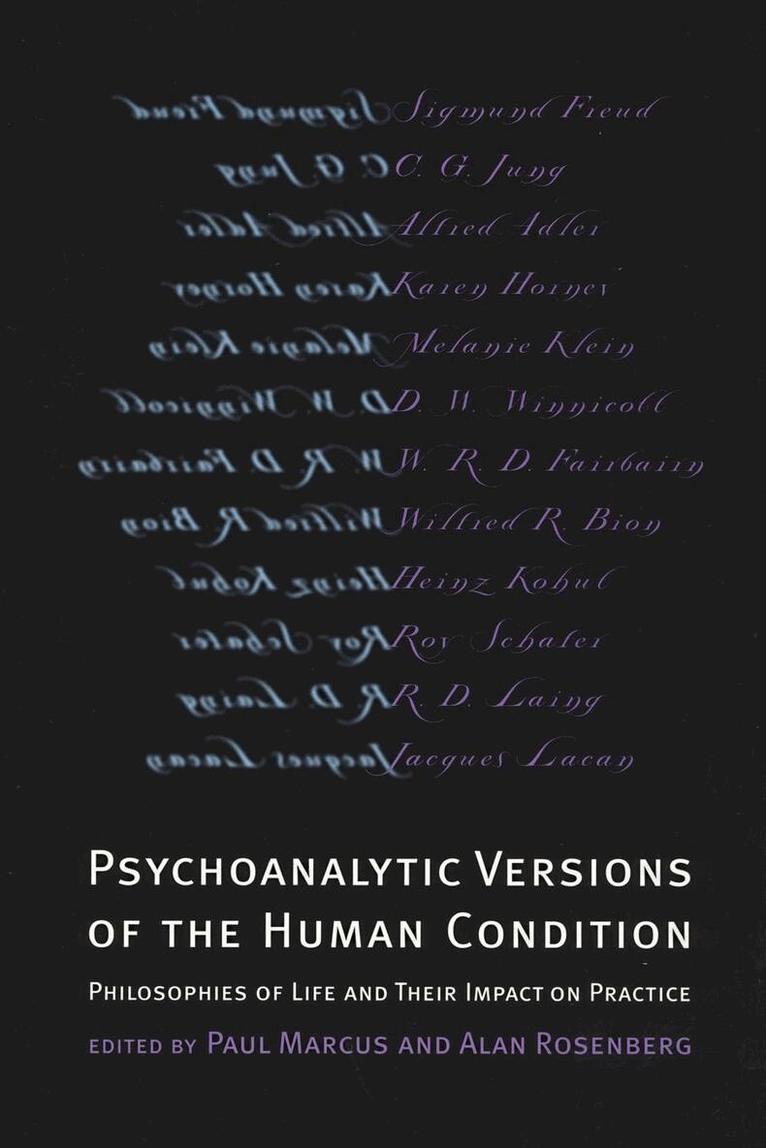
Psychoanalytic Versions of the Human Condition
Philosophies of Life and Their Impact on Practice
Häftad, Engelska, 1998
392 kr
Skickas inom 7-10 vardagar
What is psychoanalysis? Whereas there was once a time when proponents of "mainstream psychoanalysis" could point to the preeminence of Freud's drive theory and the version of the human condition associated with it–man as seeking pleasure in an erotically tinged universe–contemporary psychoanalysis is a fractured and contentious discipline in which competing theories share little more than the basic concepts of unconscious mental processes, repression, and transference.Taking the complexities, ambiguities, and contradictions engendered by psychoanalysis over the past several decades as an encouraging point of departure rather than as evidence of the dissolution of the "psychoanalytic tradition," Psychoanalytic Versions of the Human Condition makes explicit how, within each major theory, a particular story about the nature of the world and what it means to be human decisively shapes how the clinician conceptualizes individual psychopathology and approaches treatment. A chorus of voices that both challenges and reaffirms the theory and practice of psychoanalysis, Psychoanalytic Versions of the Human Condition asks urgent questions–about the politics of psychoanalytic knowledge, and about how the profession is situated and operates in our contemporary culture. Whether Freudian, Jungian, Kleinian, Kohutian, Lacanian, or hybrid, the clinician will find this book a useful guide to understanding how each theory's "philosophy of life" infuses clinical work.
461 kr
Skickas inom 11-20 vardagar
The murder of six million Jewish men, women, and children during World War II was an act of such barbarity as to constitute one of the central events of our time; yet a list of the major concerns of professional philosophers since 1945 would exclude the Holocaust. This collection of twenty-three essays, most of which were written expressly for this volume, is the first book to focus comprehensively on the profound issues and philosophical significance of the Holocaust. The essays, written for general as well as professional readers, convey an extraordinary range of factual information and philosophical reflection in seeking to identify the haunting meanings of the Holocaust. Among the questions addressed are: How should philosophy approach the Holocaust? What part did the philosophical climate play in allowing Hitlerism its temporary triumph? What is the philosophical climate today and what are its probable cultural effects? Can philosophy help our culture to become a bulwark against future agents of evil?The multiple dimensions of the Holocaust historical, sociological, psychological, religious, moral, and literary are collected here for concentrated philosophical interpretations. Alan Rosenberg is a Lecturer in the Philosophy Department at Queens College of the City University of New York. Gerald E. Myers is Professor of Philosophy at Queens College and CUNY Graduate Center.
474 kr
Skickas inom 10-15 vardagar
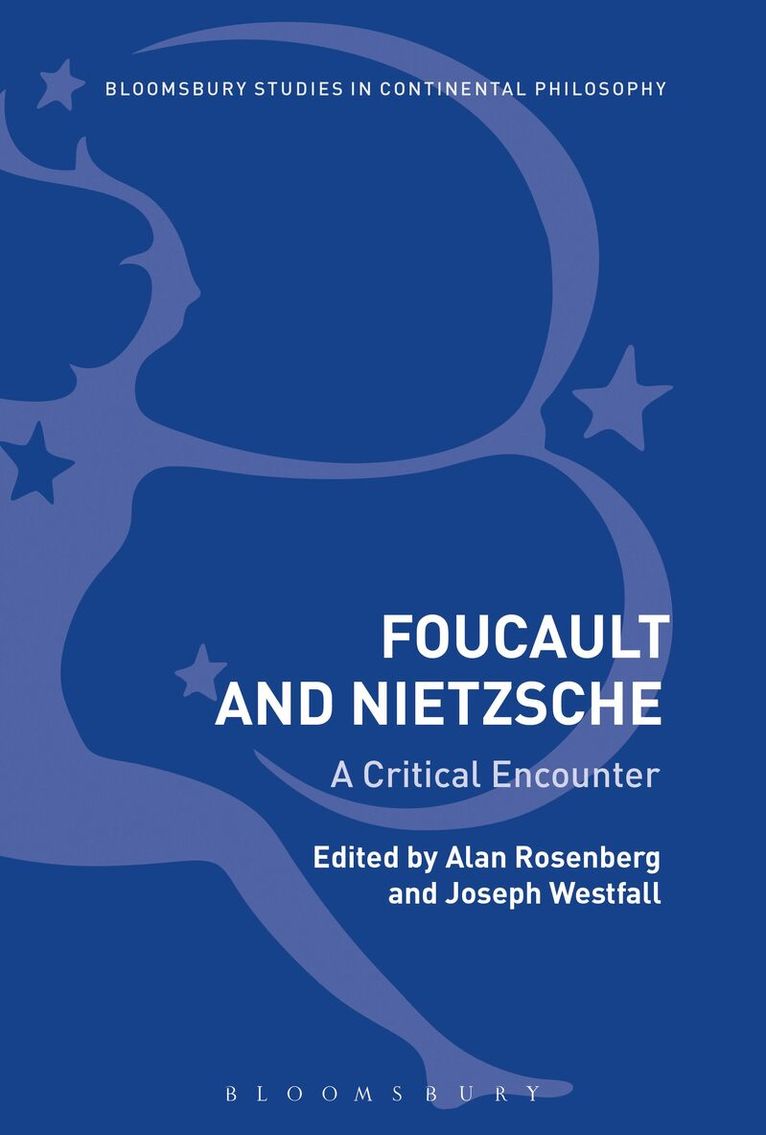
Foucault’s intellectual indebtedness to Nietzsche is apparent in his writing, yet the precise nature, extent, and nuances of that debt are seldom explored. Foucault himself seems sometimes to claim that his approach is essentially Nietzschean, and sometimes to insist that he amounts to a radical break with Nietzsche. This volume is the first of its kind, presenting the relationship between these two thinkers on elements of contemporary culture that they shared interests in, including the nature of life in the modern world, philosophy as a way of life, and the ways in which we ought to read and write about other philosophers.The contributing authors are leading figures in Foucault and Nietzsche studies, and their contributions reflect the diversity of approaches possible in coming to terms with the Foucault-Nietzsche relationship. Specific points of comparison include Foucault and Nietzsche’s differing understandings of the Death of God; art and aesthetics; power; writing and authorship; politics and society; the history of ideas; genealogy and archaeology; and the evolution of knowledge.
1 703 kr
Skickas inom 10-15 vardagar
Foucault’s intellectual indebtedness to Nietzsche is apparent in his writing, yet the precise nature, extent, and nuances of that debt are seldom explored. Foucault himself seems sometimes to claim that his approach is essentially Nietzschean, and sometimes to insist that he amounts to a radical break with Nietzsche. This volume is the first of its kind, presenting the relationship between these two thinkers on elements of contemporary culture that they shared interests in, including the nature of life in the modern world, philosophy as a way of life, and the ways in which we ought to read and write about other philosophers.The contributing authors are leading figures in Foucault and Nietzsche studies, and their contributions reflect the diversity of approaches possible in coming to terms with the Foucault-Nietzsche relationship. Specific points of comparison include Foucault and Nietzsche’s differing understandings of the Death of God; art and aesthetics; power; writing and authorship; politics and society; the history of ideas; genealogy and archaeology; and the evolution of knowledge.