Joseph Westfall - Böcker
Visar alla böcker från författaren Joseph Westfall. Handla med fri frakt och snabb leverans.
8 produkter
8 produkter
276 kr
Skickas inom 5-8 vardagar
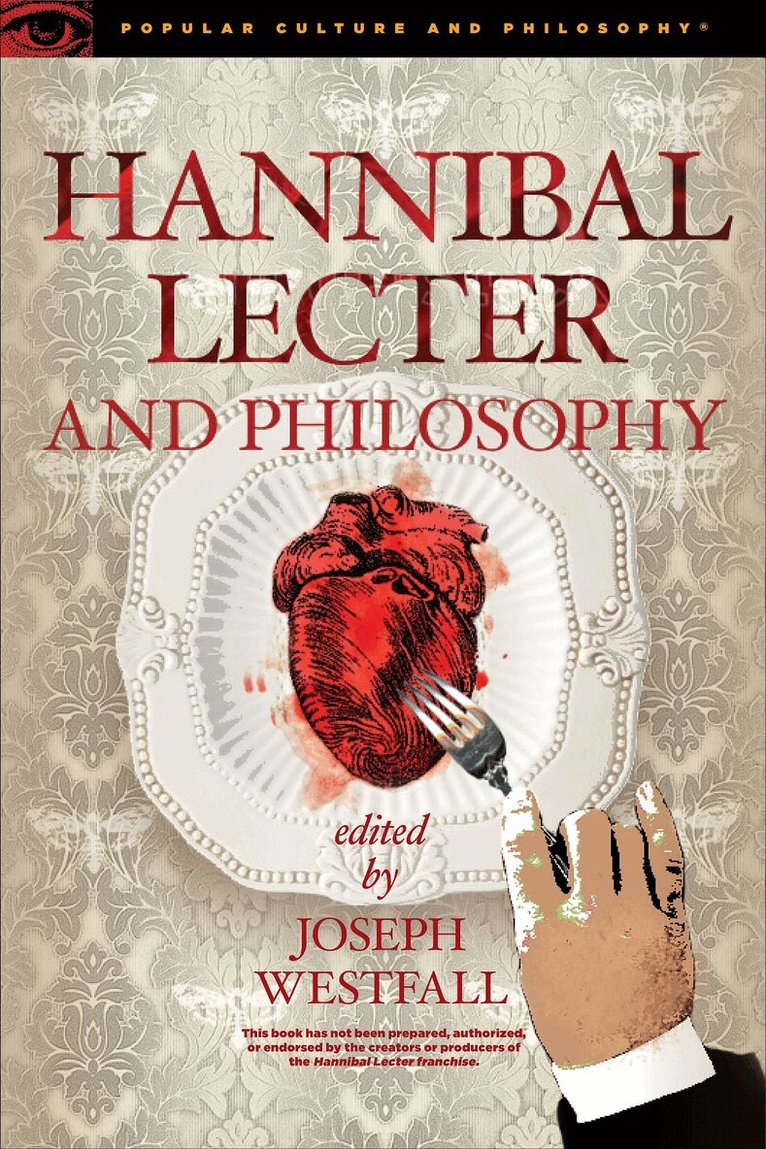
Hannibal Lecter, the subject of best-selling novels, movies, and the acclaimed TV series Hannibal, is one of pop culture's most compelling characters. In Hannibal Lecter and Philosophy, 16 philosophers come at Hannibal the way he comes at his victims -- from unexpected angles and with plenty of surprises. What does the relationship between Hannibal and those who know him -- particularly FBI investigator Will Graham -- tell us about the nature of friendship? Does Hannibal confer benefits on society by eliminating people who don't live up to his high aesthetic standards? Can upsetting experiences in early childhood turn you into a serial killer? Why are we enthralled by someone who exercises god-like control over situations and people? Does it make any difference morally that a killer eats his victims? Can a murder be a work of art? Several chapters look at the mind of this proud and accomplished killer, psychiatrist, and gourmet cook. Is he a sociopath or a psychopath, or are these the same? Is he lacking in empathy? Does his moral blindness give him compensating abilities, the way literally blind people gain heightened senses?Does it harm us that we are drawn into Hannibal's world by identifying with him?
1 703 kr
Skickas inom 10-15 vardagar
Authorship is a complicated subject in Kierkegaard's work, which he surely recognized, given his late attempts to explain himself in On My Work as an Author. From the use of multiple pseudonyms and antonyms, to contributions across a spectrum of media and genres, issues of authorship abound.Why did Kierkegaard write in the ways he did? Before we assess Kierkegaard’s famous thoughts on faith or love, or the relationship between 'the aesthetic,' 'the ethical,' and 'the religious,' we must approach how he expressed them. Given the multi-authored nature of his works, can we find a view or voice that is definitively Kierkegaard’s own? Can entries in his unpublished journals and notebooks tell us what Kierkegaard himself thought? How should contemporary readers understand inconsistencies or contradictions between differently named authors? We cannot make definitive claims about Kierkegaard’s work as a thinker without understanding Kierkegaard’s work as an author. This collection, by leading contemporary Kierkegaard scholars, is the first to systematically examine the divisive question and practice of authorship in Kierkegaard from philosophical, literary and theological perspectives.
474 kr
Skickas inom 10-15 vardagar
Foucault’s intellectual indebtedness to Nietzsche is apparent in his writing, yet the precise nature, extent, and nuances of that debt are seldom explored. Foucault himself seems sometimes to claim that his approach is essentially Nietzschean, and sometimes to insist that he amounts to a radical break with Nietzsche. This volume is the first of its kind, presenting the relationship between these two thinkers on elements of contemporary culture that they shared interests in, including the nature of life in the modern world, philosophy as a way of life, and the ways in which we ought to read and write about other philosophers.The contributing authors are leading figures in Foucault and Nietzsche studies, and their contributions reflect the diversity of approaches possible in coming to terms with the Foucault-Nietzsche relationship. Specific points of comparison include Foucault and Nietzsche’s differing understandings of the Death of God; art and aesthetics; power; writing and authorship; politics and society; the history of ideas; genealogy and archaeology; and the evolution of knowledge.
461 kr
Skickas inom 10-15 vardagar
Authorship is a complicated subject in Kierkegaard's work, which he surely recognized, given his late attempts to explain himself in On My Work as an Author. From the use of multiple pseudonyms and antonyms, to contributions across a spectrum of media and genres, issues of authorship abound.Why did Kierkegaard write in the ways he did? Before we assess Kierkegaard’s famous thoughts on faith or love, or the relationship between 'the aesthetic,' 'the ethical,' and 'the religious,' we must approach how he expressed them. Given the multi-authored nature of his works, can we find a view or voice that is definitively Kierkegaard’s own? Can entries in his unpublished journals and notebooks tell us what Kierkegaard himself thought? How should contemporary readers understand inconsistencies or contradictions between differently named authors? We cannot make definitive claims about Kierkegaard’s work as a thinker without understanding Kierkegaard’s work as an author. This collection, by leading contemporary Kierkegaard scholars, is the first to systematically examine the divisive question and practice of authorship in Kierkegaard from philosophical, literary and theological perspectives.
1 703 kr
Skickas inom 10-15 vardagar
Foucault’s intellectual indebtedness to Nietzsche is apparent in his writing, yet the precise nature, extent, and nuances of that debt are seldom explored. Foucault himself seems sometimes to claim that his approach is essentially Nietzschean, and sometimes to insist that he amounts to a radical break with Nietzsche. This volume is the first of its kind, presenting the relationship between these two thinkers on elements of contemporary culture that they shared interests in, including the nature of life in the modern world, philosophy as a way of life, and the ways in which we ought to read and write about other philosophers.The contributing authors are leading figures in Foucault and Nietzsche studies, and their contributions reflect the diversity of approaches possible in coming to terms with the Foucault-Nietzsche relationship. Specific points of comparison include Foucault and Nietzsche’s differing understandings of the Death of God; art and aesthetics; power; writing and authorship; politics and society; the history of ideas; genealogy and archaeology; and the evolution of knowledge.
2 355 kr
Skickas inom 10-15 vardagar
The first collection of its kind, The Continental Philosophy of Film Reader is the essential anthology of writings by continental philosophers on cinema, representing the last century of film-making and thinking about film, as well as all of the major schools of Continental thought: phenomenology and existentialism, Marxism and critical theory, semiotics and hermeneutics, psychoanalysis, and postmodernism. Included here are not only the classic texts in continental philosophy of film, from Benjamin’s “The Work of Art in the Age of Mechanical Reproduction” to extracts of Deleuze’s Cinema and Barthes’s Mythologies, but also the earliest works of Continental philosophy of film, from thinkers such as Georg Lukács, and little-read gems by philosophical giants such as Sartre and Beauvoir.The book demonstrates both the philosophical significance of these thinkers’ ideas about film, as well their influence on filmmakers in Europe and across the globe. In addition, however, this wide-ranging collection also teaches us how important film is to the last century of European philosophical thought. Almost every major continental European thinker of the twentieth and twenty-first centuries has had something to say—sometimes, quite a lot to say—about cinema: as an art form, as a social or political phenomenon, as a linguistic device and conveyor of information, as a projection of our fears and desires, as a site for oppression and resistance, or as a model on the basis of which some of us, at least, learn how to live.Purpose built for classroom use, with pedagogical features introducing and contextualizing the extracts, this reader is an indispensable tool for students and researchers in philosophy of film, film studies and the history of cinema.
541 kr
Skickas inom 10-15 vardagar
The first collection of its kind, The Continental Philosophy of Film Reader is the essential anthology of writings by continental philosophers on cinema, representing the last century of film-making and thinking about film, as well as all of the major schools of Continental thought: phenomenology and existentialism, Marxism and critical theory, semiotics and hermeneutics, psychoanalysis, and postmodernism. Included here are not only the classic texts in continental philosophy of film, from Benjamin’s “The Work of Art in the Age of Mechanical Reproduction” to extracts of Deleuze’s Cinema and Barthes’s Mythologies, but also the earliest works of Continental philosophy of film, from thinkers such as Georg Lukács, and little-read gems by philosophical giants such as Sartre and Beauvoir.The book demonstrates both the philosophical significance of these thinkers’ ideas about film, as well their influence on filmmakers in Europe and across the globe. In addition, however, this wide-ranging collection also teaches us how important film is to the last century of European philosophical thought. Almost every major continental European thinker of the twentieth and twenty-first centuries has had something to say—sometimes, quite a lot to say—about cinema: as an art form, as a social or political phenomenon, as a linguistic device and conveyor of information, as a projection of our fears and desires, as a site for oppression and resistance, or as a model on the basis of which some of us, at least, learn how to live.Purpose built for classroom use, with pedagogical features introducing and contextualizing the extracts, this reader is an indispensable tool for students and researchers in philosophy of film, film studies and the history of cinema.
Kierkegaardian Author
Authorship and Performance in Kierkegaard's Literary and Dramatic Criticism
Inbunden, Engelska, 2007
2 790 kr
Skickas inom 5-8 vardagar
This study engages in a detailed examination of Kierkegaard’s works of literary and dramatic criticism, including those works directed at interpreting Kierkegaard’s own authorship, with a specific concern for both what Kierkegaard and Kierkegaard’s anonyms and pseudonyms write about the nature and practice of authorship, as well as how the Kierkegaardian authors practice authorship themselves. Moving through five chapters, each devoted to one or more works of Kierkegaard’s criticism, the study develops a new approach to reading Kierkegaard – a new Kierkegaardian hermeneutic – that begins always with the character of the author. This new approach avoids the challenges of critics of biographical criticism, such as Roland Barthes, Michel Foucault, and Jacques Derrida, by positing the author always as a work of fiction him- or herself, the creation of an unknown and ever anonymous “author of the author”.