Alasdair Whittle – författare
Visar alla böcker från författaren Alasdair Whittle. Handla med fri frakt och snabb leverans.
7 produkter
7 produkter
Del 144 - Proceedings of the British Academy 144
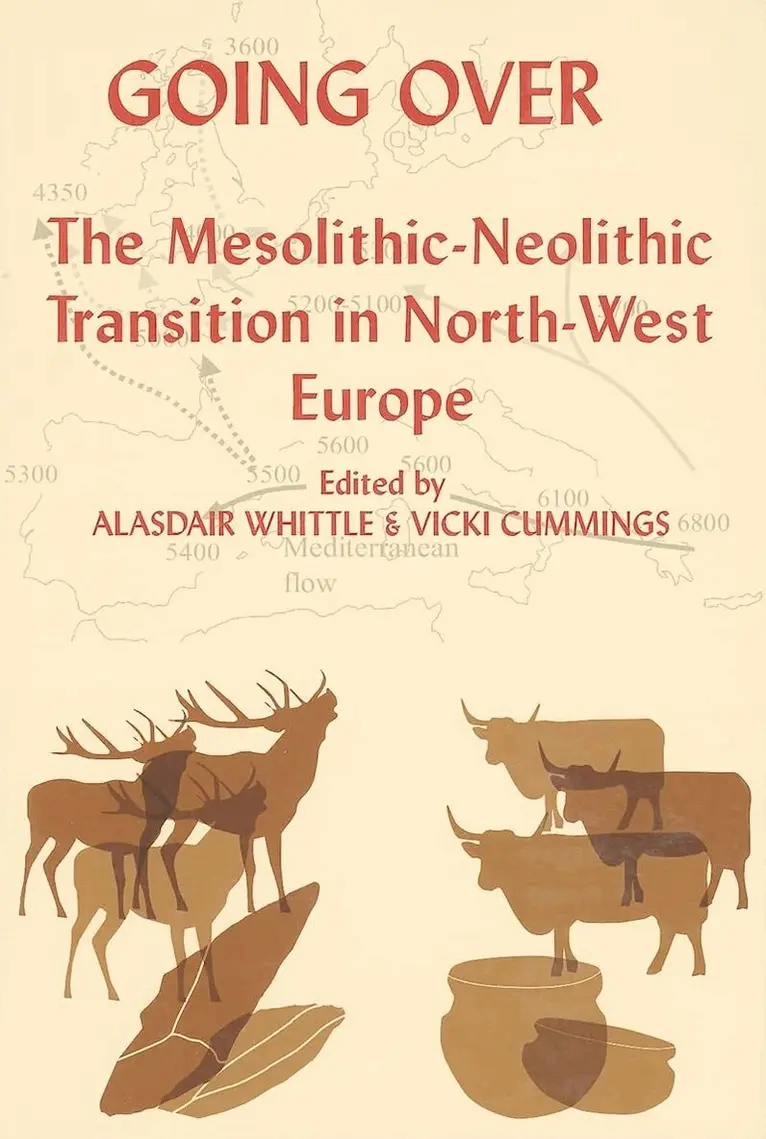
Going Over: The Mesolithic-Neolithic Transition in North-West Europe
The Mesolithic-Neolithic Transition in North-West Europe
Inbunden, Engelska, 2007
1 856 kr
Skickas inom 5-8 vardagar
The processes involved in the transformation of society from Mesolithic hunter-gatherers to Neolithic farmers were complex. They involved changes not only in subsistence but also in how people thought about themselves and their worlds, from their pasts to their animals. Two sets of protagonists have often been lined up in the long-running debates about these processes: on the one hand incoming farmers and on the other indigenous hunter-gatherers. Both have found advocates as the dominant force in the transitions to a new way of life. North-west Europe presents a very rich data set for this fundamental change, and recent research has both extended and deepened our knowledge of regional sequences, from the sixth to the fourth millennia cal BC. One of the most striking results is the evident diversity from northern Spain to southern Scandinavia. No one region is quite like another; hunter-gatherers and early farmers alike were also varied and the old labels of Mesolithic and Neolithic are increasingly inadequate to capture the diversity of human agency and belief.Surveys of the most recent evidence presented here also strongly suggest a diversity of transformations. Some cases of colonisation on the one hand, and indigenous adoption on the other, can still be argued but many situations now seem to involve complex fusions and mixtures. This wide-ranging set of papers by leading specialists offers a comprehensive and authoritative overview of this fundamental transition.
1 797 kr
Skickas
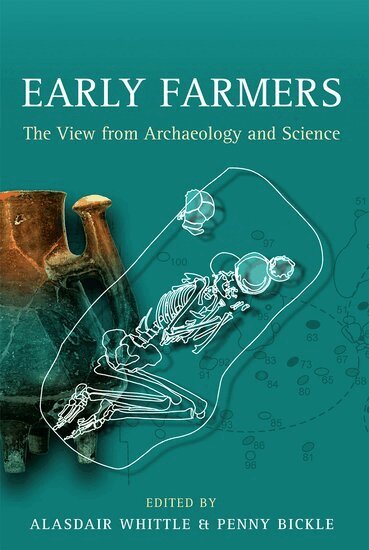
The Neolithic period was one of the great transformations in human history with profound, long-term consequences. In Europe, there were no farmers at 7000 cal BC, but very few hunter-gatherers after about 4000 cal BC. Although we understand the broad chronological structure of this shift, many pressing research questions remain. Archaeologists are still vigorously debating the identity of those principally involved in initiating change, the detail of everyday lives during the Neolithic, including basic questions about settlement, the operation of the farming economy and the varied roles of material culture, and the character of large-scale and long-term transformations. They face the task not only of working at different scales, but of integrating ever-expanding amounts of evidence. As well as the data coming from larger and more intensive excavations, there has been a radical increase in the information released by many kinds of scientific analysis of archaeological remains. These now include, alongside longer established methods of looking at food remains and material, the isotopic analysis of the diet and lifetime movement of people, isotopic analysis of cereal remains for indications of manuring, a DNA analysis of genetic signatures, detailed micromorphological analysis of deposits where people lived, and the close examination of the origin and production of varying materials and artefacts.The 21 chapters by leading experts in the field demonstrate how the combination of archaeological and scientific evidence now provides opportunities for new and creative understandings of Europe's early farmers. They make an important contribution to the debate over how best to integrate these multiple lines of evidence, scientific and more traditionally archaeological, while keeping in central focus the principal questions that we want to ask of our data.
466 kr
Skickas inom 7-10 vardagar
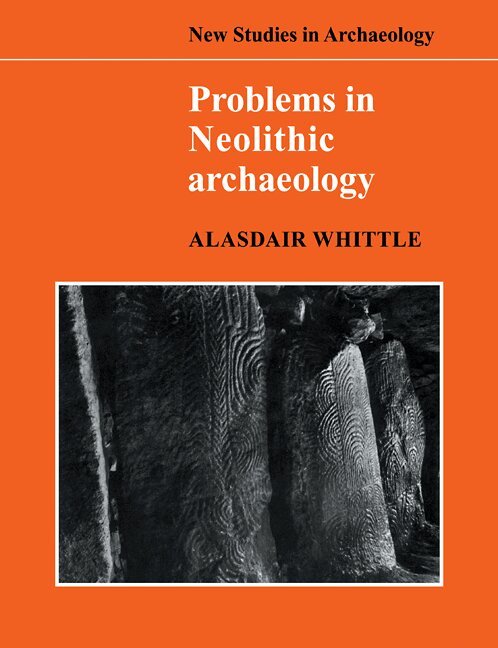
Problems in Neolithic Archaeology is a notable contribution to the debate about how we can write prehistory. Drawing on both processual and post-processual approaches, it reaffirms the central role of theory and interpretation while accepting as permanent the uncertainty which makes the testing of archaeological hypotheses difficult or even impossible. Dr Whittle asserts in particular the need for greater self-confidence and for the formulation of new theory and questions more appropriate to the archaeological record. The book's specific strength lies, however, in a close contextual study of the Neolithic period in western and central Europe. In this respect it provides an admirable complement to his textbook Neolithic Europe.
First Stones
Penywyrlod, Gwernvale and the Black Mountains Neolithic Long Cairns of South-East Wales
Häftad, Engelska, 2022
520 kr
Skickas
The First Stones brings together the results of recent research on the Neolithic long cairns lying in the shadow of the Black Mountains in south-east Wales, focusing upon Penywyrlod and Gwernvale, the two best known tombs within the group, previously excavated in the 1970s. Important results lie in both new site detail and reassessment of the wider context. Small-scale excavation, geophysical survey and geological assessment at Penywyrlod – the largest of the Welsh long cairns – gave further information about the distinctive external and internal architecture of the monument. In turn, this opened the opportunity to reassess the pre-monument sequence at Gwernvale, with re-examination of both Mesolithic and Neolithic occupations, including a timber structure and midden, lithic and pottery assemblages, and cereal remains. The frame for wider reassessment is given by fresh chronological modelling both of the monuments themselves, suggesting a sequence from Penywyrlod and Pipton to Ty Isaf and Gwernvale, probably spanning the 38th to the 36th or 35th centuries cal BC, and of early Neolithic activity in south Wales and the Marches, probably beginning in the 39th century cal BC. A detailed study of the major assemblages of human remains from the Black Mountains tombs includes evidence for diet, trauma and lifestyles of the populations represented. Recent isotope analysis of human remains from the tombs is also reviewed, implying social mobility and migration within local populations during the early Neolithic. The First Stones makes a significant contribution to the study of tomb building, treatment of the dead, place making, the relationship of monuments to landscape, local and regional identities, connections and affiliations across southern Britain and the adjacent continent, and Neolithisation in western Britain. Viewed within the context of tombs within the Cotswold-Severn tradition as a whole, it leads to an appreciation of the local and regional distinctiveness of architecture and mortuary practice exhibited by the tombs in this area of south-east Wales, emerging as part of the intake of a significant inland area in the early centuries of the Neolithic.
547 kr
Tillfälligt slut
The current paradigm-changing ancient DNA revolution is offering unparalleled insights into central problems within archaeology relating to the movement of populations and individuals, patterns of descent, relationships and aspects of identity – at many scales and of many different kinds. The impact of recent ancient DNA results can be seen particularly clearly in studies of the European Neolithic, the subject of contributions presented in this volume. We now have new evidence for the movement and mixture of people at the start of the Neolithic, as farming spread from the east, and at its end, when the first metals as well as novel styles of pottery and burial practices arrived in the Chalcolithic. In addition, there has been a wealth of new data to inform complex questions of identities and relationships. The terms of archaeological debate for this period have been permanently altered, leaving us with many issues.This volume stems from the online day conference of the Neolithic Studies Group held in November 2021, which aimed to bring geneticists and archaeologists together in the same forum, and to enable critical but constructive inter-disciplinary debate about key themes arising from the application of advanced ancient DNA analysis to the study of the European Neolithic. The resulting papers gathered here are by both geneticists and archaeologists. Individually, they form a series of significant, up-to-date, period and regional syntheses of various manifestations of the Neolithic across the Near East and Europe, including particularly Britain and Ireland. Together, they offer wide-ranging reflections on the progress of ancient DNA studies, and on their future reach and character.
Whittle Collection
Key Papers by Prehistorian Alasdair Whittle on European Neolithic Archaeology
Häftad, Engelska, 2026
317 kr
Skickas
Alasdair Whittle is one of the most influential British prehistorians of the late 20th to early 21st century. This volume in our new Reflections series re-presents some of his most important papers published in Oxbow titles and celebrates his contribution to our understanding of Neolithic lifeways and the development of Neolithic society in Britain and Europe. The collection illustrates his pioneering work in the interpretation of both monumental and settlement sites, and the spread and nature of early farming in central and western Europe, including investigation of LBK longhouse life. Alasdair has also been at the forefront of the application of Bayesian statistics in radiocarbon dating, helping to revolutionise chronologies at a variety of geographical and temporal scales. This volume seeks to reflect some of the best of his innovative thinking and influence as seen through his publications with Oxbow.
853 kr
Kommande
This title, the next in the Neolithic Studies Group Seminar Papers series, presents a selection of case studies from across Neolithic continental Europe, Britain and Ireland as examples of recent and ongoing archaeological research on kinship.Kinship has often been seen as central to how many societies operated in the past, and there is a very long and complex history of research on it in anthropology. Debate actively continues, centred around whether kinship is essentially a matter of biology or should be seen as a social construct, or some combination of the two. Until fairly recently, archaeology has done very little in detail with kinship, despite its probably central importance in past social relations. The recent development of aDNA research has changed things fundamentally, with prolific studies indicating, for the Neolithic, diverse situations where biological relatedness can be documented, but also others where biological relatedness is either absent or not so prominent. Neolithic studies therefore face the challenge of coming to terms with evident diversity and needing to find nuanced interpretative approaches to kinship; they also have the opportunity to begin to chart detailed trajectories of change. The coverage of the book will illustrate diversity across time and space, as well as exploring the many approaches now possible to the significance of kinship. It will help to give the archaeological reader a reflective and nuanced understanding of the very broad range of possible approaches to the study of kinship in the past. This is the only book on kinship focusing exclusively on Neolithic Europe, offering readers a wide sample of current and ongoing research across Europe. It will reflect on combining a broad range of evidence; while most of the chapters will be concerned with depositions in the mortuary sphere, and some will make use of aDNA data derived from that sphere, contributions will also cover other dimensions of practice, including settlements, architecture, and material culture.