Alex Madva - Böcker
Visar alla böcker från författaren Alex Madva. Handla med fri frakt och snabb leverans.
5 produkter
5 produkter
1 205 kr
Skickas
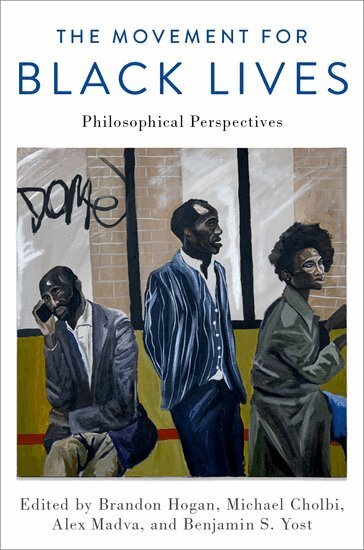
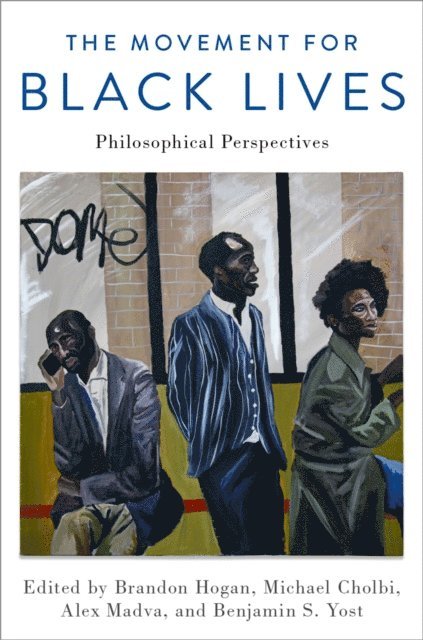
The Movement for Black Lives (M4BL) has gained worldwide visibility as a grassroots social justice movement distinguished by a decentralized, non-hierarchal mode of organization, and in 2020 Black Lives Matter protests across the country shook America's moral conscience to its core. M4BL rose to prominence in part thanks to its protests against police brutality and misconduct directed at Black Americans. However, its animating concerns are far broader, calling for a wide range of economic, political, legal, and cultural measures to address what it terms a "war against Black people," as well as the "shared struggle with all oppressed people." Yet despite the significance of the social, political, and economic goals of M4BL, as well as the innovative organizational leadership strategies it employs, M4BL has so far received little sustained philosophical attention. The Movement for Black Lives: Philosophical Perspectives brings philosophical analysis to bear on the aims, strategies, policy positions, and intellectual-historical context of M4BL. Leading scholars tackle such themes as: "Black Lives Matter" as a political speech act, M4BL's conception of the value of Black lives, the gender dynamics of the Movement, the relation of M4BL to other Black liberation movements and transitional justice movements, the Movement's new forms of leadership and organization, and the impact of racism on the normative assessment of the criminal justice system. The volume broaches a wide range of pressing issues in the philosophy of language, social and political philosophy, philosophy of race, philosophy of gender, and the philosophy of punishment. It is vital reading for students and scholars in the humanities and social sciences interested in race, inequality, and social justice movements.
501 kr
Skickas
The Movement for Black Lives (M4BL) has gained worldwide visibility as a grassroots social justice movement distinguished by a decentralized, non-hierarchal mode of organization, and in 2020 Black Lives Matter protests across the country shook America's moral conscience to its core. M4BL rose to prominence in part thanks to its protests against police brutality and misconduct directed at Black Americans. However, its animating concerns are far broader, calling for a wide range of economic, political, legal, and cultural measures to address what it terms a "war against Black people," as well as the "shared struggle with all oppressed people." Yet despite the significance of the social, political, and economic goals of M4BL, as well as the innovative organizational leadership strategies it employs, M4BL has so far received little sustained philosophical attention. The Movement for Black Lives: Philosophical Perspectives brings philosophical analysis to bear on the aims, strategies, policy positions, and intellectual-historical context of M4BL. Leading scholars tackle such themes as: "Black Lives Matter" as a political speech act, M4BL's conception of the value of Black lives, the gender dynamics of the Movement, the relation of M4BL to other Black liberation movements and transitional justice movements, the Movement's new forms of leadership and organization, and the impact of racism on the normative assessment of the criminal justice system. The volume broaches a wide range of pressing issues in the philosophy of language, social and political philosophy, philosophy of race, philosophy of gender, and the philosophy of punishment. It is vital reading for students and scholars in the humanities and social sciences interested in race, inequality, and social justice movements.
315 kr
Skickas
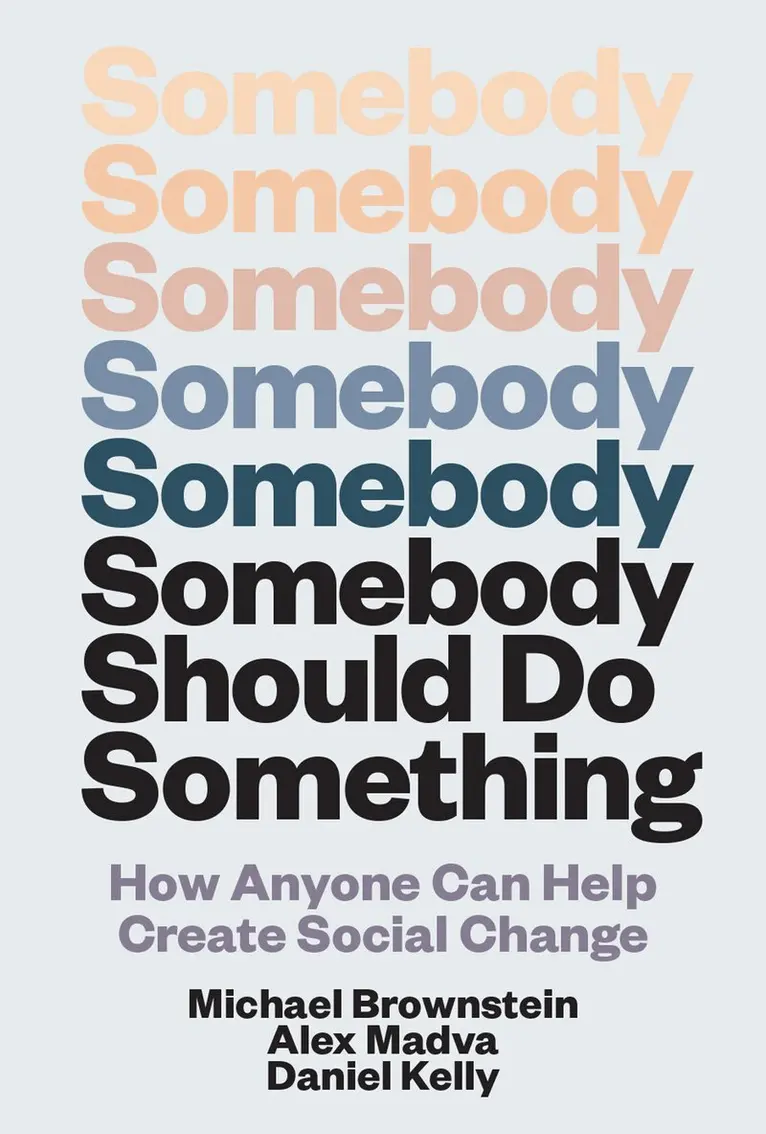
A novel and scientific approach to creating transformative social change and the surprising ways that each of us can help make a real difference. Changing the world is difficult. One reason is that the most important problems, like climate change, racism, and poverty, are structural. They emerge from our collective practices: laws, economies, history, culture, norms, and built environments. The dilemma is that there is no way to make structural change without individual people making different more structure-facing decisions. In Somebody Should Do Something, Michael Brownstein, Alex Madva, and Daniel Kelly show us how we can connect our personal choices to structural change and why individual choices matter, though not in the way people usually think. The authors paint a new picture of how social change happens, arguing that our most powerful personal choices are those that springboard us into working together with others warehouse worker Chris Smalls' unionization at Amazon is one powerful example. Taking inspiration from the writer Bill McKibben, they stress how one 'important thing an individual can do is be somewhat less of an individual.' Organized into three main sections, the book first diagnoses the problem of 'either/or' thinking about social change, which stems from the false choice of making better personal choices or changing the system. Then it offers a different way to think about social change, anchored in a new picture of human nature emerging across the social sciences. Finally, the authors explore ways of putting this picture into practice. Neither a how-to manual nor an activist s guide, Somebody Should Do Something pairs stories and science (plus some jokes) to help readers recognize their own power, turning resignation about climate change and racial injustice into actions that transform the world.
2 104 kr
Skickas inom 10-15 vardagar
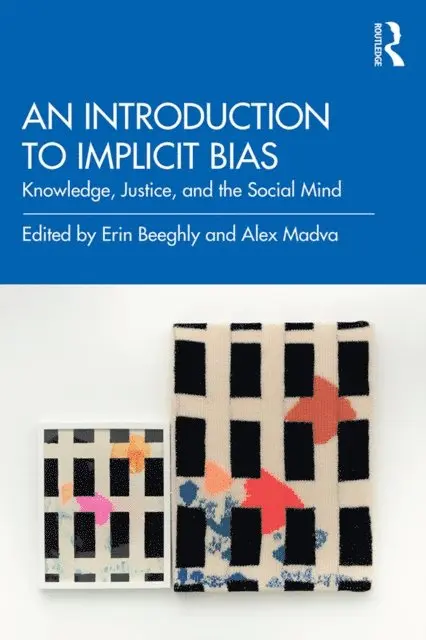
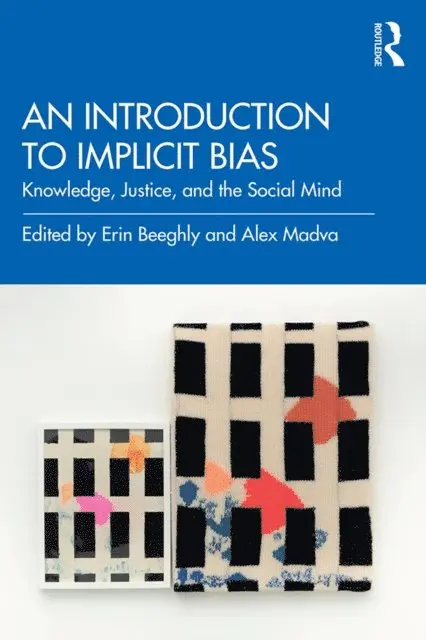
Written by a diverse range of scholars, this accessible introductory volume asks: What is implicit bias? How does implicit bias compromise our knowledge of others and social reality? How does implicit bias affect us, as individuals and participants in larger social and political institutions, and what can we do to combat biases? An interdisciplinary enterprise, the volume brings together the philosophical perspective of the humanities with the perspective of the social sciences to develop rich lines of inquiry. Its twelve chapters are written in a non-technical style, using relatable examples that help readers understand what implicit bias is, its significance, and the controversies surrounding it. Each chapter includes discussion questions and additional annotated reading suggestions, and a companion webpage contains teaching resources. The volume is an invaluable resource for students—and researchers—seeking to understand criticisms surrounding implicit bias, as well as how one might answer them by adopting a more nuanced understanding of bias and its role in maintaining social injustice.
548 kr
Skickas inom 10-15 vardagar
Written by a diverse range of scholars, this accessible introductory volume asks: What is implicit bias? How does implicit bias compromise our knowledge of others and social reality? How does implicit bias affect us, as individuals and participants in larger social and political institutions, and what can we do to combat biases? An interdisciplinary enterprise, the volume brings together the philosophical perspective of the humanities with the perspective of the social sciences to develop rich lines of inquiry. Its twelve chapters are written in a non-technical style, using relatable examples that help readers understand what implicit bias is, its significance, and the controversies surrounding it. Each chapter includes discussion questions and additional annotated reading suggestions, and a companion webpage contains teaching resources. The volume is an invaluable resource for students—and researchers—seeking to understand criticisms surrounding implicit bias, as well as how one might answer them by adopting a more nuanced understanding of bias and its role in maintaining social injustice.