Alexander M. Capron - Böcker
Visar alla böcker från författaren Alexander M. Capron. Handla med fri frakt och snabb leverans.
3 produkter
3 produkter
546 kr
Tillfälligt slut
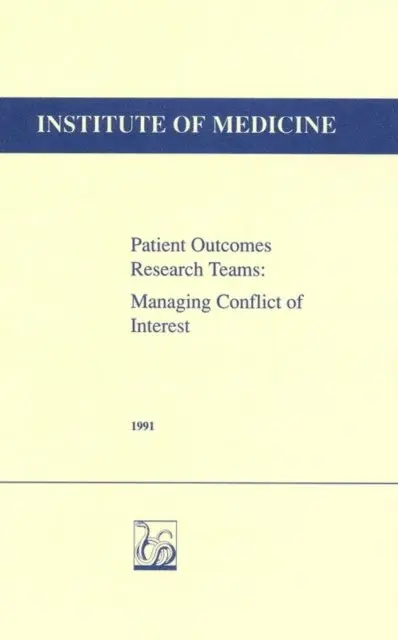
The new Agency for Health Care Policy and Research in the U.S. Public Health Service is funding a set of multidisciplinary groups called Patient Outcomes Research Teams (PORTs). Their purpose is to assess alternative treatments for medical conditions using a variety of outcome measures. In guiding insurance coverage, these PORTs are expected to wield considerable influence on medical practice and health policy. This book addresses possible threats to their credibility that might be based on real or apparent conflicts of interest, including both financial and other conflicts. It raises points to consider for the new agency, for PORTs and their institutions, for industry, for the health services research community, and for the U.S. Congress in avoiding and managing conflicts of interest.
2 237 kr
Skickas inom 10-15 vardagar
Population genomics research drawing on genetic databases has expanded rapidly, with some of this information being combined in 'biobanks'. Managing this information in an appropriate way is a highly complex ethical issue in the health policy arena. This book combines theoretical and empirical research to analyze the areas of conflict and consensus in the regulatory and ethical frameworks that have been developed to govern biobanks. Ethicists from the Department of Ethics, Trade, Human Rights and Health Law (ETH) of the World Health Organization, the Institute of Biomedical Ethics of Geneva University and the Institute of Biomedical Ethics of the University of Zurich, with the support of the Geneva International Academic Network (GIAN), examine the conditions under which genetic databases can be established, kept, and made use of in an ethically acceptable way. In addition to a comprehensive review of the scientific literature and a comparative analysis of existing normative frameworks, they present the results of in-depth interviews with experts around the world concerning the most unresolved and controversial issues. The results of that study, combined with their normative analysis, leads to recommendations for a better international framework.
774 kr
Skickas inom 10-15 vardagar
Population genomics research drawing on genetic databases has expanded rapidly, with some of this information being combined in 'biobanks'. Managing this information in an appropriate way is a highly complex ethical issue in the health policy arena. This book combines theoretical and empirical research to analyze the areas of conflict and consensus in the regulatory and ethical frameworks that have been developed to govern biobanks. Ethicists from the Department of Ethics, Trade, Human Rights and Health Law (ETH) of the World Health Organization, the Institute of Biomedical Ethics of Geneva University and the Institute of Biomedical Ethics of the University of Zurich, with the support of the Geneva International Academic Network (GIAN), examine the conditions under which genetic databases can be established, kept, and made use of in an ethically acceptable way. In addition to a comprehensive review of the scientific literature and a comparative analysis of existing normative frameworks, they present the results of in-depth interviews with experts around the world concerning the most unresolved and controversial issues. The results of that study, combined with their normative analysis, leads to recommendations for a better international framework.