Ali Eteraz - Böcker
Visar alla böcker från författaren Ali Eteraz. Handla med fri frakt och snabb leverans.
3 produkter
3 produkter
168 kr
Skickas inom 5-8 vardagar
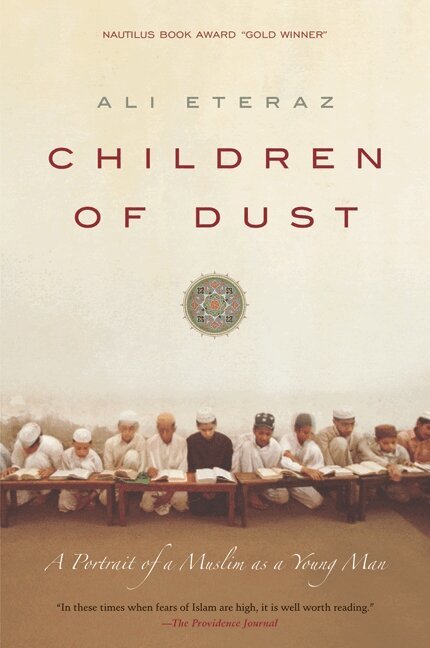
Centered around the rural areas of Pakistan, "Children of Dust" is a memoir that chronicles a boy's coming of age in a fundamentalist milieu, and offers a detailed account of the ways in which people internalize and submit to Islamic extremism and social alienation. It sets forth a harrowing narrative of abuse and violence, an intimate portrait of life at the lower levels of Pakistani society, an exploration of love in a place where both romance and women are reviled, a discussion on the rise of religious fanaticism, and an intellectual reflection on the mental totalitarianism of global Wahhabism. After settling in the US, where he entered college and began evaluating his past with a critical eye, Ali and his family returned to Pakistan in 1999. He found the cities of his youth dominated by the ideology of the Taliban, filled with members of al-Qaeda, and his extended family caught up in a fight for survival. He became the target of an al-Qaeda plot to abduct and hold him ransom for being a purported CIA agent. He eventually had to escape under military escort.One of the fundamental questions animating the book is how the author reconciled himself with the violence he experienced without becoming consumed by it. This question opens the door to searing reflections on the possibilities of reform in Islam by an individual who, as a human rights lawyer and activist, has now been intimately involved in such efforts for a decade.
193 kr
Skickas inom 7-10 vardagar
329 kr
Skickas inom 7-10 vardagar
This anthology of eight short stories and eight narrative essays depicts diverse facets of the South Asian experience in the American South. Some of them relate to the proverbial longing for what the immigrants have left behind, while the others spotlight the immigrants’ struggles to reconcile with realities they did not sign up for. In Chaitali Sen’s “The Immigrant,” Dhruv is unable to talk about a lost boy because he feels “as if he were trapping the boy with his story,” as if the lost boy’s story were his own story of getting lost in a foreign country. In Hasanthika Sirisena’s “Pine,” a Christmas tree becomes more than “only a pine tree with decorations thrown on it” when Lakshmi’s ex-husband lets her know he is converting to Christianity “to get ahead in this country.” Aruni Kashyap’s “Nafisa Ali’s Life, Love, and Friendships, Before and after the Travel Ban” tell a post-2016 immigrant story in which love is baffling. In “Gettysburg,” Kirtan Nautiyal asks, how does an immigrant become part of the new country’s history? Soniah Kamal’s essay “Writing the Immigrant Southern in the New New South” reflects on what it means to be an immigrant writer and if one can write from two places at once. Together, the stories and essays in the anthology compose a mosaic of South Asian lived experiences in the American South.