Alia Yunis - Böcker
Visar alla böcker från författaren Alia Yunis. Handla med fri frakt och snabb leverans.
5 produkter
5 produkter
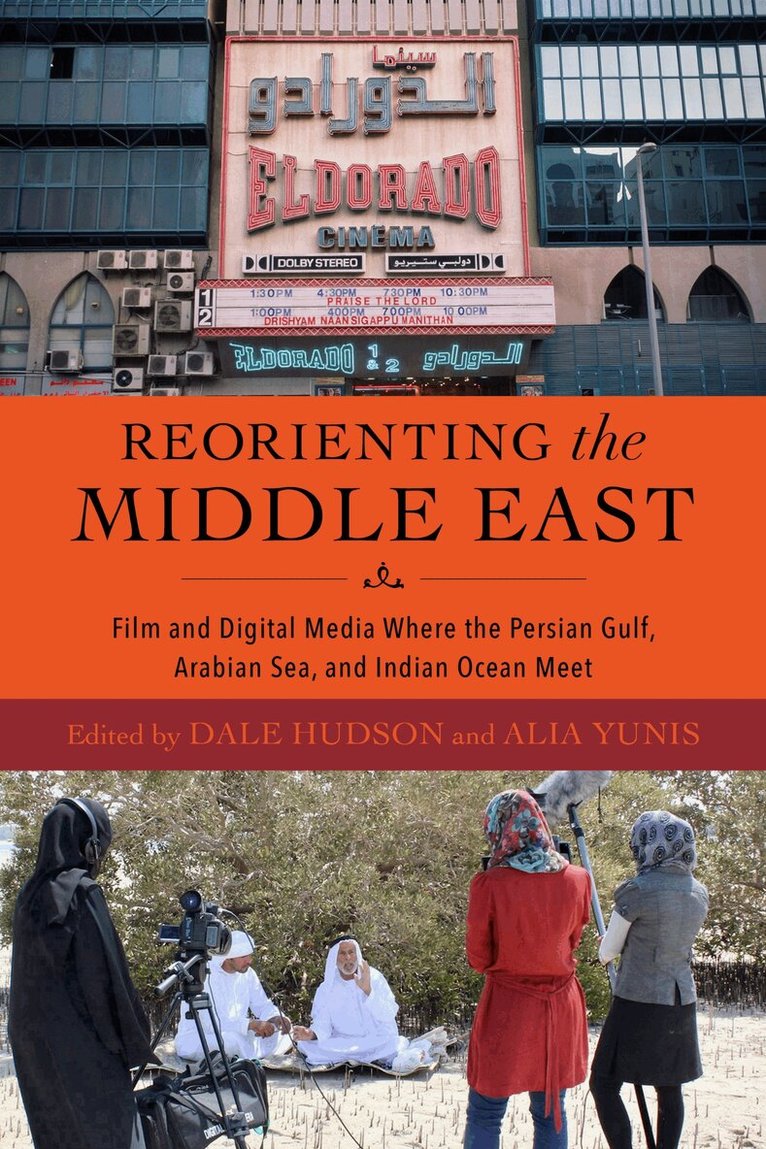
Reorienting the Middle East
Film and Digital Media Where the Persian Gulf, Arabian Sea, and Indian Ocean Meet
Inbunden, Engelska, 2024
982 kr
Skickas inom 7-10 vardagar
Stories of desert landscapes, cutting-edge production facilities, and lavish festivals often dominate narratives about film and digital media on the Arabian Peninsula. However, there is a more complicated history that reflects long-standing interconnections between the Persian Gulf, Arabian Sea, and Indian Ocean. Just as these waters are fluid spaces, so too is the flow of film and digital media between cultures in East Africa, Europe, North Africa, South Asia, Southwest Asia, and Southeast Asia.Reorienting the Middle East examines past and contemporary aspects of film and digital media in the Gulf that might not otherwise be apparent in dominant frameworks. Contributors consider oil companies that brought film exhibition to this area in the 1930s, the first Indian film produced on the Arabian Peninsula in the late 1970s, blackness in Iranian films, the role of Western funding in reshaping stories, Dubai's emergence in global film production, uses of online platforms for performance art, the development of film festivals and cinemas, and short films made by citizens and migrants that turn a lens on racism, sexism, national identity, and other rarely discussed social issues.Reorienting the Middle East offers new methods to analyze the often-neglected littoral spaces between nation-states and regions and to understand the role of film and digital media in shaping dialogue between area studies and film and media studies. Readers will find new pathways to rethink the limitations of dominant categories and frameworks in both fields.
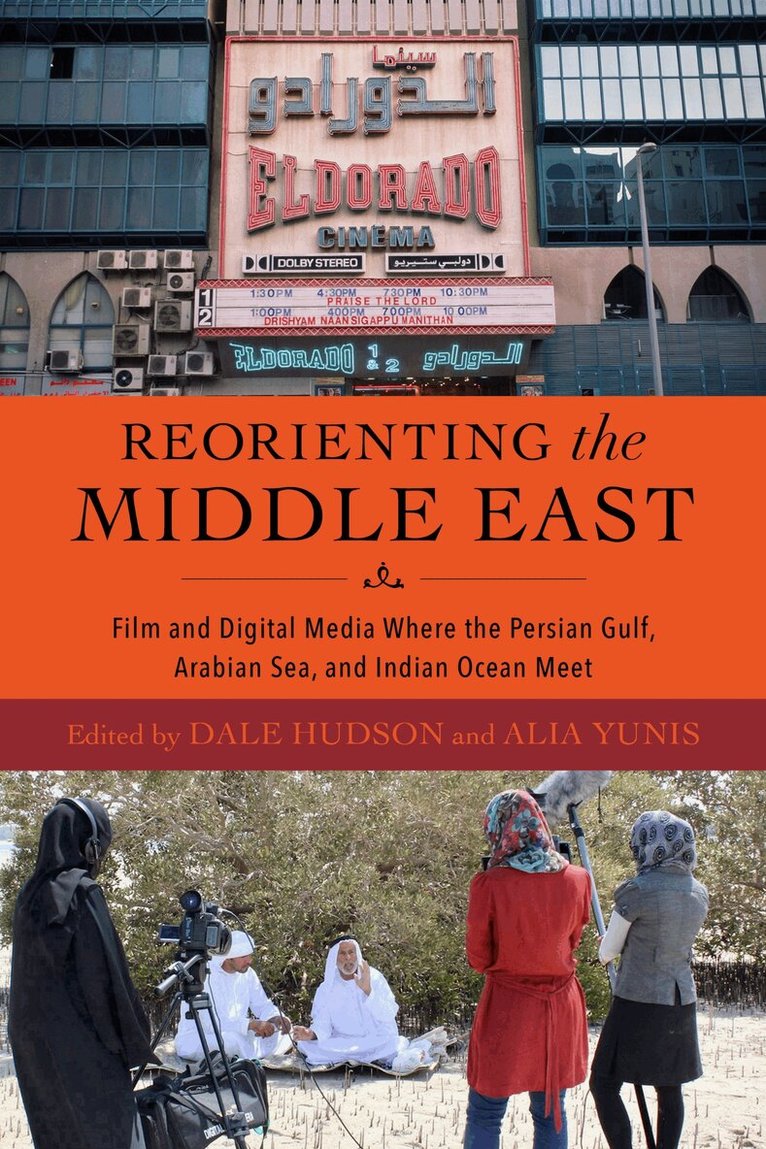
Reorienting the Middle East
Film and Digital Media Where the Persian Gulf, Arabian Sea, and Indian Ocean Meet
Häftad, Engelska, 2024
481 kr
Skickas inom 7-10 vardagar
Stories of desert landscapes, cutting-edge production facilities, and lavish festivals often dominate narratives about film and digital media on the Arabian Peninsula. However, there is a more complicated history that reflects long-standing interconnections between the Persian Gulf, Arabian Sea, and Indian Ocean. Just as these waters are fluid spaces, so too is the flow of film and digital media between cultures in East Africa, Europe, North Africa, South Asia, Southwest Asia, and Southeast Asia.Reorienting the Middle East examines past and contemporary aspects of film and digital media in the Gulf that might not otherwise be apparent in dominant frameworks. Contributors consider oil companies that brought film exhibition to this area in the 1930s, the first Indian film produced on the Arabian Peninsula in the late 1970s, blackness in Iranian films, the role of Western funding in reshaping stories, Dubai's emergence in global film production, uses of online platforms for performance art, the development of film festivals and cinemas, and short films made by citizens and migrants that turn a lens on racism, sexism, national identity, and other rarely discussed social issues.Reorienting the Middle East offers new methods to analyze the often-neglected littoral spaces between nation-states and regions and to understand the role of film and digital media in shaping dialogue between area studies and film and media studies. Readers will find new pathways to rethink the limitations of dominant categories and frameworks in both fields.
226 kr
Skickas inom 5-8 vardagar
2 155 kr
Skickas inom 10-15 vardagar
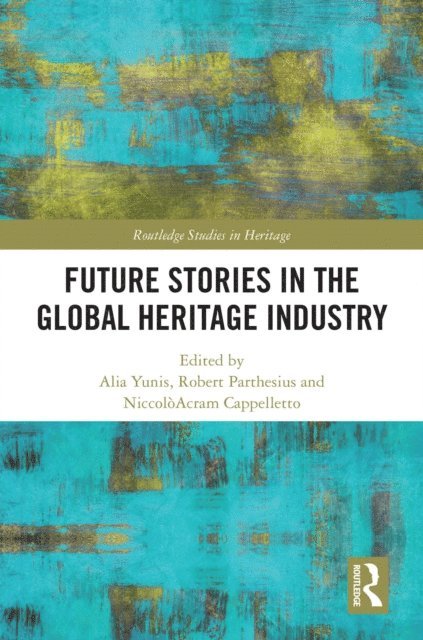
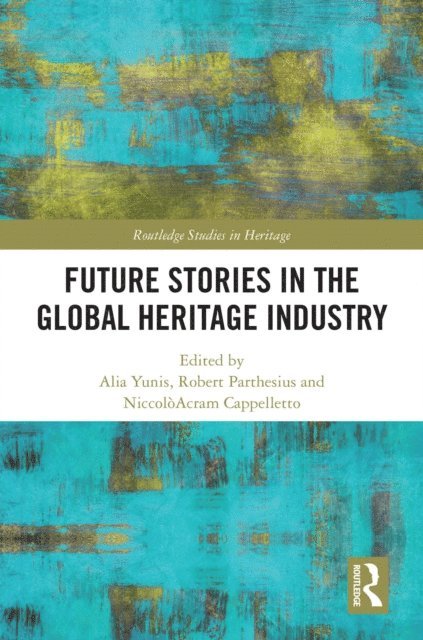
Future Stories in the Global Heritage Industry explores what happens to the heritage and memory of communities that find themselves in contact with the rest of the world when they become UNESCO World Heritage Sites.Written by an interdisciplinary group of emerging scholars and heritage professionals connected to these sites through their own heritage, this volume considers how a community can engage with a site’s globalized importance while retaining its own sense of history. Drawing on oral histories, ethnographic methods, film, interviews, and archival research, the book adds to the discourse around Critical Heritage Studies. It does so by putting theories into practice in selected heritage sites in Romania, the UAE/India, Eritrea, China, Mozambique, Tanzania, and Malaysia. The book also contributes toward the dismantlement of the many dichotomies imposed on heritage from the divisions between natural and cultural, or tangible and intangible in the UNESCO Conventions and Eurocentric heritage practices. Looking toward the future of the past, the volume asks whether heritage can be objectively or equitably managed, as it increasingly comes into conflict with issues around nation‑building, climate change, social class, ethnicity, religion, and gender.Future Stories in the Global Heritage Industry will be of great interest to academics and students engaged in the study of heritage, sociology, public history, history, international studies, sociology, and anthropology.
675 kr
Kommande
Future Stories in the Global Heritage Industry explores what happens to the heritage and memory of communities that find themselves in contact with the rest of the world when they become UNESCO World Heritage Sites.Written by an interdisciplinary group of emerging scholars and heritage professionals connected to these sites through their own heritage, this volume considers how a community can engage with a site’s globalized importance while retaining its own sense of history. Drawing on oral histories, ethnographic methods, film, interviews, and archival research, the book adds to the discourse around Critical Heritage Studies. It does so by putting theories into practice in selected heritage sites in Romania, the UAE/India, Eritrea, China, Mozambique, Tanzania, and Malaysia. The book also contributes toward the dismantlement of the many dichotomies imposed on heritage from the divisions between natural and cultural, or tangible and intangible in the UNESCO Conventions and Eurocentric heritage practices. Looking toward the future of the past, the volume asks whether heritage can be objectively or equitably managed, as it increasingly comes into conflict with issues around nation‑building, climate change, social class, ethnicity, religion, and gender.Future Stories in the Global Heritage Industry will be of great interest to academics and students engaged in the study of heritage, sociology, public history, history, international studies, sociology, and anthropology.