Dale Hudson - Böcker
Visar alla böcker från författaren Dale Hudson. Handla med fri frakt och snabb leverans.
12 produkter
12 produkter
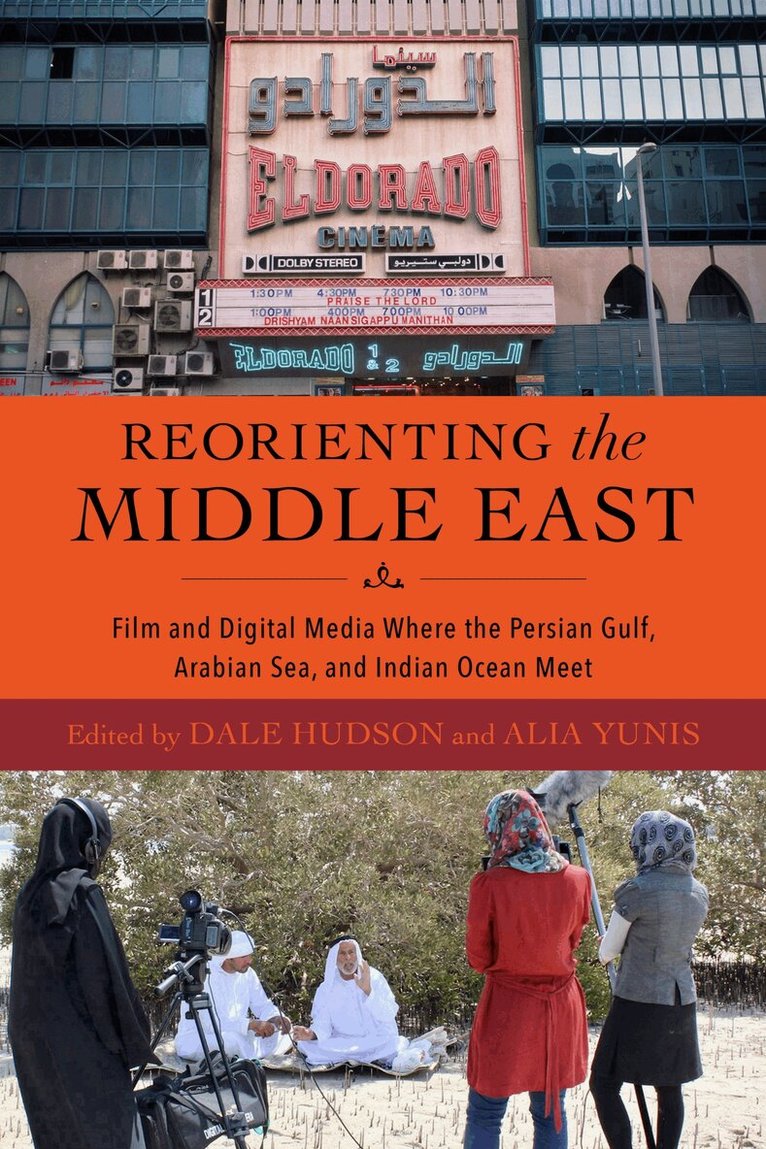
Reorienting the Middle East
Film and Digital Media Where the Persian Gulf, Arabian Sea, and Indian Ocean Meet
Inbunden, Engelska, 2024
982 kr
Skickas inom 7-10 vardagar
Stories of desert landscapes, cutting-edge production facilities, and lavish festivals often dominate narratives about film and digital media on the Arabian Peninsula. However, there is a more complicated history that reflects long-standing interconnections between the Persian Gulf, Arabian Sea, and Indian Ocean. Just as these waters are fluid spaces, so too is the flow of film and digital media between cultures in East Africa, Europe, North Africa, South Asia, Southwest Asia, and Southeast Asia.Reorienting the Middle East examines past and contemporary aspects of film and digital media in the Gulf that might not otherwise be apparent in dominant frameworks. Contributors consider oil companies that brought film exhibition to this area in the 1930s, the first Indian film produced on the Arabian Peninsula in the late 1970s, blackness in Iranian films, the role of Western funding in reshaping stories, Dubai's emergence in global film production, uses of online platforms for performance art, the development of film festivals and cinemas, and short films made by citizens and migrants that turn a lens on racism, sexism, national identity, and other rarely discussed social issues.Reorienting the Middle East offers new methods to analyze the often-neglected littoral spaces between nation-states and regions and to understand the role of film and digital media in shaping dialogue between area studies and film and media studies. Readers will find new pathways to rethink the limitations of dominant categories and frameworks in both fields.
Reorienting the Middle East
Film and Digital Media Where the Persian Gulf, Arabian Sea, and Indian Ocean Meet
Häftad, Engelska, 2024
481 kr
Skickas inom 7-10 vardagar
Stories of desert landscapes, cutting-edge production facilities, and lavish festivals often dominate narratives about film and digital media on the Arabian Peninsula. However, there is a more complicated history that reflects long-standing interconnections between the Persian Gulf, Arabian Sea, and Indian Ocean. Just as these waters are fluid spaces, so too is the flow of film and digital media between cultures in East Africa, Europe, North Africa, South Asia, Southwest Asia, and Southeast Asia.Reorienting the Middle East examines past and contemporary aspects of film and digital media in the Gulf that might not otherwise be apparent in dominant frameworks. Contributors consider oil companies that brought film exhibition to this area in the 1930s, the first Indian film produced on the Arabian Peninsula in the late 1970s, blackness in Iranian films, the role of Western funding in reshaping stories, Dubai's emergence in global film production, uses of online platforms for performance art, the development of film festivals and cinemas, and short films made by citizens and migrants that turn a lens on racism, sexism, national identity, and other rarely discussed social issues.Reorienting the Middle East offers new methods to analyze the often-neglected littoral spaces between nation-states and regions and to understand the role of film and digital media in shaping dialogue between area studies and film and media studies. Readers will find new pathways to rethink the limitations of dominant categories and frameworks in both fields.
1 200 kr
Kommande
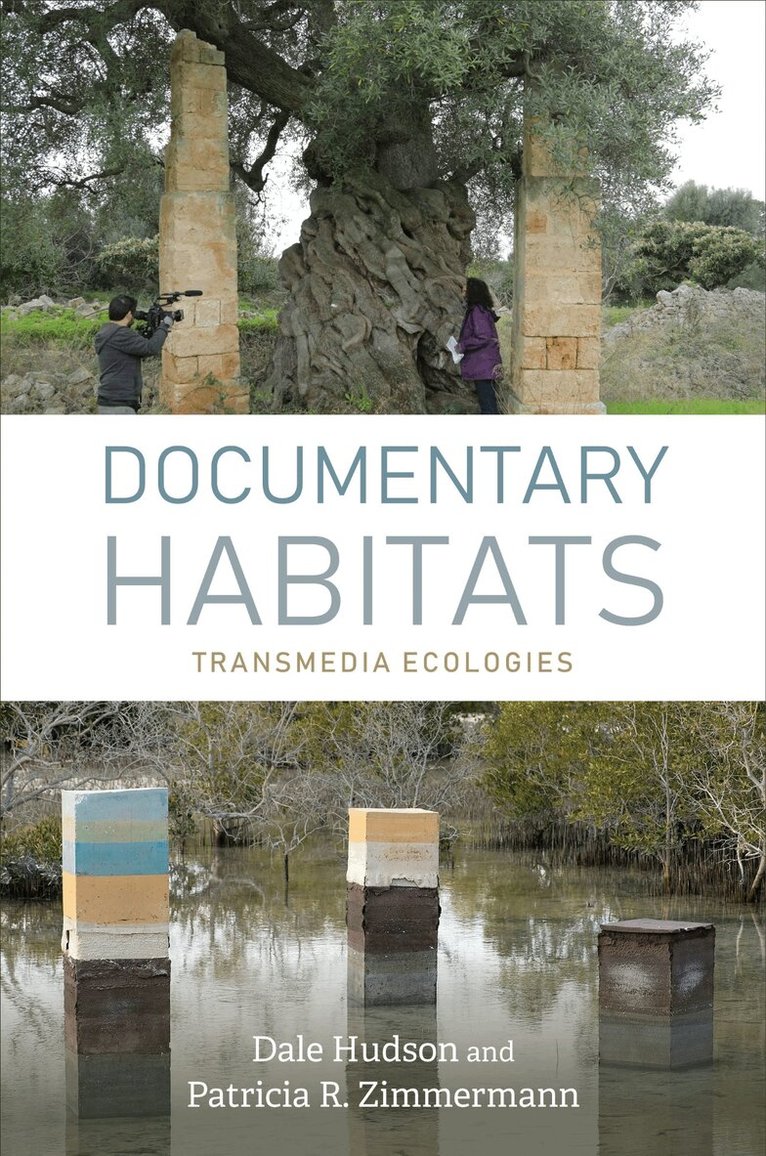
As record-breaking wildfires moved across eastern Canada and record rainfalls flooded Dubai; as billionaires offshored immense profits while so-called essential workers risked their lives during a pandemic; resources, knowledge, and even life itself are increasingly privatized – and disruptions have become the status quo to ensure as much. Documentary Habitats argues that overlapping crises demand strategies for the long term rather than short-term technocratic pivots. They require local and Indigenous knowledge, derived from extended living with a place, rather than faith in techno-solutions designed to generate profit elsewhere. By redefining humans as one species of many in shared habitats rather than as an exceptional species with unchecked domain over the planet, authors Dale Hudson and Patricia R. Zimmermann offer a powerful counterpart to understandings of documentary conceived almost exclusively as centered not only on humans, but on humans who exploit modern systems. Across eight categories of relationships – entanglements, polyphonies, contaminations, iterations, navigations, extractions, adaptations, and infections – Documentary Habitats follows documentary practices that are community oriented, dialogue-driven, place-based, and research-led, using augmented reality, interactive and mobile technologies, film and photography, and video installation. Featuring works by artists and filmmakers from over 25 countries and drawing on two decades of curatorial collaborations, Documentary Habitats is a rallying cry to documentary studies to focus attention on environmental and social issues that may seem new and urgent to some people but are all too familiar to others.
485 kr
Kommande
As record-breaking wildfires moved across eastern Canada and record rainfalls flooded Dubai; as billionaires offshored immense profits while so-called essential workers risked their lives during a pandemic; resources, knowledge, and even life itself are increasingly privatized—and disruptions have become the status quo to ensure as much. Documentary Habitats argues that overlapping crises demand strategies for the long term rather than short-term technocratic pivots. They require local and Indigenous knowledge, derived from extended living with a place, rather than faith in techno-solutions designed to generate profit elsewhere. By redefining humans as one species of many in shared habitats rather than as an exceptional species with unchecked domain over the planet, authors Dale Hudson and Patricia R. Zimmermann offer a powerful counterpart to understandings of documentary conceived almost exclusively as centered not only on humans, but on humans who exploit modern systems. Across eight categories of relationships—entanglements, polyphonies, contaminations, iterations, navigations, extractions, adaptations, and infections—Documentary Habitats follows documentary practices that are community oriented, dialogue-driven, place-based, and research-led, using augmented reality, interactive and mobile technologies, film and photography, and video installation. Featuring works by artists and filmmakers from over 25 countries and drawing on two decades of curatorial collaborations, Documentary Habitats is a rallying cry to documentary studies to focus attention on environmental and social issues that may seem new and urgent to some people but are all too familiar to others.
An Hour to Kill: A True Story of Love, Murder, and Justice in a Small Southern Town
Häftad, Engelska, 2001
292 kr
Skickas inom 3-6 vardagar
1 343 kr
Skickas inom 7-10 vardagar
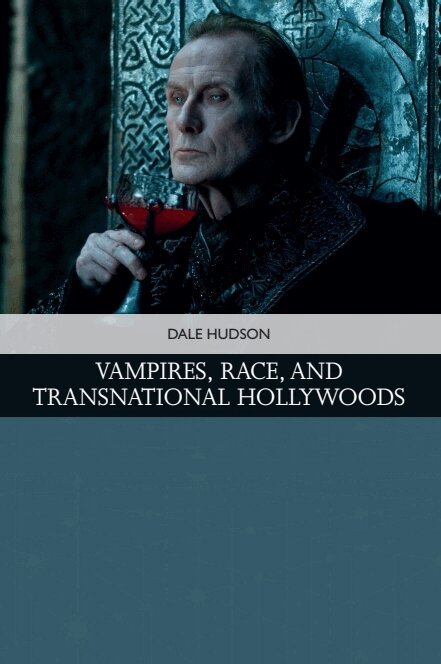
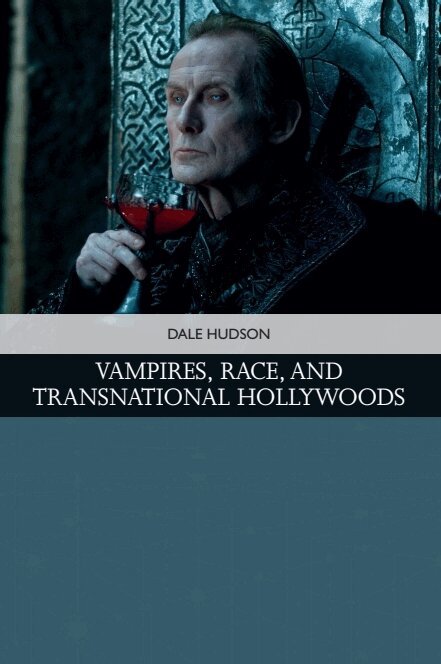
The figure of the vampire serves as both object and mode of analysis for more than a century of Hollywood filmmaking. Never dying, shifting shape and moving at unnatural speed, as the vampire renews itself by drinking victims’ blood, so too does Hollywood renew itself by consuming foreign styles and talent, moving to overseas locations, and proliferating in new guises.In Vampires, Race, and Transnational Hollywoods, Dale Hudson explores the movement of transnational Hollywood’s vampires, between low-budget quickies and high-budget franchises, as it appropriates visual styles from German, Mexican and Hong Kong cinemas and off-shores to Canada, Philippines, and South Africa. As the vampire’s popularity has swelled, vampire film and television has engaged with changing discourses around race and identity not always addressed in realist modes. Here, teen vampires comfort misunderstood youth, chador-wearing skateboarder vampires promote transnational feminism, African American and Mexican American vampires recover their repressed histories. Looking at contemporary hits like True Blood, Twilight, Underworld and The Strain, classics such as Universal’s Dracula and Drácula, and miscegenation melodramas like The Cheat and The Sheik, the book reconfigures Hollywood historiography and tradition as fundamentally transnational, offering fresh interpretations of vampire media as trans-genre sites for political contestation.
689 kr
Skickas inom 3-6 vardagar
The figure of the vampire serves as both object and mode of analysis for more than a century of Hollywood filmmaking. Never dying, shifting shape and moving at unnatural speed, as the vampire renews itself by drinking victims’ blood, so too does Hollywood renew itself by consuming foreign styles and talent, moving to overseas locations, and proliferating in new guises.In Vampires, Race, and Transnational Hollywoods, Dale Hudson explores the movement of transnational Hollywood’s vampires, between low-budget quickies and high-budget franchises, as it appropriates visual styles from German, Mexican and Hong Kong cinemas and off-shores to Canada, Philippines, and South Africa. As the vampire’s popularity has swelled, vampire film and television has engaged with changing discourses around race and identity not always addressed in realist modes. Here, teen vampires comfort misunderstood youth, chador-wearing skateboarder vampires promote transnational feminism, African American and Mexican American vampires recover their repressed histories. Looking at contemporary hits like True Blood, Twilight, Underworld and The Strain, classics such as Universal’s Dracula and Drácula, and miscegenation melodramas like The Cheat and The Sheik, the book reconfigures Hollywood historiography and tradition as fundamentally transnational, offering fresh interpretations of vampire media as trans-genre sites for political contestation.
781 kr
Skickas inom 5-8 vardagar
781 kr
Skickas inom 5-8 vardagar
781 kr
Skickas inom 5-8 vardagar
781 kr
Skickas inom 5-8 vardagar
781 kr
Skickas inom 5-8 vardagar