Alice L. McLean – Författare
Visar alla böcker från författaren Alice L. McLean. Handla med fri frakt och snabb leverans.
2 produkter
2 produkter
608 kr
Skickas inom 10-15 vardagar
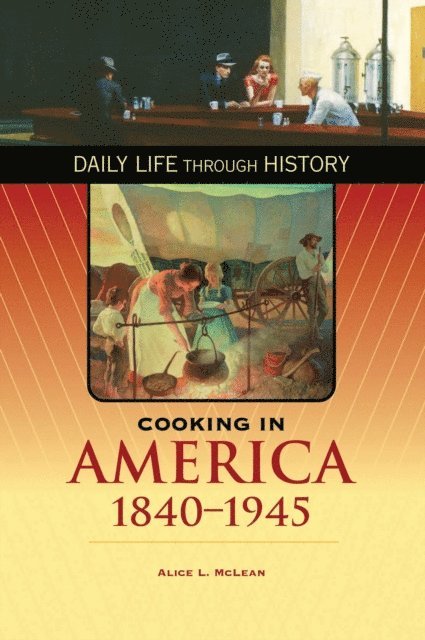
This cookbook covers the years 1840 through 1945, a time during which American cookery underwent a full-scale revolution. Gas and electric stoves replaced hearth cookery. Milk products came from commercial dairy farms rather than the family cow. Daily meals were no longer bound by seasons and regions, as canned, bottled, and eventually frozen products flooded the market and trains began to transport produce and meat from one end of the country to the other. During two World Wars and the Great Depression women entered the work force in unprecedented numbers and household servants abandoned low-paying domestic jobs to work in factories. As a result of these monumental changes, American home cooking became irrevocably simplified and cookery skills geared more toward juggling time to comb grocery store shelves for the best and most economical products than toward butchering and preserving an entire animal carcass or pickling fruits and vegetables.This cookbook reflects these changes, with each of the three chapters capturing the home cooking that typified the era. The first chapter covers the pre-industrial period 1840 to 1875; during this time, home cooks knew how to broil, roast, grill, fry, and boil on an open hearth flame and its embers without getting severely injured. They also handled whole sheep carcasses, made gelatin from boiled pigs trotters, grew their own yeast, and prepared their own preserves. The second chapter covers 1876 through 1910, a time when rapid urbanization transformed the United States from an agrarian society into an industrial giant, giving rise to food corporations such as Armour, Swift, Campbell's, Heinz, and Pillsbury. The mass production and mass marketing of commercial foods began to transform home cooking; meat could be purchased from a local butcher or grocery store and commercial gelatin became widely available. While many cooks still made their own pickles and preserves, commercial varieties multiplied. From 1910 to 1945, the period covered by Chapter 3, the home cook became a full-fledged consumer and the national food supply became standardized to a large extent. As the industrialization of the American food supply progressed, commercially produced breads, pastries, sauces, pickles, and preserves began to take over kitchen cupboards and undermine the home cooks' ability to produce their own meals from scratch. The recipes have been culled from some of the most popular commercial and community cookbooks of the nineteenth and early twentieth centuries. Taken together, the more than 300 recipes reflect the major cookbook trends of the era. Suggested menus are provided for replicating entire meals.
675 kr
Skickas inom 10-15 vardagar
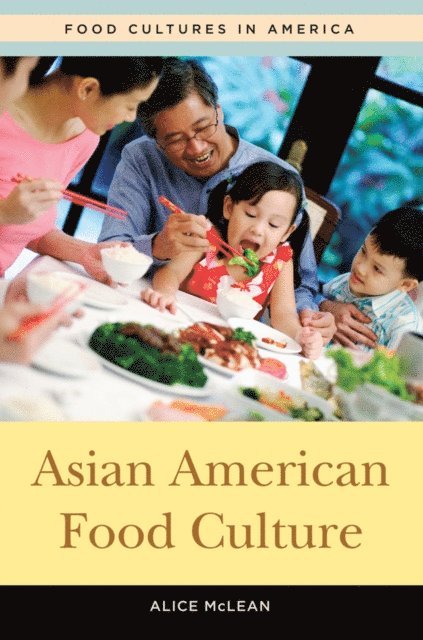
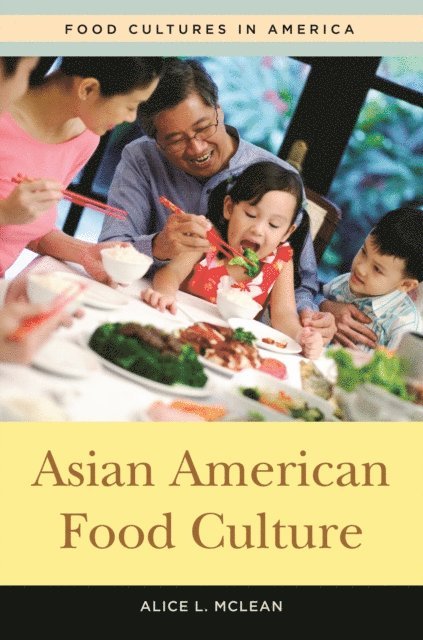
Covering topics ranging from the establishment of the Gulf Coast shrimping industry in 1800s to the Korean taco truck craze in the present day, this book explores the widespread contributions of Asian Americans to U.S. food culture.Since the late 18th century, Asian immigrants to the United States have brought their influences to bear on American culture, yielding a rich, varied, and nuanced culinary landscape. The past 50 years have seen these contributions significantly amplified, with the rise of globalization considerably blurring the boundaries between East and West, giving rise to fusion foods and transnational ingredients and cooking techniques. The Asian American population grew from under 1 million in 1960 to an estimated 19.4 million in 2013. Three-quarters of the Asian American population in 2012 was foreign-born, a trend that ensures that Asian cuisines will continue to invigorate and enrich the United States food culture. This work focuses on the historical trajectory that led to this remarkable point in Asian American food culture. In particular, it charts the rise of Asian American food culture in the United States, beginning with the nation's first Chinese "chow chows" and ending with the successful campaign of Indochina war refugees to overturn the Texas legislation that banned the cultivation of water spinach—a staple vegetable in their traditional diet. The book focuses in particular on the five largest immigrant groups from East and Southeast Asia—those of Chinese, Japanese, Korean, Filipino, and Vietnamese descent.Students and food enthusiasts alike now have a substantial resource to turn to besides ethnic cookbooks to learn how the cooking and food culture of these groups have altered and been integrated into the United States foodscape. The work begins with a chronology that highlights Asian immigration patterns and government legislation as well as major culinary developments. The book's seven chapters provide an historical overview of Asian immigration and the development of Asian American food culture; detail the major ingredients of the traditional Asian diet that are now found in the United States; introduce Asian cooking philosophies, techniques, and equipment as well as trace the history of Asian American cookbooks; and outline the basic structure and content of traditional Asian American meals. Author Alice L. McLean's book also details the rise of Chinese, Japanese, Korean, Filipino, and Vietnamese restaurants in the United States and discusses the contemporary dining options found in ethnic enclaves; introduces celebratory dining, providing an overview of typical festive foods eaten on key occasions; and explores the use of food as medicine among Asian Americans.