Alice R. Burks - Böcker
Visar alla böcker från författaren Alice R. Burks. Handla med fri frakt och snabb leverans.
2 produkter
2 produkter
516 kr
Skickas inom 7-10 vardagar
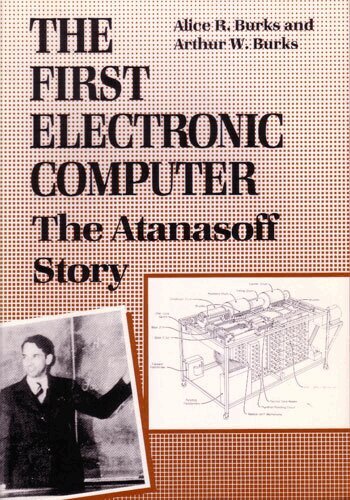
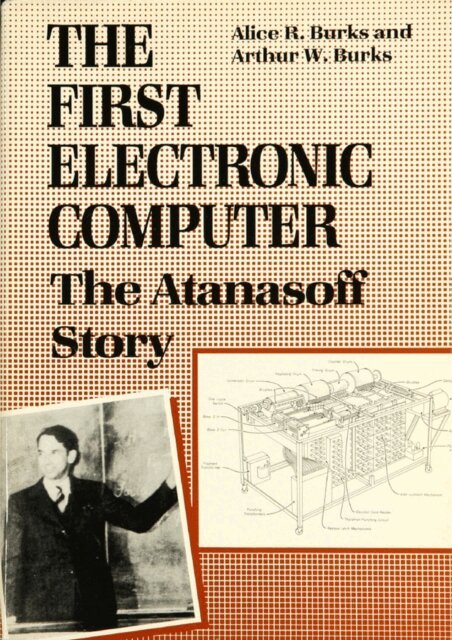
The First Electronic Computer is a groundbreaking historical and technical account of John Vincent Atanasoff’s revolutionary work on the world’s first electronic digital computer. Drawing upon years of meticulous research and firsthand experience, coauthors Alice and Arthur Burks trace the remarkable journey of Atanasoff—from his early life and education to his pivotal innovations at Iowa State College in the late 1930s and early 1940s. Atanasoff’s machine—the Atanasoff-Berry Computer (ABC)—proved the feasibility of electronic computation and introduced key concepts, such as electronic switching and regenerative memory, that became foundational to the digital computers that followed. The authors present detailed narratives of Atanasoff’s collaboration with graduate student Clifford Berry and recount the critical sequence of events that linked his invention to the famous ENIAC, commonly celebrated as the first general-purpose electronic computer. With depth and clarity, the book delves into the technical design, development, and operation of the ABC, while candidly addressing the major controversies surrounding computing history. The Burkses examine the intricate web of correspondence, personal interactions, and legal battles—especially the landmark Honeywell v. Sperry Rand patent case—culminating in the federal court’s recognition of Atanasoff’s precedence over ENIAC. Rich in technical detail and engaging historical narrative, The First Electronic Computer offers readers an unparalleled look at the origins of one of the most significant technological revolutions of the twentieth century, acknowledging Atanasoff’s contributions and clarifying his enduring legacy in computing history.
428 kr
Tillfälligt slut
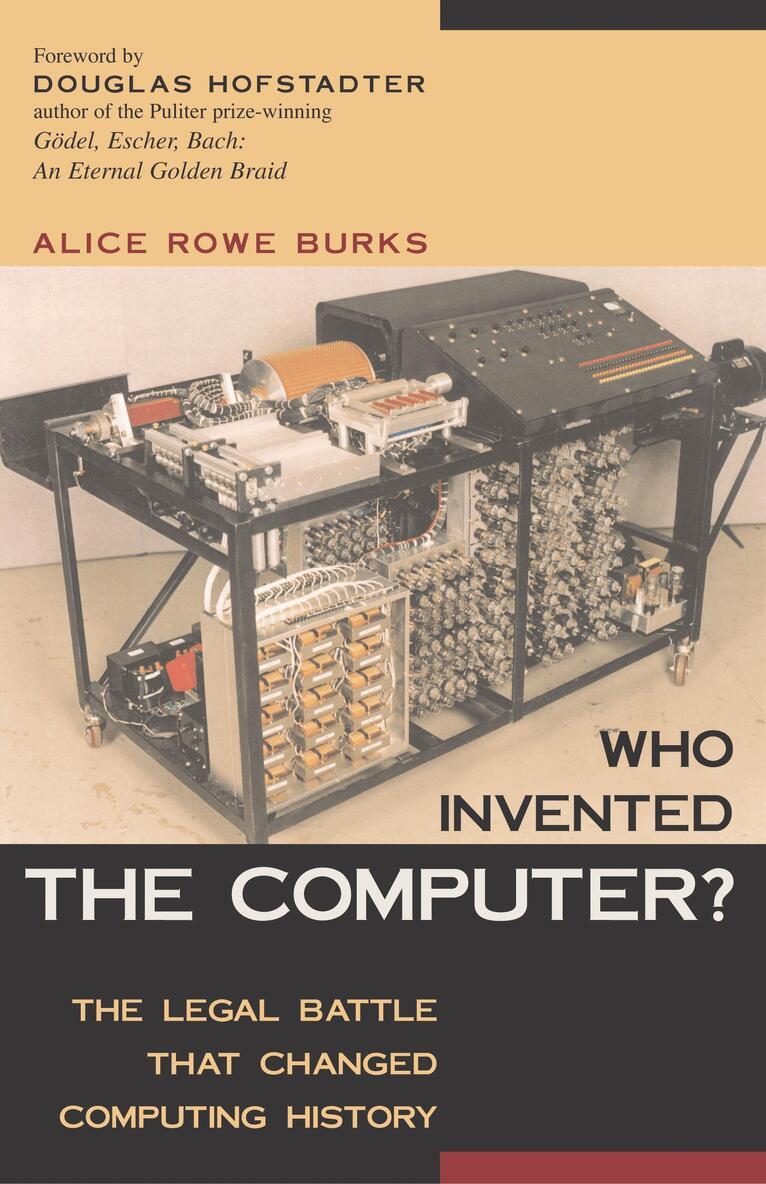
In 1973, Federal District Judge Earl R. Larson issued a ruling in a patent case that was to have profound and long-lasting implications for the dawning computer revolution. Against all expectations, the judge ruled against Sperry Rand Corp., which claimed to hold the patent on the first computer dubbed the "ENIAC" and was demanding huge royalties on all electronic data processing sales by Honeywell Inc. and other large competitors. The judge came to the conclusion that in fact the ENIAC was not the first computer but was a derivative of an obscure computer called the ABC, which had been developed in the late thirties by a largely unknown professor of physics and mathematics at Iowa State University, named John V. Atanasoff.Looking back today from our digital world at what was then a little-publicized trial, it is clear that the judge's decision had enormous repercussions. If Judge Larson had ruled the other way, in favor of the patent claim, subsequent manufacturers of computing hardware would have had to obtain a license from Sperry Rand, and the course of computing history would likely have been very different from the galloping revolution we have all witnessed in the past three decades.This book centers on this crucial trial, arguing that Judge Larson correctly evaluated the facts and made the right decision, even though many in the computing community have never accepted Atanasoff as the legitimate inventor of the electronic computer. With meticulous research, Alice Rowe Burks examines both the trial and its aftermath, presenting telling evidence in convincing and absorbing fashion, and leaving no doubt about the actual originator of what has been called the greatest invention of the 20th century.