Alicia Carroll – Författare
Visar alla böcker från författaren Alicia Carroll. Handla med fri frakt och snabb leverans.
5 produkter
5 produkter
765 kr
Skickas inom 10-15 vardagar
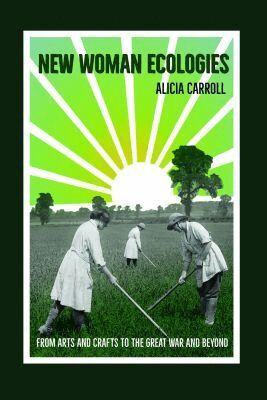
A transatlantic phenomenon of the late nineteenth and early twentieth centuries, the "New Woman" broke away from many of the constraints of the Victorian era to enjoy a greater freedom of movement in the social, physical, and intellectual realms. As Alicia Carroll reveals, the New Woman also played a significant role in environmental awareness and action.From the Arts and Crafts period, to before, during, and after the Great War, the iconic figure of the New Woman accompanied and informed historical women’s responses to the keen environmental issues of their day, including familiar concerns about air and water quality as well as critiques of Victorian floral ecologies, extinction narratives, land use, local food shortages, biodiversity decline, and food importation. As the Land Question intersected with the Woman Question, women contributed to a transformative early green culture, extolling the benefits of going back to the land themselves, as "England should feed her own people." Carroll traces the convergence of this work and a self-realization articulated by Mona Caird’s 1888 demand for the "acknowledgement of the obvious right of the woman to possess herself body and soul."By the early twentieth century, a thriving community of New Woman authors, gardeners, artists, and land workers had emerged and created a vibrant discussion. Exploring the early green culture of Arts and Crafts to women’s formation of rural utopian communities, to the Women’s Land Army and herbalists of the Great War and beyond, New Woman Ecologies shows how women established both their own autonomy and the viability of an ecological modernity.
365 kr
Skickas inom 10-15 vardagar
A transatlantic phenomenon of the late nineteenth and early twentieth centuries, the "New Woman" broke away from many of the constraints of the Victorian era to enjoy a greater freedom of movement in the social, physical, and intellectual realms. As Alicia Carroll reveals, the New Woman also played a significant role in environmental awareness and action.From the Arts and Crafts period, to before, during, and after the Great War, the iconic figure of the New Woman accompanied and informed historical women’s responses to the keen environmental issues of their day, including familiar concerns about air and water quality as well as critiques of Victorian floral ecologies, extinction narratives, land use, local food shortages, biodiversity decline, and food importation. As the Land Question intersected with the Woman Question, women contributed to a transformative early green culture, extolling the benefits of going back to the land themselves, as "England should feed her own people." Carroll traces the convergence of this work and a self-realization articulated by Mona Caird’s 1888 demand for the "acknowledgement of the obvious right of the woman to possess herself body and soul."By the early twentieth century, a thriving community of New Woman authors, gardeners, artists, and land workers had emerged and created a vibrant discussion. Exploring the early green culture of Arts and Crafts to women’s formation of rural utopian communities, to the Women’s Land Army and herbalists of the Great War and beyond, New Woman Ecologies shows how women established both their own autonomy and the viability of an ecological modernity.
493 kr
Skickas inom 7-10 vardagar
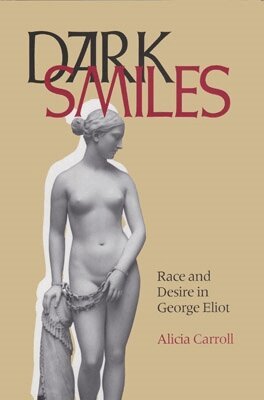
Although George Eliot has long been described as "the novelist of the Midlands," she often brought the outer reaches of the empire home in her work. Dark Smiles: Race and Desire in George Eliot studies Eliot's problematic, career-long interest in representing racial and ethnic Otherness.Placing Eliot's diverse and wide-ranging treatment of Otherness in its contemporary context, Alicia Carroll argues that Eliot both engages and resists traditional racial and ethnic representations of Otherness. Carroll finds that Eliot, like other women writers of her time, often appropriates narratives of Otherness to explore issues silenced in mainstream Victorian culture, particularly the problem of the desirous woman. But if Otherness in Eliot's century was usually gendered as woman and constructed as the object of white male desire, Eliot often seeks to subvert that vision. Professor Carroll demonstrates Eliot's tendency to "exoticize" images of girlhood, vocation, and maternity in order to critique and explore gendered subjectivities. Indeed, the disruptive presence of a racial or ethnic outsider often fractures Eliot's narratives of community, creating a powerful critique of home culture.The consistent reliance of Eliot's work upon racial and ethnic Otherness as a mode of cultural critique is explored here for the first time in its entirety.
1 129 kr
Skickas inom 10-15 vardagar
In the last few years, there have been myriad media reports regarding Federal Indian boarding schools and their grisly history of violence and cultural erasure against Native people in the United States. The US government recently acknowledged its role for the first time with the Department of the Interior's publication of the ""Federal Indian Boarding School Initiative Investigative Report."" In this book, Alicia Carroll tells the history of one form of literary Native resistance to this violence, that of the collaboratively written autobiography. Focusing on work by Hopi boarding school residents, Carroll shows readers that collaborative autobiographical authorship is a practice of Indigenous intellectual sovereignty, using a method they dub indiscipline: a strategy of defying, refusing, or purposefully failing to follow mandates to conform to settler colonial sex and gender norms, including heteronormativity, the binary construct of sex and gender, and the idea of personhood itself. Through collaboratively written autobiography, Carroll argues that Native authors not only resisted colonial attempts to use sex and gender to alienate them from their homelands and bodies, they created an important Indigenous literary genre that informs our understanding of Native life and art today.
391 kr
Skickas inom 10-15 vardagar
In the last few years, there have been myriad media reports regarding Federal Indian boarding schools and their grisly history of violence and cultural erasure against Native people in the United States. The US government recently acknowledged its role for the first time with the Department of the Interior's publication of the ""Federal Indian Boarding School Initiative Investigative Report."" In this book, Alicia Carroll tells the history of one form of literary Native resistance to this violence, that of the collaboratively written autobiography. Focusing on work by Hopi boarding school residents, Carroll shows readers that collaborative autobiographical authorship is a practice of Indigenous intellectual sovereignty, using a method they dub indiscipline: a strategy of defying, refusing, or purposefully failing to follow mandates to conform to settler colonial sex and gender norms, including heteronormativity, the binary construct of sex and gender, and the idea of personhood itself. Through collaboratively written autobiography, Carroll argues that Native authors not only resisted colonial attempts to use sex and gender to alienate them from their homelands and bodies, they created an important Indigenous literary genre that informs our understanding of Native life and art today.