Alyssa Emery - Böcker
Visar alla böcker från författaren Alyssa Emery. Handla med fri frakt och snabb leverans.
4 produkter
4 produkter
1 591 kr
Skickas inom 10-15 vardagar
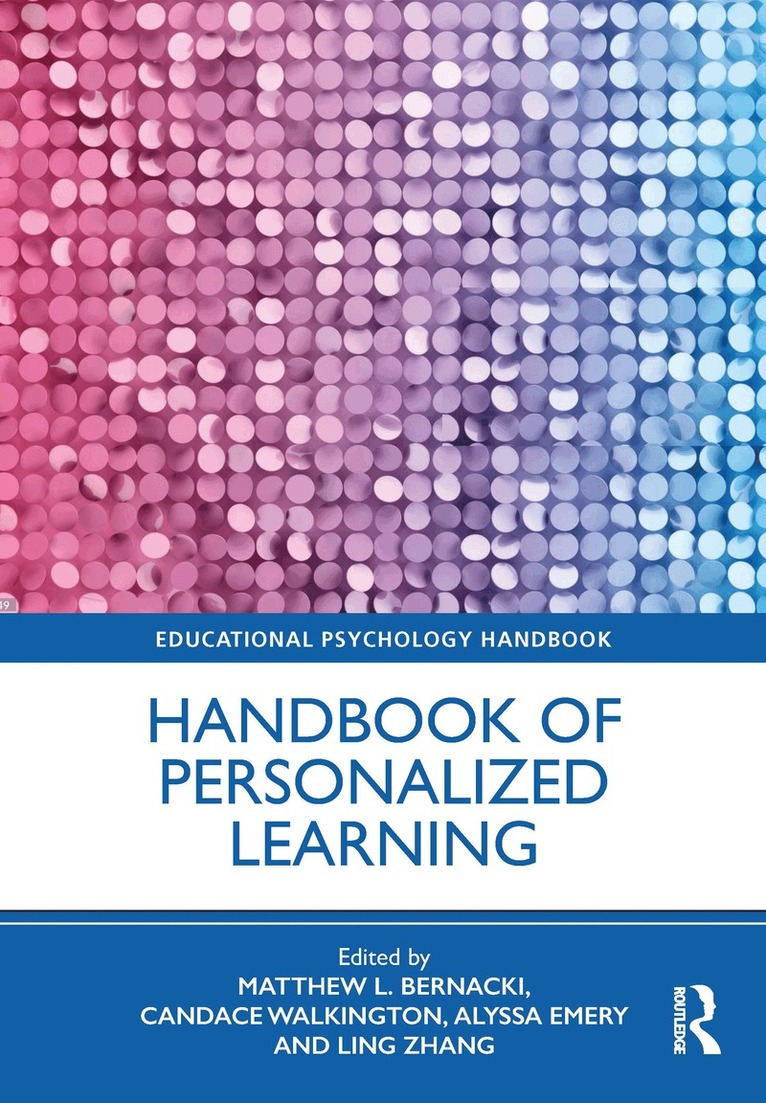
The Handbook of Personalized Learning offers a theoretically grounded conceptualization for the development and implementation of personalizing learning. This comprehensive volume addresses personalized learning’s roots in educational, cognitive, and social psychological studies of learning as well as in practice. Positioned to shape the future of personalized learning, this handbook documents past innovations achieved in educational technology research and development; considers how advancements in learning analytics and machine learning have influenced policy and implementation; and showcases current and future applications of personalized learning in diverse K-12 classrooms, higher education, and informal educational settings. The book’s varied, rigorous contributions are informed by an overarching model of personalized learning that centers the assets individuals bring to learning opportunities (including their prior knowledge, interests, self-beliefs, autonomy, and identity) and whose responsive designs build on those assets to improve learning and attainment. Researchers, developers, teaching faculty, and graduate students across educational psychology, educational technology, the learning sciences, learning analytics, human-computer interaction, and beyond will come away with substantive foundations and cutting-edge exemplars of the ways in which designs can be personalized to promote learners’ experiences in educational settings.
3 242 kr
Skickas inom 10-15 vardagar
The Handbook of Personalized Learning offers a theoretically grounded conceptualization for the development and implementation of personalizing learning. This comprehensive volume addresses personalized learning’s roots in educational, cognitive, and social psychological studies of learning as well as in practice. Positioned to shape the future of personalized learning, this handbook documents past innovations achieved in educational technology research and development; considers how advancements in learning analytics and machine learning have influenced policy and implementation; and showcases current and future applications of personalized learning in diverse K-12 classrooms, higher education, and informal educational settings. The book’s varied, rigorous contributions are informed by an overarching model of personalized learning that centers the assets individuals bring to learning opportunities (including their prior knowledge, interests, self-beliefs, autonomy, and identity) and whose responsive designs build on those assets to improve learning and attainment. Researchers, developers, teaching faculty, and graduate students across educational psychology, educational technology, the learning sciences, learning analytics, human-computer interaction, and beyond will come away with substantive foundations and cutting-edge exemplars of the ways in which designs can be personalized to promote learners’ experiences in educational settings.
583 kr
Skickas inom 7-10 vardagar
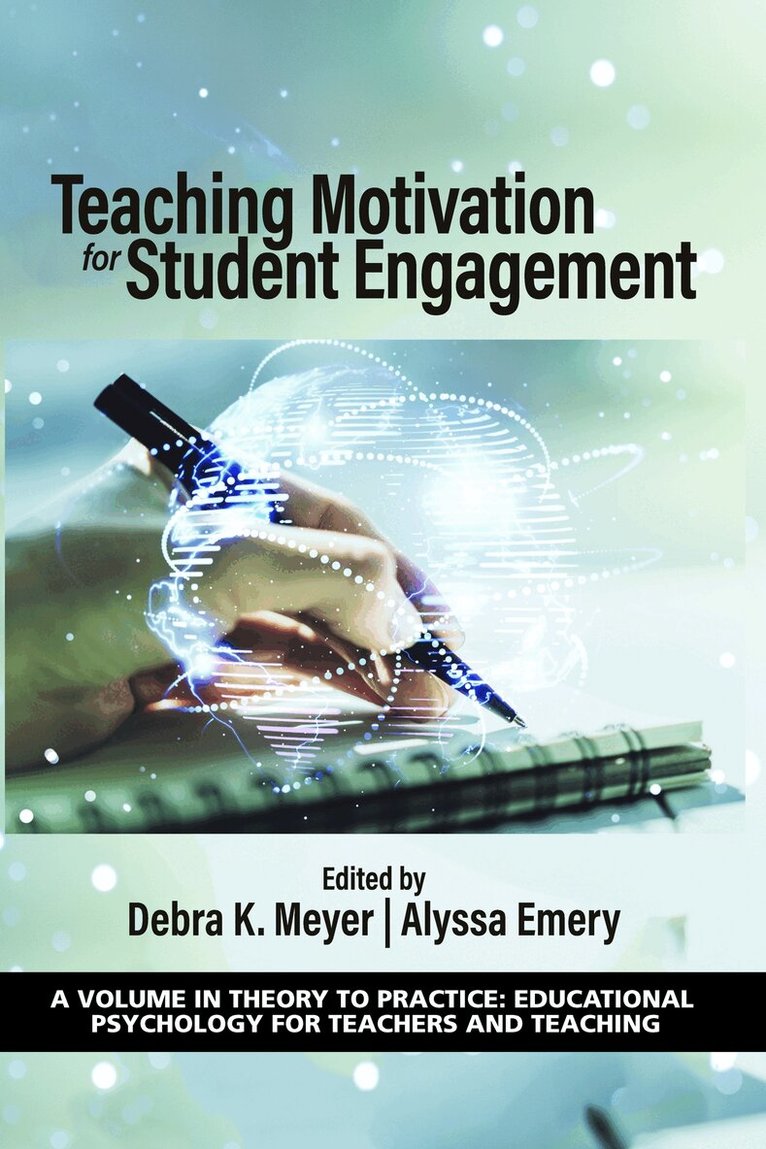
Helping teachers understand and apply theory and research is one of the most challenging tasks of teacher preparation and professional development. As they learn about motivation and engagement, teachers need conceptually rich, yet easy-to-use, frameworks. At the same time, teachers must understand that student engagement is not separate from development, instructional decision-making, classroom management, student relationships, and assessment. This volume on teaching teachers about motivation addresses these challenges. The authors share multiple approaches and frameworks to cut through the growing complexity and variety of motivational theories, and tie theory and research to real-world experiences that teachers are likely to encounter in their courses and classroom experiences. Additionally, each chapter is summarized with key “take away” practices.A shared perspective across all the chapters in this volume on teaching teachers about motivation is “walking the talk.” In every chapter, readers will be provided with rich examples of how research on and principles of classroom motivation can be re-conceptualized through a variety of college teaching strategies. Teachers and future teachers learning about motivation need to experience explicit modeling, practice, and constructive feedback in their college courses and professional development in order to incorporate those into their own practice. In addition, a core assumption throughout this volume is the importance of understanding the situated nature of motivation, and avoiding a “one-size-fits” all approach in the classroom. Teachers need to fully interrogate their instructional practices not only in terms of motivational principles, but also for their cultural relevance, equity, and developmental appropriateness.Just like P-12 students, college students bring their histories as learners and beliefs about motivation to their formal study of motivation. That is why college instructors teaching motivation must begin by helping students evaluate their personal beliefs and experiences. Relatedly, college instructors need to know their students and model differentiating their interactions to support each of them. The authors in this volume have, collectively, decades of experience teaching at the college level and conducting research in motivation, and provide readers with a variety of strategies to help teachers and future teachers explore how motivation is supported and undermined. In each chapter in this volume, readers will learn how college instructors can demonstrate what effective, motivationally supportive classrooms look, sound, and feel like.
1 032 kr
Skickas inom 7-10 vardagar
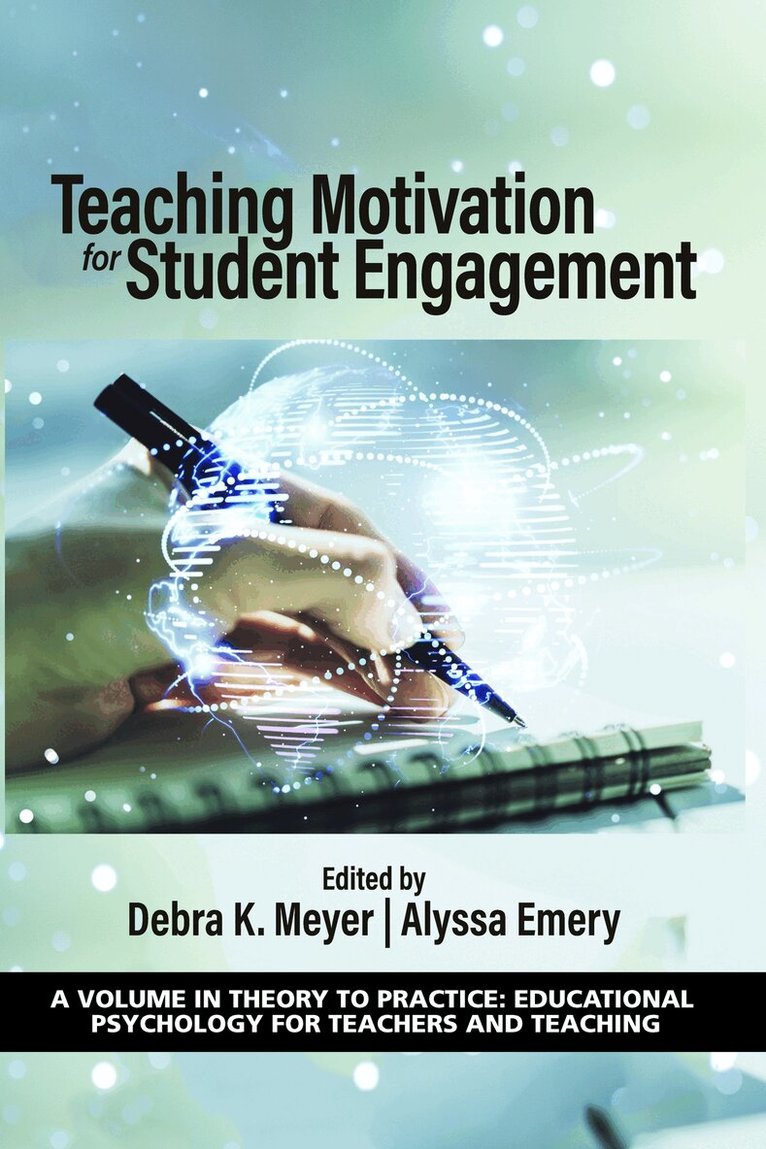
Helping teachers understand and apply theory and research is one of the most challenging tasks of teacher preparation and professional development. As they learn about motivation and engagement, teachers need conceptually rich, yet easy-to-use, frameworks. At the same time, teachers must understand that student engagement is not separate from development, instructional decision-making, classroom management, student relationships, and assessment. This volume on teaching teachers about motivation addresses these challenges. The authors share multiple approaches and frameworks to cut through the growing complexity and variety of motivational theories, and tie theory and research to real-world experiences that teachers are likely to encounter in their courses and classroom experiences. Additionally, each chapter is summarized with key “take away” practices.A shared perspective across all the chapters in this volume on teaching teachers about motivation is “walking the talk.” In every chapter, readers will be provided with rich examples of how research on and principles of classroom motivation can be re-conceptualized through a variety of college teaching strategies. Teachers and future teachers learning about motivation need to experience explicit modeling, practice, and constructive feedback in their college courses and professional development in order to incorporate those into their own practice. In addition, a core assumption throughout this volume is the importance of understanding the situated nature of motivation, and avoiding a “one-size-fits” all approach in the classroom. Teachers need to fully interrogate their instructional practices not only in terms of motivational principles, but also for their cultural relevance, equity, and developmental appropriateness.Just like P-12 students, college students bring their histories as learners and beliefs about motivation to their formal study of motivation. That is why college instructors teaching motivation must begin by helping students evaluate their personal beliefs and experiences. Relatedly, college instructors need to know their students and model differentiating their interactions to support each of them. The authors in this volume have, collectively, decades of experience teaching at the college level and conducting research in motivation, and provide readers with a variety of strategies to help teachers and future teachers explore how motivation is supported and undermined. In each chapter in this volume, readers will learn how college instructors can demonstrate what effective, motivationally supportive classrooms look, sound, and feel like.