Amal Elsana Alh'jooj - Böcker
Visar alla böcker från författaren Amal Elsana Alh'jooj. Handla med fri frakt och snabb leverans.
2 produkter
2 produkter
203 kr
Skickas
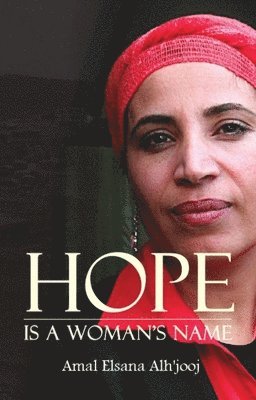
At birth it was only Amal's father who looked at her and said "I see hope in her face. I want to call her 'Amal'- meaning 'Hope'- in the hope that Allah will give us boys after her." The fifth daughter in a patriarchal society and an indigenous Bedouin in a Jewish state, Amal Elsana came into this world fighting for her right to exist. Today she is a key shaper of public opinion on Israel's marginalized minorities.Hope is a Woman's Name tells of Amal's journey navigating interweaving systems of power and oppression - the patriarchal and the nationalist - in her fight for justice and equality. As a shepherd at the age of 5, she led her flock across the green mountains of Laqiya, her village in the Negev in southern Israel, and later ran literacy classes for the women in her tribe in her early teens, the beginning of a lifelong career organizing people to promote policy change for Israel's Bedouin, a minority within the Palestinian minority. She later established economic empowerment programs for marginalized women, helping to found an Arab-Jewish school, and creating organizations to promote shared society. Where others come up against obstacles, Amal builds bridges; not by sacrificing her identity, but by embracing it. Each thread of her identity - Bedouin, Arab, woman, feminist, Palestinian and Israeli - is woven into the tent of her life, a tent where no one is left out in the sun.
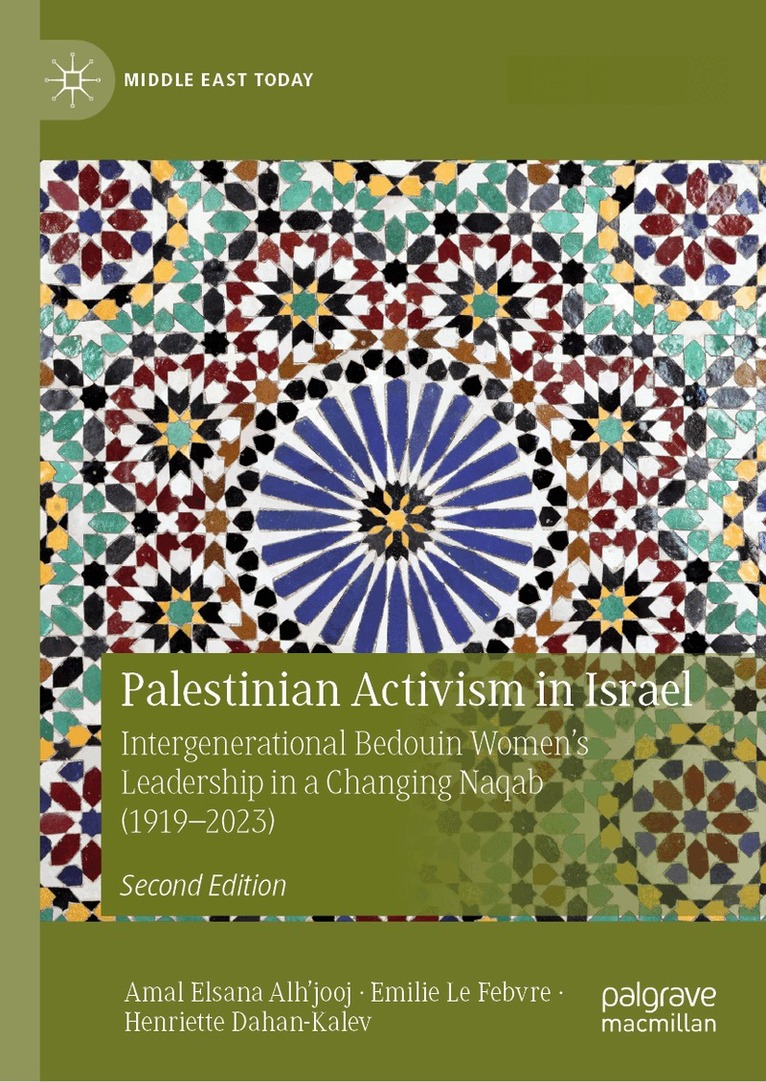
Palestinian Activism in Israel
Intergenerational Bedouin Women’s Leadership in a Changing Naqab (1919–2023)
Inbunden, Engelska, 2026
1 505 kr
Skickas inom 10-15 vardagar
This second edition of Palestinian Activism in Israel deepens the exploration of Bedouin women’s leadership in the Naqab through the intergenerational activist biographies of three women from the Al-Sana lineage. Building on the first edition’s focus on Amal Al-Sana Alh’jooj, a pioneering Palestinian Bedouin activist, this volume weaves together the narratives of her mother, Hajar Al-Sana, and grandmother, Rukiya Al-Sana, to examine the everyday practices of female political agency in this Bedouin society. It traces how three generations of women navigated patriarchy and colonialism during the Nakba and the Siyag Reservation to the Intifadas and the aftermath of the Prawer Plan. Situated amid gender, identity, community, and tribal belonging, the book describes the lived experiences of Naqab Bedouin women’s steadfastness (sumud) and survival. Through empirical research and anthropological description, it highlights the intersectionalities and complexity of their activism(s) and calls for rethinking the multigenerational experiences of Palestinian women in the Middle East through the perspectives of the activists themselves.