Amanda Reeser Lawrence - Böcker
Visar alla böcker från författaren Amanda Reeser Lawrence. Handla med fri frakt och snabb leverans.
7 produkter
7 produkter
588 kr
Tillfälligt slut
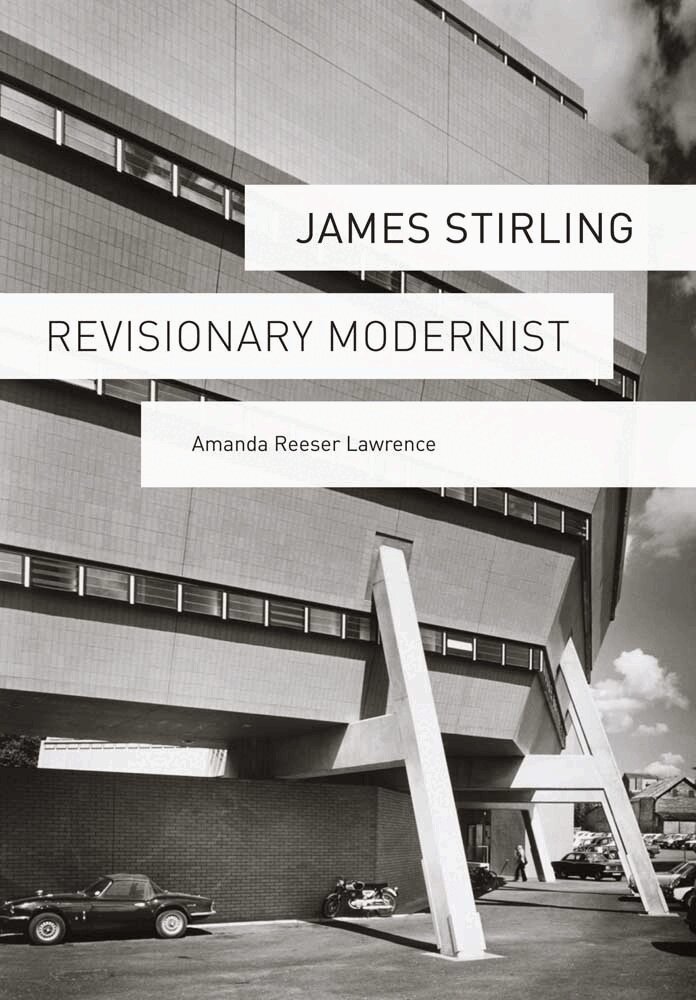
James Stirling (1926–1992) was one of the most influential architects of the late 20th century. His formally inventive yet historically informed designs inspired a generation of architects in his native England and throughout the world. James Stirling: Revisionary Modernist is the first in-depth, book-length analysis of the architect's work. Amanda Reeser Lawrence focuses on six of Stirling's projects from the early 1950s through the late 1970s, offering detailed formal analysis of the buildings and drawings while also mapping his relationship to a broader architectural and cultural context. Though it is widely held that Stirling took a mid-career turn toward postmodernism, Lawrence shows that he was undeniably modern throughout his career. She clarifies the ways in which Stirling understood modernism as inextricably linked to the past and placed his own work in what he termed a "dialogue with architectural tradition."
1 242 kr
Skickas inom 7-10 vardagar
The publication of this volume has been supported by a grant from the National Historical Publications and Records Commission. Few leaders of the new American nation had more influence than John Jay (1745-1829), or could match his contributions in all three branches of government, at both state and national levels. A leading representative of New York in the Continental Congress, Jay became one of the American commissioners who negotiated peace with Great Britain. He served the new republic as secretary for foreign affairs under the Articles of Confederation, as a contributor to the Federalist papers, as the first chief justice of the United States, as negotiator of the 1794 'Jay Treaty' with Great Britain, and as a two-term governor of the state of New York. In his personal life, Jay embraced a wide range of religious, social, and cultural concerns, including the abolition of slavery. This volume launches a new annotated seven-volume edition of selected correspondence of John Jay. The work consists of a wide-ranging selection of the most significant and interesting public and private documents and letters, written or received by Jay. The edition is designed to revise and complete work begun in the 1950s by the eminent Columbia University professor Richard B. Morris, who supplemented the major collection of original Jay Papers at Columbia with copies of Jay documents secured from archives throughout the world, and with his staff published two volumes covering the era of the American Revolution. The new project is administered by the Rare Books and Manuscript Room of Columbia University Libraries. The Selected Papers of John Jay, 1760-1779 begins with Jay's education and training as a socially elite, Anglican, King's College - educated lawyer. Although such a path led many into Loyalism, it brought Jay, and such friends and correspondents as Robert R. Livingston, Gouverneur Morris, and Alexander Hamilton, into the front ranks of New York's moderate revolutionary leaders. Jay's marriage to Sarah (Sally) Van Brugh Livingston in 1774 tied him to the influential Patriot family headed by William Livingston. Jay soon found himself a leader of New York's revolutionary committees and a delegate to the Continental Congress, where he sought reconciliation with Great Britain but promoted war preparedness, and applied his much-admired writing skills to drafting major congressional reports and addresses. With his state facing invasion, he returned to New York to help organize the new state government and to combat 'plots, conspiracies, and chimeras dire' as a member of committees dealing with loyalty and security issues, including the notorious Hickey Plot. He then helped to organize Hudson River defense and to draft the state constitution of 1777. In 1778 Jay returned to Congress, where he supported New York's claims to Vermont and served as president until he was appointed minister to Spain in September 1779. The volume closes with John and Sally Jay's eventful voyage to Europe, including a brief layover at Martinique after their ship was dismasted and rendered virtually rudderless.
1 236 kr
Skickas inom 11-20 vardagar
Volume 2 of The Selected Letters of John Jay opens in January 1780 with John Jay’s arrival in Spain on his first diplomatic mission abroad. It ends in June 1782 with his departure for France to join Benjamin Franklin as one of the American commissioners to negotiate a peace treaty with Great Britain. Jay was accompanied by his wife, Sarah Livingston Jay, his brother-in-law and private secretary, Henry Brockholst Livingston, and his young nephew, Peter Jay Munro, and by his official secretary William Carmichael. The travellers’ personal letters supplement the public correspondence with American, Spanish, and French officials and financiers. The documents provide a case study of the perils of negotiating from a position of political, military, and, especially, financial weakness, and delineate the conflicts that plagued Spanish-American relations for decades. They also demonstrate the additional strains on Jay’s household caused by social isolation, insufficient funds, separation from their often endangered families, and routine detention and inspection of their mail. Jay’s mission was to seek Spanish recognition of American independence, a treaty of alliance, and financial aid. Thwarted by Spain’s refusal to acknowledge American independence or to receive any American diplomat as representative of an independent nation, he soon despaired of real progress in his treaty negotiations. The ministry was unsympathetic, the military situation was unpropitious, and America could offer little in exchange for Spanish aid. What Spain wanted most, exclusive control of the Mississippi Valley and the Gulf of Mexico, required American abandonment of western land claims and insistence on the right to navigate the Mississippi River, concessions congressional instructions forbade. Further undermining Jay’s negotiating position were the “cursed bills” Congress drew on him in anticipation of loans it hoped Jay would obtain, but which Spain was unwilling and unable to grant. Jay became ever more critical of Spain's ""jealous and absolute"" government, which had ""little money, less wisdom, no credit, nor any right to it."" Although Jay secured some Spanish funding, American credit was rescued primarily by further aid from France. Jay appreciated French assistance but, mindful of France’s obligations to its Spanish ally, became increasingly wary of subordinating American interests to French direction. Jay’s Spanish experience set the stage for his independent stance during the peace negotiations and magnified his determination to create a stronger, more unified nation that would be treated with respect abroad. Access to people, places, and events in the volume is facilitated by detailed annotation, illustrations, and a comprehensive index.
1 236 kr
Skickas inom 11-20 vardagar
Volume 4 of The Selected Papers of John Jay opens in January 1785 as John Jay assumes office as secretary for foreign affairs and brings system and order to the long-neglected Department of Foreign Affairs. It explores Jay's administration of all aspects of American foreign affairs, including his efforts to implement the peace treaty with Great Britain, facilitate American trade, and renegotiate an intrusive consular treaty with France. It examines Jay's divisive negotiations with Diego de Gardoqui and his politically embarrassing dispute with Lewis Littlepage. It depicts his antislavery efforts as president of the New-York Manumission Society and his participation in the Americanization of the Episcopal Church. It documents his promotion of constitutional change as the weaknesses of the Confederation thwart diplomacy and his defense of the proposed new Constitution as an author of The Federalist and of a far more influential pamphlet. The volume closes as Jay takes leave of absence from office to support ratification of the Constitution as delegate to the New York Ratifying Convention. Access to people, places, and events in the volume is facilitated by detailed annotation, illustrations, a biographical directory, and a comprehensive index.
552 kr
Skickas inom 7-10 vardagar
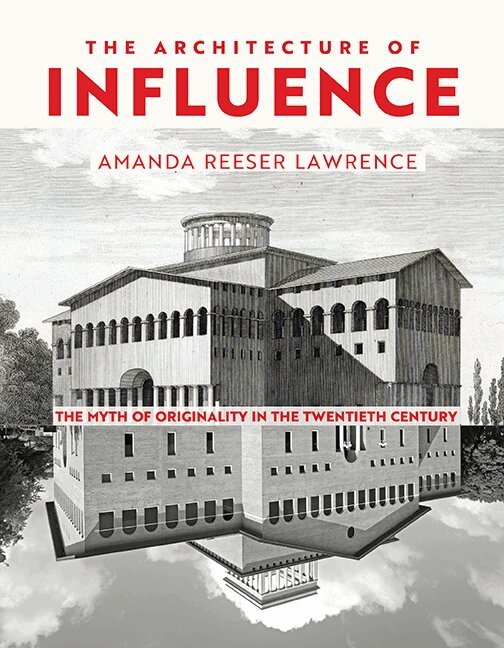
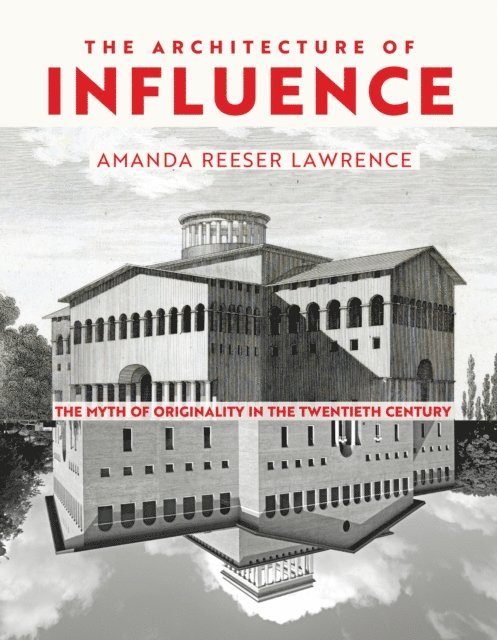
How do we create the new from the old? The Architecture of Influence explores this fundamental question by analysing a broad swath of twentieth-century architectural works--including some of the best-known examples of the architectural canon, modern and postmodern--through the lens of influence. The book serves as both a critique of the discipline’s long-standing focus on "genius" and a celebration of the creative act of revisioning and reimagining the past. It argues that all works of architecture not only depend on the past but necessarily alter, rewrite, and reposition the traditions and ideas to which they refer. Organized into seven chapters--Replicas, Copies, Compilations, Generalizations, Revivals, Emulations, and Self-Repetitions--the book redefines influence as an active process through which the past is defined, recalled, and subsequently redefined within twentieth-century architecture.
2 150 kr
Skickas inom 10-15 vardagar
This collection focuses on how architectural material is transformed, revised, swallowed whole, plagiarized, or in any other way appropriated. It charts new territory within this still unexplored yet highly topical area of study by establishing a shared vocabulary with which to discuss, or contest, the workings of appropriation as a vital and progressive aspect of architectural discourse. Written by a group of rising scholars in the field of architectural history and criticism, the chapters cover a range of architectural subjects that are linked in their investigations of how architects engage with their predecessors.
691 kr
Skickas inom 10-15 vardagar
This collection focuses on how architectural material is transformed, revised, swallowed whole, plagiarized, or in any other way appropriated. It charts new territory within this still unexplored yet highly topical area of study by establishing a shared vocabulary with which to discuss, or contest, the workings of appropriation as a vital and progressive aspect of architectural discourse. Written by a group of rising scholars in the field of architectural history and criticism, the chapters cover a range of architectural subjects that are linked in their investigations of how architects engage with their predecessors.