Amritjit Singh - Böcker
Visar alla böcker från författaren Amritjit Singh. Handla med fri frakt och snabb leverans.
6 produkter
6 produkter
657 kr
Skickas inom 5-8 vardagar
479 kr
Skickas inom 5-8 vardagar
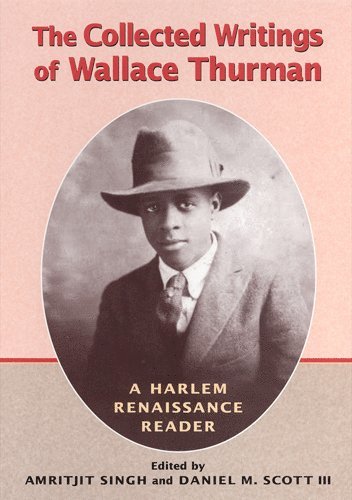
This is a collection of the writings of Wallace Thurman (1902-1934), providing a comprehensive analogy of both the published and unpublished works of this bohemian, bisexual writer, widely regarded as the ""enfant terrible"" of the Harlem Renaissance scene.
362 kr
Skickas inom 10-15 vardagar
362 kr
Skickas inom 10-15 vardagar
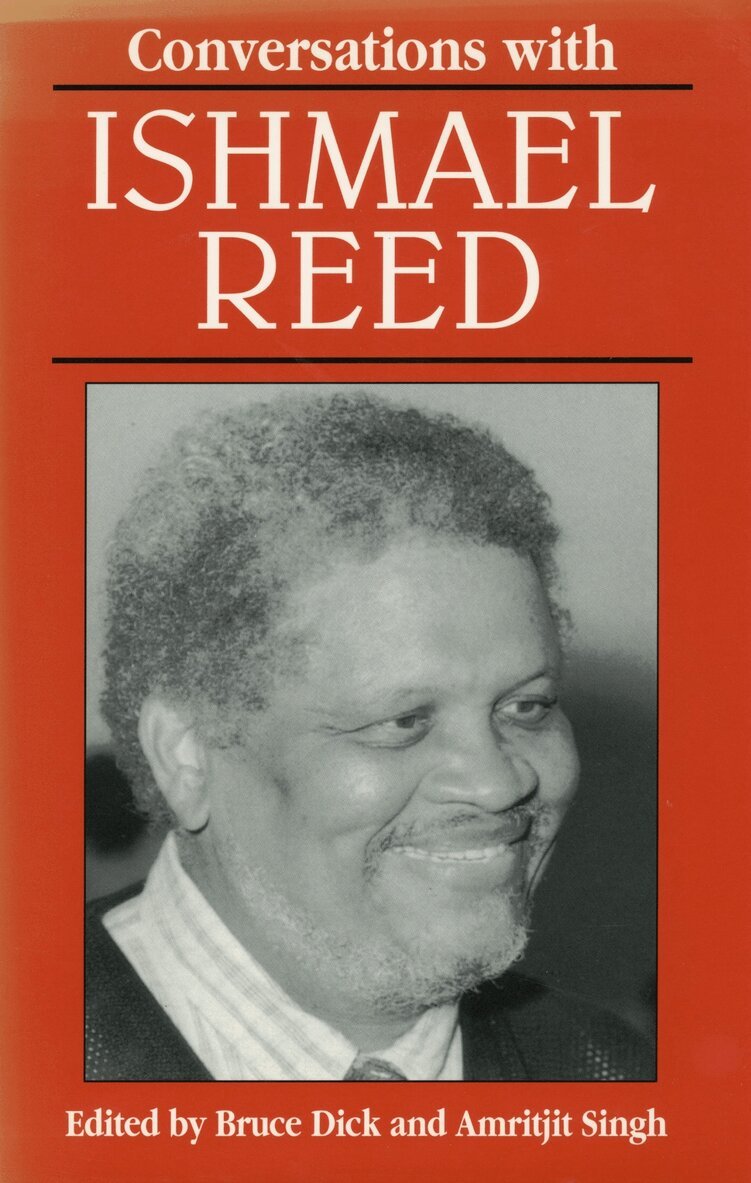
As a fiercely independent thinker, Ishmael Reed, author of Mumbo Jumbo, Flight to Canada, Reckless Eyeballing, and other works of fiction, nonfiction, and poetry, is often in conflict with the culture that appears to have a compulsive need to cage its artists and intellectuals in worn-out cliches and labels. As a writer who experiments in many forms and genres, and one who embraces postmodernism rather than protest and naturalism, Reed defies popular conceptions of what American writers, particularly black American male writers, should be or do. In this collection of candid interviews, Reed discusses how critics, especially from the northeastern establishment have consistently marginalized African American writers by placing them in the ""either-or thing of Christianity and Communism."" As he does in his writing, Reed uses invective, satire, and humor to show how those people judging American literature ""have made no attempt to understand recent American writing."" Bruce Dick is a professor English and African American studies at Appalachian State University. Amritjit Singh is a professor of English at Rhode Island College and co-editor of Postcolonial Theory and the United States, published by University Press of Mississippi in 2000.
764 kr
Skickas inom 10-15 vardagar
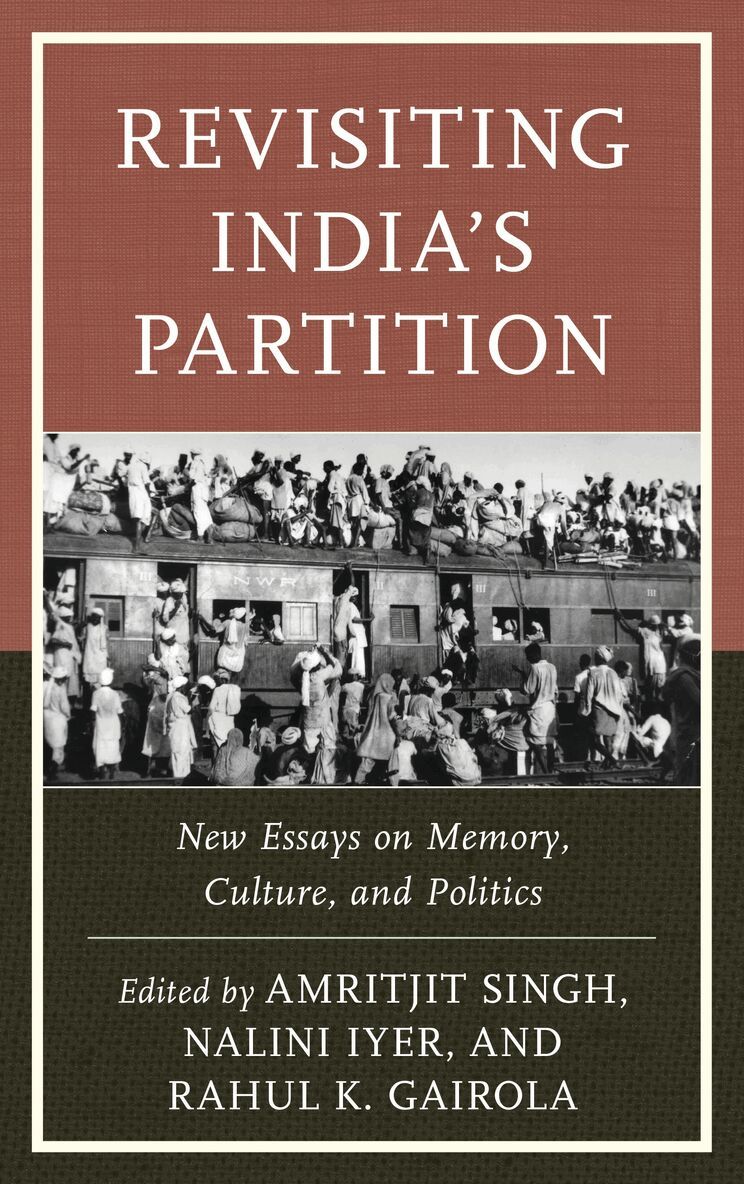
Revisiting India’s Partition: New Essays on Memory, Culture, and Politics brings together scholars from across the globe to provide diverse perspectives on the continuing impact of the 1947 division of India on the eve of independence from the British Empire. The Partition caused a million deaths and displaced well over 10 million people. The trauma of brutal violence and displacement still haunts the survivors as well as their children and grandchildren. Nearly 70 years after this cataclysmic event, Revisiting India’s Partition explores the impact of the “Long Partition,” a concept developed by Vazira Zamindar to underscore the ongoing effects of the 1947 Partition upon all South Asian nations. In our collection, we extend and expand Zamindar’s notion of the Long Partition to examine the cultural, political, economic, and psychological impact the Partition continues to have on communities throughout the South Asian diaspora.The nineteen interdisciplinary essays in this book provide a multi-vocal, multi-focal, transnational commentary on the Partition in relation to motifs, communities, and regions in South Asia that have received scant attention in previous scholarship. In their individual essays, contributors offer new engagements on South Asia in relation to several topics, including decolonization and post-colony, economic development and nation-building, cross-border skirmishes and terrorism, and nationalism. This book is dedicated to covering areas beyond Punjab and Bengal and includes analyses of how Sindh and Kashmir, Hyderabad, and more broadly South India, the Northeast, and Burma call for special attention in coming to terms with memory, culture and politics surrounding the Partition.
1 314 kr
Skickas inom 10-15 vardagar
Critical Perspectives on Chitra Banerjee Divakaruni: Feminism and Diaspora offers insights into Chitra Banerjee Divakaruni’s provocative and popular fiction. In their engaging and comprehensive introduction, editors Amritjit Singh and Robin Field explore how Divakaruni’s short stories and novels have been shaped by her own struggles as a new immigrant and by the influences she imbibed from academic mentors and feminist writers of color. Twelve critical essays by both aspiring and experienced scholars explore Divakaruni's aesthetic of interconnectivity and wholeness as she links generations, races, ethnicities, and nations in her depictions of the diversity of religious and ethnic affiliations within the Indian diaspora. The contributors offer a range of critical perspectives on Divakaruni’s growth as a novelist of historical, mythic, and political motifs. The volume includes two extended interviews with Divakaruni, offering insights into her personal inspirations and social concerns, while also revealing her deep affection for South Asian communities, as well as an essay by Divakaruni herself—a candid expression of her artistic independence in response to the didactic expectations of her many South Asian readers.