Nalini Iyer - Böcker
Visar alla böcker från författaren Nalini Iyer. Handla med fri frakt och snabb leverans.
6 produkter
6 produkter
444 kr
Skickas inom 7-10 vardagar
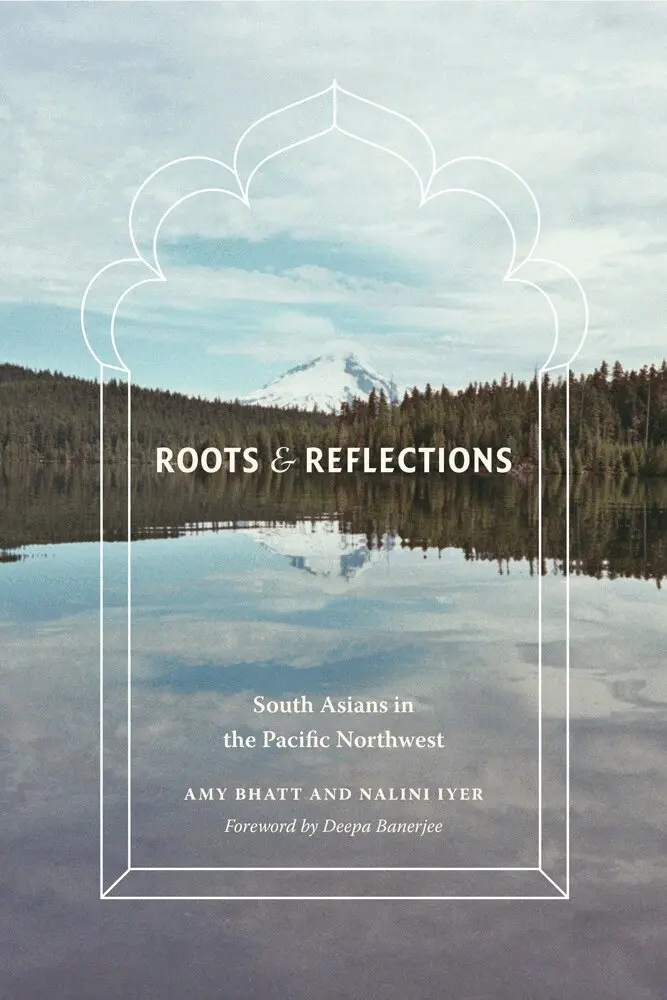
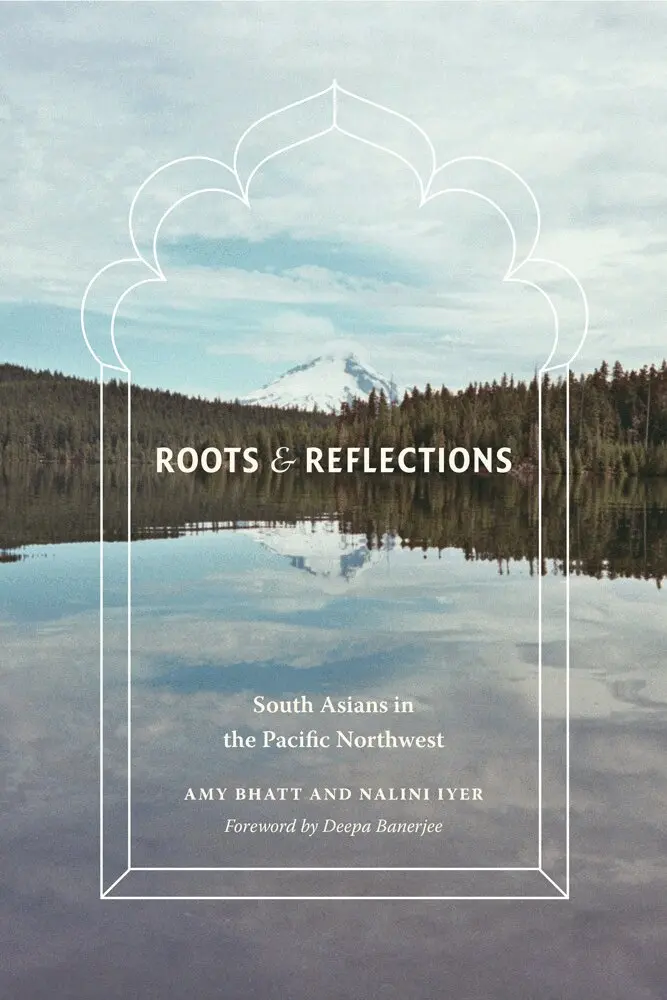
Immigrants from South Asia first began settling in Washington and Oregon in the nineteenth century, but because of restrictions placed on Asian immigration to the United States in the early twentieth century, the vast majority have come to the region since World War II. Roots and Reflections uses oral history to show how South Asian immigrant experiences were shaped by the region and how they differed over time and across generations. It includes the stories of immigrants from India, Pakistan, Bangladesh, and Sri Lanka who arrived from the end of World War II through the 1980s.Watch the trailer: http://www.youtube.com/watch?v=JHjtOvH0YdU&list=UUge4MONgLFncQ1w1C_BnHcw&index=3&feature=plcp
2 247 kr
Skickas inom 10-15 vardagar
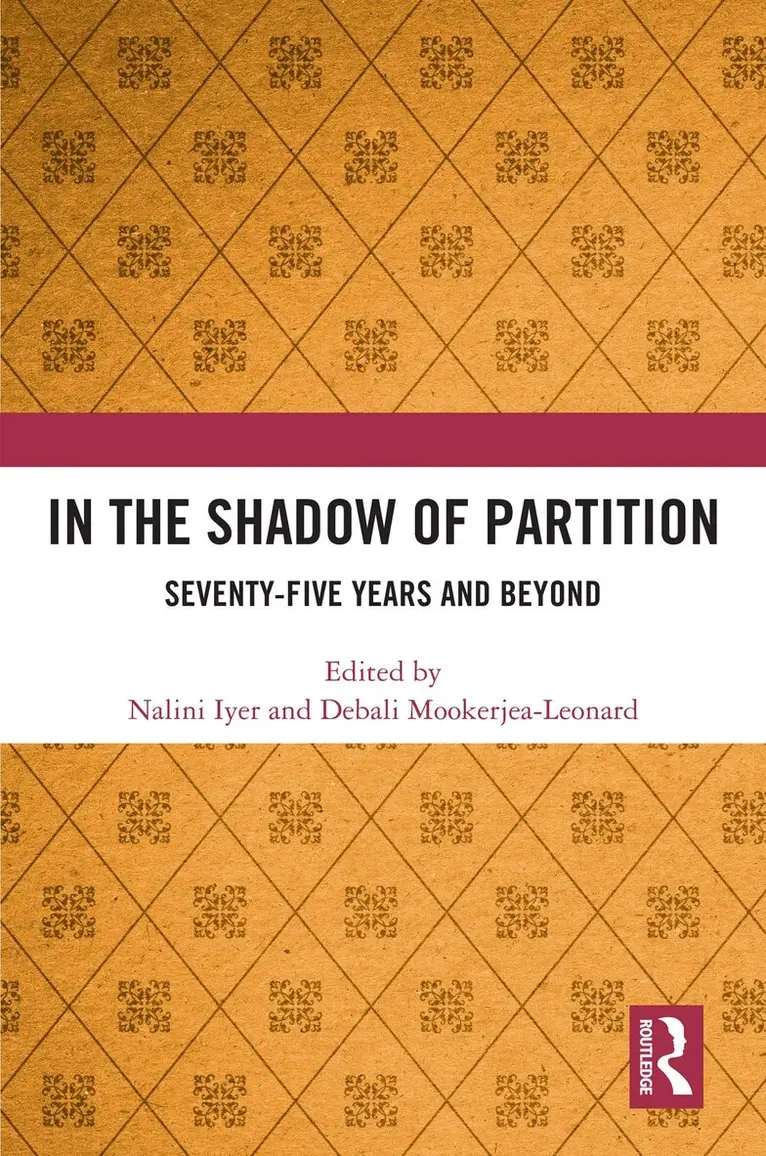
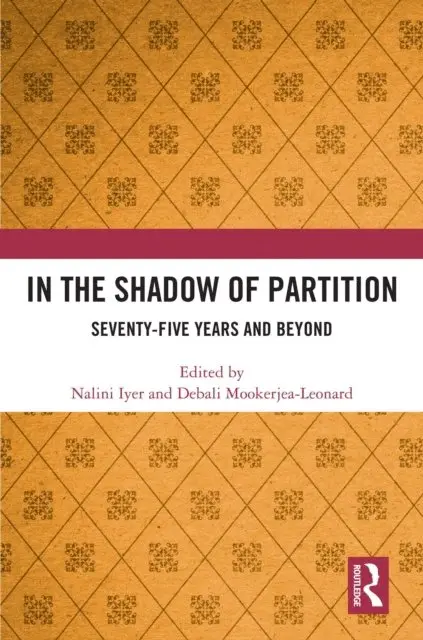
This book brings together conversations about the Partition and its haunting residues in the present as represented in literary, visual, oral, and material cultures of the subcontinent and beyond.The seventy-fifth anniversary of Partition confronts scholars with significantly new subjects for reflection. The question of historical memory has now largely transformed to one of its reproductions through mass politics and mass media and, perhaps, professional academic inquiry, while the very meaning or value of Independence is in crisis. This edited volume includes chapters on representations of partition experiences and the re-drawing of the subcontinent’s political map. While the impact of the partition of the Punjab has been the focus of much scholarly studies in the past, and Bengal to a smaller extent, this collection extends the examination of the impact of this political event elsewhere in other communities in the subcontinent, and across other differentials.This book will be of interest to students, scholars and researchers of Indian history, Partition studies, literature, popular culture and performance, postcolonial studies, and South Asian studies. The chapters in this book were originally published as a special issue of South Asian Review.
776 kr
Kommande
This book brings together conversations about the Partition and its haunting residues in the present as represented in literary, visual, oral, and material cultures of the subcontinent and beyond.The seventy-fifth anniversary of Partition confronts scholars with significantly new subjects for reflection. The question of historical memory has now largely transformed to one of its reproductions through mass politics and mass media and, perhaps, professional academic inquiry, while the very meaning or value of Independence is in crisis. This edited volume includes chapters on representations of partition experiences and the re-drawing of the subcontinent’s political map. While the impact of the partition of the Punjab has been the focus of much scholarly studies in the past, and Bengal to a smaller extent, this collection extends the examination of the impact of this political event elsewhere in other communities in the subcontinent, and across other differentials.This book will be of interest to students, scholars and researchers of Indian history, Partition studies, literature, popular culture and performance, postcolonial studies, and South Asian studies. The chapters in this book were originally published as a special issue of South Asian Review.
764 kr
Skickas inom 10-15 vardagar
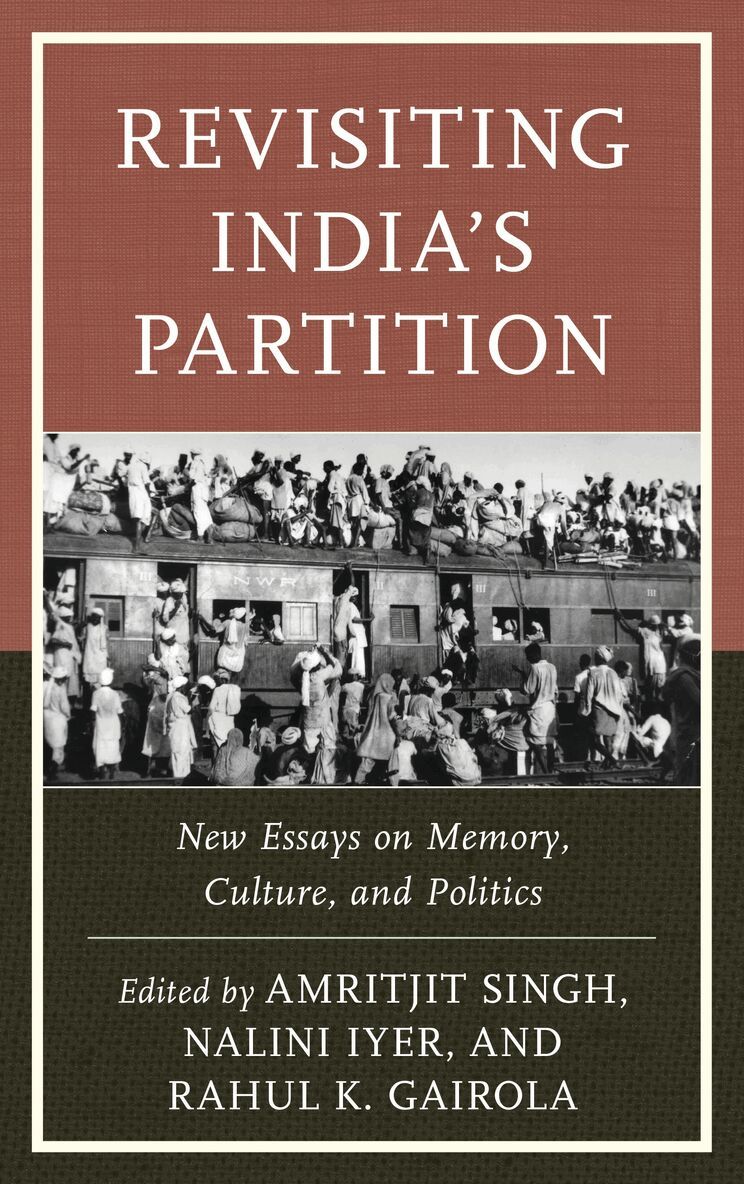
Revisiting India’s Partition: New Essays on Memory, Culture, and Politics brings together scholars from across the globe to provide diverse perspectives on the continuing impact of the 1947 division of India on the eve of independence from the British Empire. The Partition caused a million deaths and displaced well over 10 million people. The trauma of brutal violence and displacement still haunts the survivors as well as their children and grandchildren. Nearly 70 years after this cataclysmic event, Revisiting India’s Partition explores the impact of the “Long Partition,” a concept developed by Vazira Zamindar to underscore the ongoing effects of the 1947 Partition upon all South Asian nations. In our collection, we extend and expand Zamindar’s notion of the Long Partition to examine the cultural, political, economic, and psychological impact the Partition continues to have on communities throughout the South Asian diaspora.The nineteen interdisciplinary essays in this book provide a multi-vocal, multi-focal, transnational commentary on the Partition in relation to motifs, communities, and regions in South Asia that have received scant attention in previous scholarship. In their individual essays, contributors offer new engagements on South Asia in relation to several topics, including decolonization and post-colony, economic development and nation-building, cross-border skirmishes and terrorism, and nationalism. This book is dedicated to covering areas beyond Punjab and Bengal and includes analyses of how Sindh and Kashmir, Hyderabad, and more broadly South India, the Northeast, and Burma call for special attention in coming to terms with memory, culture and politics surrounding the Partition.
1 218 kr
Skickas inom 7-10 vardagar
Essays on teaching anglophone literature of the South Asian diaspora from around the worldMigration from the Indian subcontinent began on a large scale over 150 years ago, and today there are diasporic communities around the world. The identities of South Asians in the diaspora are informed by roots in the subcontinent and the complex experiences of race, religion, nation, class, caste, gender, sexuality, language, trauma, and geography. The literature that arises from these roots and experiences is diverse, powerful, and urgent.Teaching South Asian Anglophone Diasporic Literature embraces an intersectionality that attends to the historical and material conditions of cultural production, the institutional contexts of pedagogy, and the subject positions of teachers and students. Encouraging a deep engagement with works whose personal, political, and cultural insights are specific to South Asian diasporic consciousness, the volume also provokes meaningful reflection on other literatures in an age of increasing migration and diaspora.This book also contains discussion of the following authors and works: Monica Ali, Brick Lane; Nadeem Aslam, The Wasted Vigil; Bhira Backhaus, Under the Lemon Trees; Gaiutra Bahadur, Coolie Woman: The Odyssey of Indenture; Sharon Bala, The Boat People; Ramabai Espinet, The Swinging Bridge; Amitav Ghosh, In an Antique Land and The Great Derangement; Mohsin Hamid, Exit West and The Reluctant Fundamentalist; Meena Kandasamy, When I Hit You; Rupi Kaur, Home Body; Jhumpa Lahiri, "A Temporary Matter" and Unaccustomed Earth; Deepa Mehta, Earth; Johny Miranda, Jeevichirikkunnavarkku Vendiyulla Oppees: Requiem for the Living; Shani Mootoo, Cereus Blooms at Night; Bharati Mukherjee, Jasmine; V. S. Naipaul, A House for Mr. Biswas; Michael Ondaatje, Anil's Ghost; Salman Rushdie, Midnight's Children; Sunjeev Sahota, The Year of the Runaways; Sara Suleri, Meatless Days; Shyam Selvadurai, Funny Boy; Ryhaan Shah, A Silent Life; Narmala Shewcharan, Tomorrow Is Another Day; Bapsi Sidhwa, Cracking India; Manjushree Thapa, Seasons of Flight; M. G. Vassanji, The In-Between World of Vikram Lall.
492 kr
Skickas inom 7-10 vardagar
Essays on teaching anglophone literature of the South Asian diaspora from around the worldMigration from the Indian subcontinent began on a large scale over 150 years ago, and today there are diasporic communities around the world. The identities of South Asians in the diaspora are informed by roots in the subcontinent and the complex experiences of race, religion, nation, class, caste, gender, sexuality, language, trauma, and geography. The literature that arises from these roots and experiences is diverse, powerful, and urgent.Teaching South Asian Anglophone Diasporic Literature embraces an intersectionality that attends to the historical and material conditions of cultural production, the institutional contexts of pedagogy, and the subject positions of teachers and students. Encouraging a deep engagement with works whose personal, political, and cultural insights are specific to South Asian diasporic consciousness, the volume also provokes meaningful reflection on other literatures in an age of increasing migration and diaspora.This book also contains discussion of the following authors and works: Monica Ali, Brick Lane; Nadeem Aslam, The Wasted Vigil; Bhira Backhaus, Under the Lemon Trees; Gaiutra Bahadur, Coolie Woman: The Odyssey of Indenture; Sharon Bala, The Boat People; Ramabai Espinet, The Swinging Bridge; Amitav Ghosh, In an Antique Land and The Great Derangement; Mohsin Hamid, Exit West and The Reluctant Fundamentalist; Meena Kandasamy, When I Hit You; Rupi Kaur, Home Body; Jhumpa Lahiri, "A Temporary Matter" and Unaccustomed Earth; Deepa Mehta, Earth; Johny Miranda, Jeevichirikkunnavarkku Vendiyulla Oppees: Requiem for the Living; Shani Mootoo, Cereus Blooms at Night; Bharati Mukherjee, Jasmine; V. S. Naipaul, A House for Mr. Biswas; Michael Ondaatje, Anil's Ghost; Salman Rushdie, Midnight's Children; Sunjeev Sahota, The Year of the Runaways; Sara Suleri, Meatless Days; Shyam Selvadurai, Funny Boy; Ryhaan Shah, A Silent Life; Narmala Shewcharan, Tomorrow Is Another Day; Bapsi Sidhwa, Cracking India; Manjushree Thapa, Seasons of Flight; M. G. Vassanji, The In-Between World of Vikram Lall.