Amy Dunham Strand – författare
Visar alla böcker från författaren Amy Dunham Strand. Handla med fri frakt och snabb leverans.
8 produkter
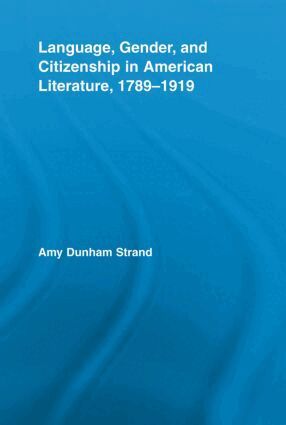
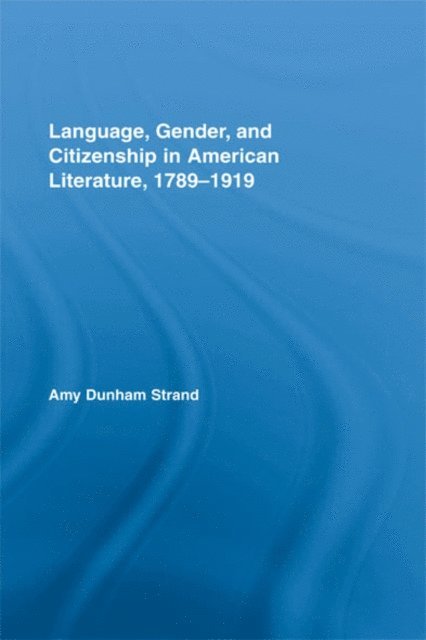
Language, Gender, and Citizenship in American Literature, 1789-1919
Häftad, 2012
642 kr
Lägg i varukorg
Examining language debates and literary texts from Noah Webster to H.L. Mencken and from Washington Irving to Charlotte Perkins Gilman, this book demonstrates how gender arose in passionate discussions about language to address concerns about national identity and national citizenship elicited by …
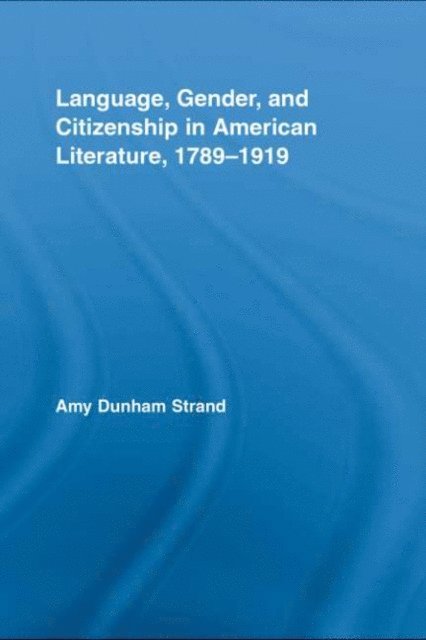
Language, Gender, and Citizenship in American Literature, 1789-1919
Inbunden, 2008
1744 kr
Lägg i varukorg
Examining language debates and literary texts from Noah Webster to H.L. Mencken and from Washington Irving to Charlotte Perkins Gilman, this book demonstrates how gender arose in passionate discussions about language to address concerns about national identity and national citizenship elicited by …
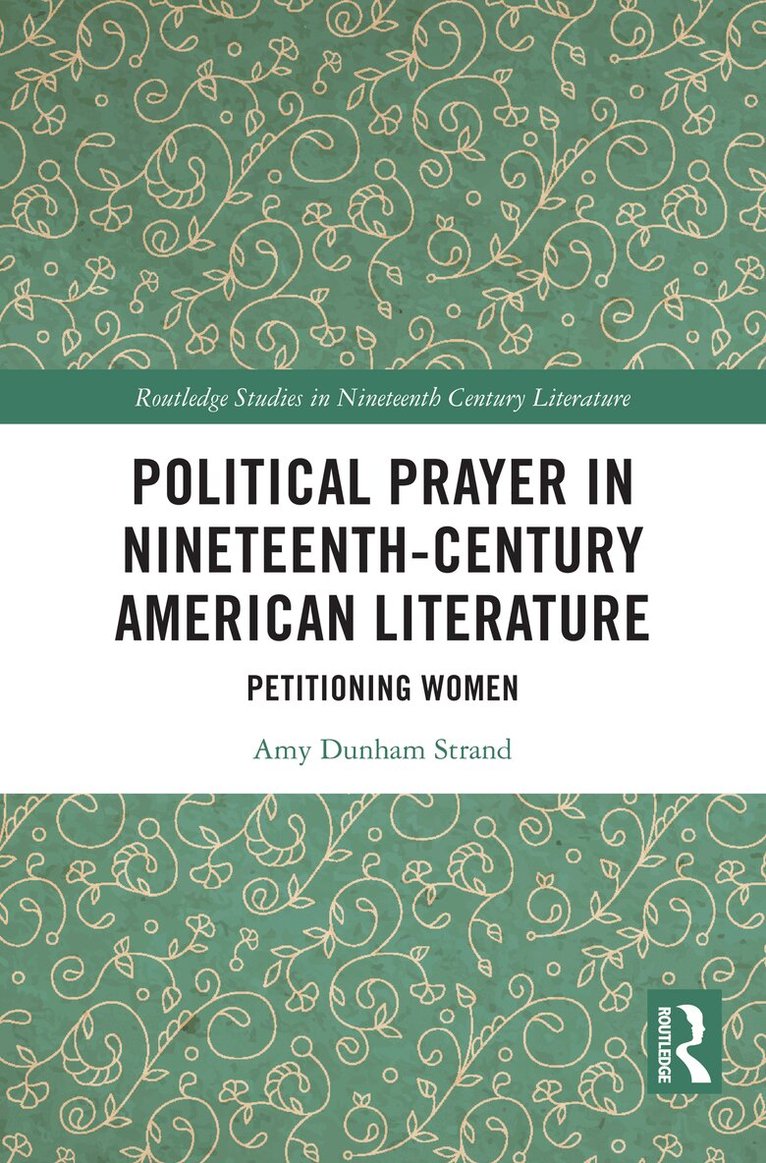
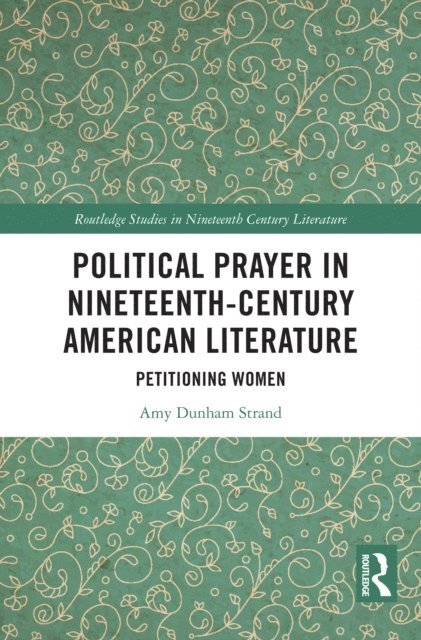
Political Prayer in Nineteenth-Century American Literature
Petitioning Women
Inbunden, 2024
2879 kr
Lägg i varukorg
Political Prayer in Nineteenth-Century American Literature explores how American women writers such as Catharine Maria Sedgwick, Harriet Beecher Stowe, Rebecca Harding Davis, and Emily Dickinson translated petitioning – a political form for redress of grievances with religious resonance, or what …
Political Prayer in Nineteenth-Century American Literature
Petitioning Women
Häftad, 2026
809 kr
Lägg i varukorg
Political Prayer in Nineteenth-Century American Literature explores how American women writers such as Catharine Maria Sedgwick, Harriet Beecher Stowe, Rebecca Harding Davis, and Emily Dickinson translated petitioning – a political form for redress of grievances with religious resonance, or what …
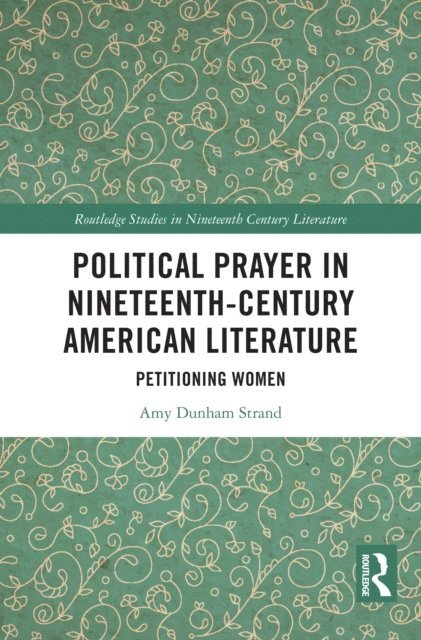
Political Prayer in Nineteenth-Century American Literature
Petitioning Women
E-bok, 2024
956 kr
Lägg i varukorg
Political Prayer in Nineteenth-Century American Literature explores how American women writers such as Catharine Maria Sedgwick, Harriet Beecher Stowe, Rebecca Harding Davis, and Emily Dickinson translated petitioning – a political form for redress of grievances with religious resonance, or what …
Political Prayer in Nineteenth-Century American Literature
Petitioning Women
E-bok, 2024
956 kr
Lägg i varukorg
Political Prayer in Nineteenth-Century American Literature explores how American women writers such as Catharine Maria Sedgwick, Harriet Beecher Stowe, Rebecca Harding Davis, and Emily Dickinson translated petitioning – a political form for redress of grievances with religious resonance, or what …
Language, Gender, and Citizenship in American Literature, 1789-1919
E-bok, 2008
757 kr
Lägg i varukorg
Examining language debates and literary texts from Noah Webster to H.L. Mencken and from Washington Irving to Charlotte Perkins Gilman, this book demonstrates how gender arose in passionate discussions about language to address concerns about national identity and national citizenship elicited by …
Language, Gender, and Citizenship in American Literature, 1789-1919
E-bok, 2008
757 kr
Lägg i varukorg
Examining language debates and literary texts from Noah Webster to H.L. Mencken and from Washington Irving to Charlotte Perkins Gilman, this book demonstrates how gender arose in passionate discussions about language to address concerns about national identity and national citizenship elicited by …