Amy Nelson - Böcker
Visar alla böcker från författaren Amy Nelson. Handla med fri frakt och snabb leverans.
3 produkter
3 produkter
589 kr
Skickas inom 5-8 vardagar
Mention twentieth-century Russian music, and the names of three "giants"—Igor Stravinsky, Sergei Prokofiev, and Dmitrii Shostakovich—immediately come to mind. Yet during the turbulent decade following the Bolshevik Revolution, Stravinsky and Prokofiev lived abroad and Shostakovich was just finishing his conservatory training. While the fame of these great musicians is widely recognized, little is known about the creative challenges and political struggles that engrossed musicians in Soviet Russia during the crucial years after 1917. Music for the Revolution examines musicians’ responses to Soviet power and reveals the conditions under which a distinctively Soviet musical culture emerged in the early thirties. Given the dramatic repression of intellectual freedom and creativity in Stalinist Russia, the twenties often seem to be merely a prelude to Totalitarianism in artistic life. Yet this was the decade in which the creative intelligentsia defined its relationship with the Soviet regime and the aesthetic foundations for socialist realism were laid down. In their efforts to deal with the political challenges of the Revolution, musicians grappled with an array of issues affecting musical education, professional identity, and the administration of musical life, as well as the embrace of certain creative platforms and the rejection of others. Nelson shows how debates about these issues unfolded in the context of broader concerns about artistic modernism and elitism, as well as the more expansive goals and censorial authority of Soviet authorities. Music for the Revolution shows how the musical community helped shape the musical culture of Stalinism and extends the interpretive frameworks of Soviet culture presented in recent scholarship to an area of artistic creativity often overlooked by historians. It should be broadly important to those interested in Soviet history, the cultural roots of Stalinism, Russian and Soviet music, and the place of music and the arts in revolutionary change.
805 kr
Skickas inom 7-10 vardagar
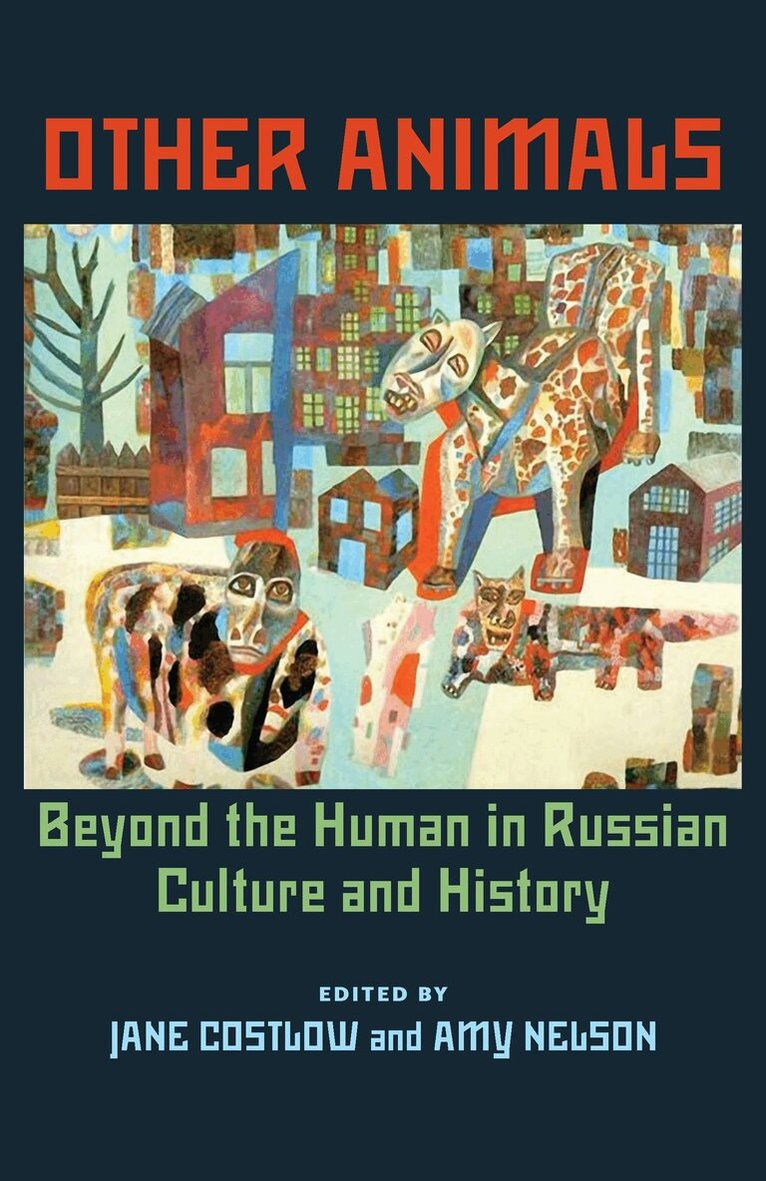
The lives of animals in Russia are intrinsically linked to cultural, political and psychological transformations of the imperial, Soviet, and post-Soviet eras. Other Animals examines the interaction of animals and humans in Russian literature, art, and life from the eighteenth century until the present. The chapters explore the unique nature of the Russian experience in a range of human-animal relationships through tales of cruelty, interspecies communion and compassion, and efforts to either overcome or establish the human-animal divide. Four themes run through the volume: the prevalence of animals in utopian visions; the ways in which Russians have incorporated and sometimes challenged Western sensibilities and practices, such as the humane treatment of animals and the inclusion of animals in urban domestic life; the quest to identify and at times exploit the physiological basis of human and animal behavior and the ideological implications of these practices; and the breakdown of traditional human-animal hierarchies and categories during times of revolutionary upheaval, social transformation, or disintegration.From failed Soviet attempts to transplant the seminomadic Sami and their reindeer herds onto collective farms, to performance artist Oleg Kulik's scandalous portrayal of Pavlov's dogs as a parody of the Soviet "new man," to novelist Tatyana Tolstaya's post-cataclysmic future world of hybrid animal species and their disaffection from the past, Other Animals presents a completely new perspective on Russian and Soviet history. It also offers a fascinating look into the Russian psyche as seen through human interactions with animals.
1 670 kr
Skickas inom 5-8 vardagar