Ana Cannas da Silva – författare
Visar alla böcker från författaren Ana Cannas da Silva. Handla med fri frakt och snabb leverans.
6 produkter
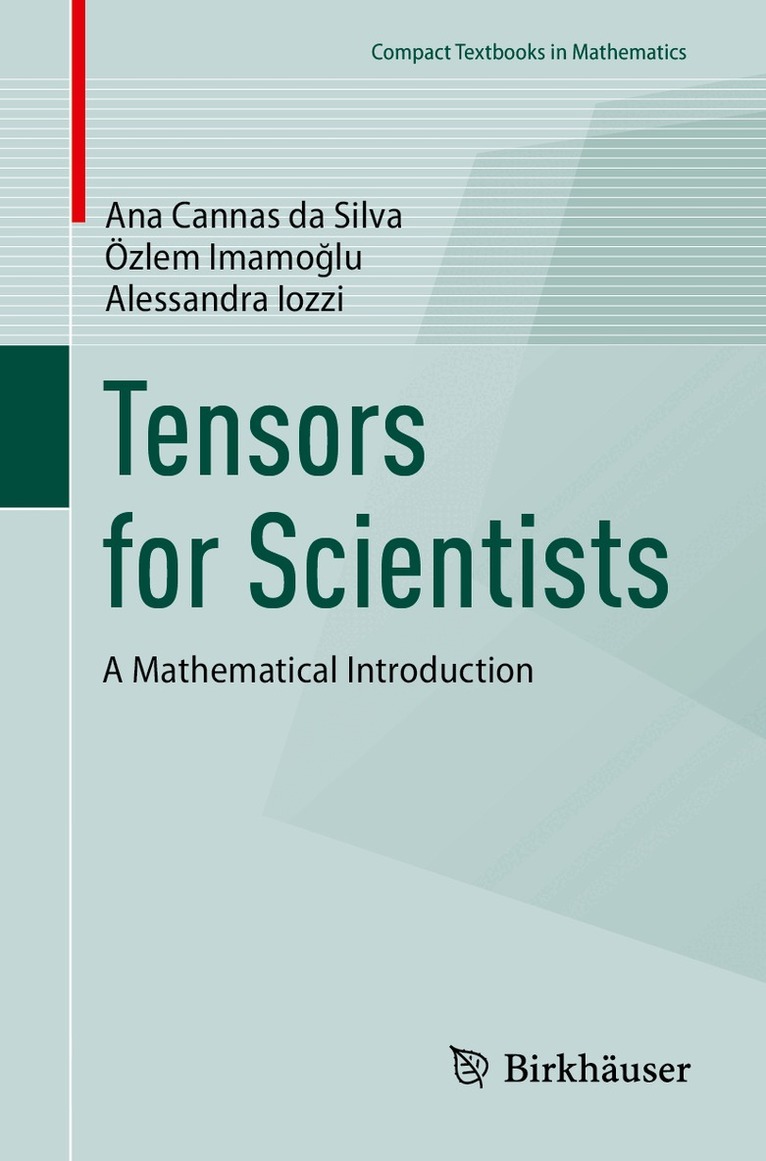
Tensors for Scientists
A Mathematical Introduction
Av Ana Cannas da Silva, Özlem Imamoğlu m. fl.
Häftad, 2025
497 kr
Lägg i varukorg
This textbook provides a compact introduction to tensors, which are physical or geometric entities that generalize vectors. Tensors are fundamental in engineering and physics, as they form the framework for formulating and solving problems across various disciplines. These include mechanics …
Tensors for Scientists
A Mathematical Introduction
Av Alessandra Iozzi, Ozlem Imamoglu m. fl.
E-bok, 2025
631 kr
Lägg i varukorg
This textbook provides a compact introduction to tensors, which are physical or geometric entities that generalize vectors. Tensors are fundamental in engineering and physics, as they form the framework for formulating and solving problems across various disciplines. These include mechanics …
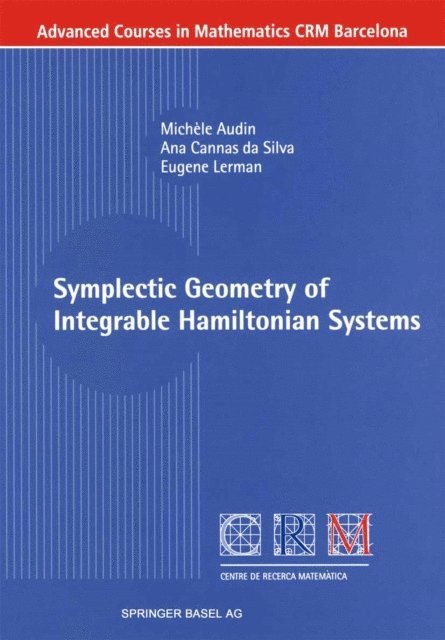
Symplectic Geometry of Integrable Hamiltonian Systems
Av Eugene Lerman, Ana Cannas da Silva m. fl.
E-bok, 2012
568 kr
Lägg i varukorg
Among all the Hamiltonian systems, the integrable ones have special geometric properties; in particular, their solutions are very regular and quasi-periodic. The quasi-periodicity of the solutions of an integrable system is a result of the fact that the system is invariant under a (semi-global) …
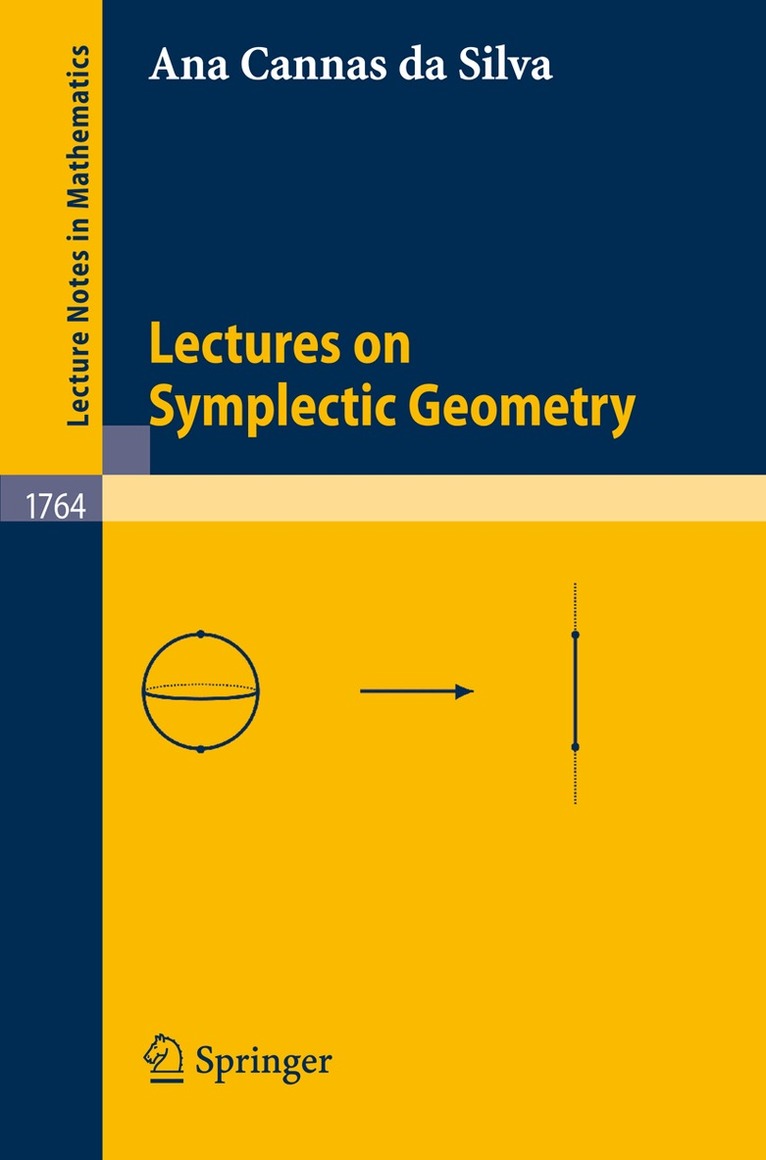
Lectures on Symplectic Geometry
Häftad, 2001
660 kr
Lägg i varukorg
These notes approximately transcribe a 15-week course on symplectic geometry I taught at UC Berkeley in the Fall of 1997. The course at Berkeley was greatly inspired in content and style by Victor Guillemin, whose masterly teaching of beautiful courses on topics related to s- plectic geometry at …
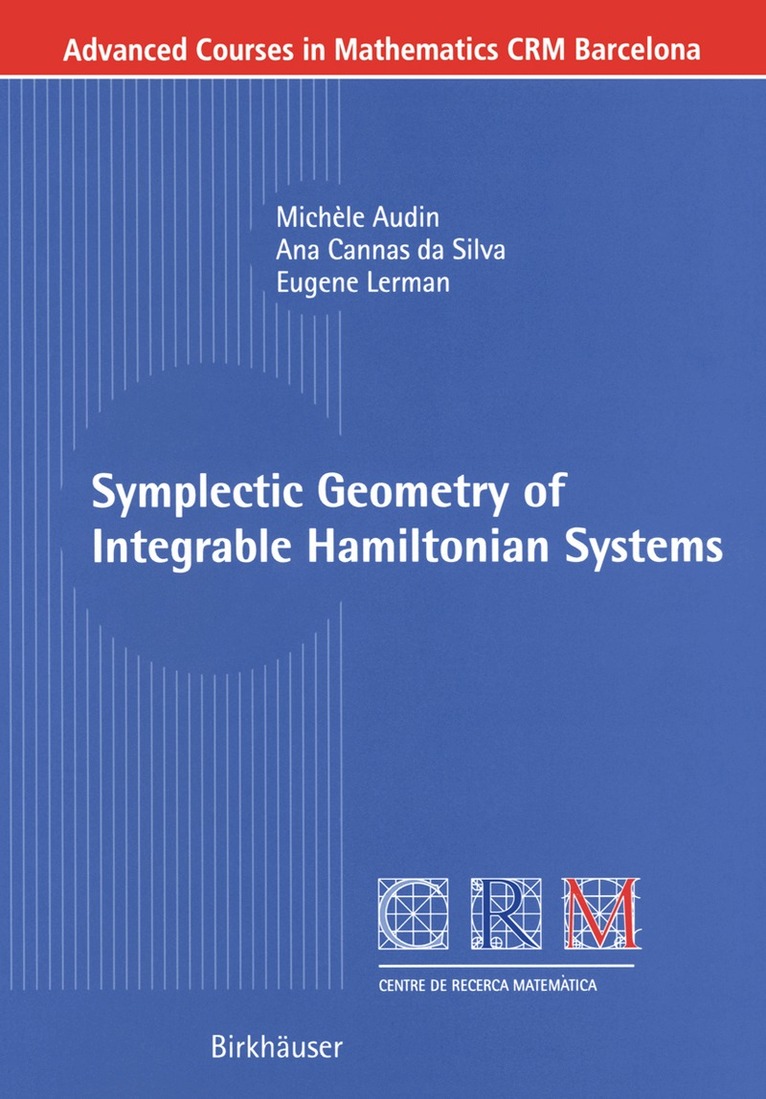
Symplectic Geometry of Integrable Hamiltonian Systems
Av Michèle Audin, Ana Cannas da Silva m. fl.
Häftad, 2003
442 kr
Lägg i varukorg
Among all the Hamiltonian systems, the integrable ones have special geometric properties; in particular, their solutions are very regular and quasi-periodic. The quasi-periodicity of the solutions of an integrable system is a result of the fact that the system is invariant under a (semi-global) …